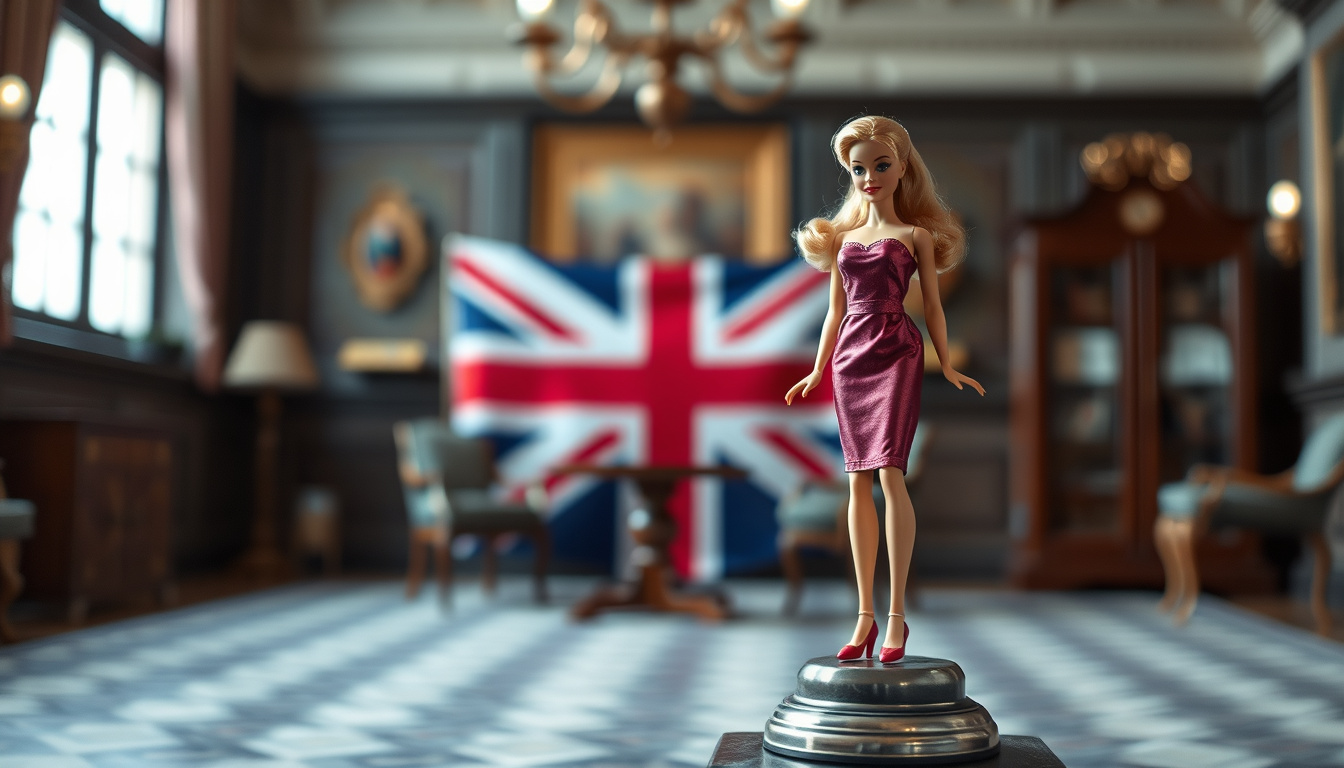
Most people meet Barbie as a toy, but she’s also a cultural artifact with a paper trail of records and debates. Since the 1959 launch that Smithsonian Magazine documents, more than a billion dolls have been sold, and collectors still argue over which edition matters most: the rarest, the first Black Barbie, the British rival. The answers are uneven: some come from auction records and museums, others from Mattel’s own marketing history.
First Barbie introduced: 1959 · Total dolls sold: over 1 billion · Careers represented: 200+ · Auction record: $302,500 · Rarest edition: 1 (Stefano Canturi Barbie)
Quick snapshot
- Stefano Canturi Barbie — one copy produced; auctioned for $302,500 in 2010. (Smithsonian Magazine)
- First official Black Barbie — 1980, designed by Kitty Black Perkins (Smithsonian Magazine).
- Barbie’s full name — Barbara Millicent Roberts. (Smithsonian Magazine)
- 1959 — Barbie debuts at the American International Toy Fair.
- 1980 — first official Black Barbie reaches stores.
- 2010 — Stefano Canturi Barbie sells for $302,500.
- Mattel has not confirmed 2026/2027 releases; current popularity is concentrated in the Fashionistas line and movie-linked dolls.
- Until an official date appears, treat rumored release lists as speculation.
Eight rows, one pattern: the official biography of Barbie is short, but the cultural arguments around her keep expanding.
| Attribute | Value |
|---|---|
| Creator | Ruth Handler (Mattel) |
| Launch year | 1959 |
| Full name of character | Barbara Millicent Roberts |
| Total dolls sold | Over 1 billion |
| Number of careers | Over 200 |
| Rarest known edition | Stefano Canturi Barbie (1 copy) |
| Best-selling model | Totally Hair Barbie (1992) |
| First Black Barbie | 1980 |
What’s the rarest Barbie doll ever?
Which Barbie holds the auction record?
- Stefano Canturi Barbie — production count: 1.
- Auction result — $302,500 (2010).
- Other scarce editions — the 1959 original in mint condition and the Pink Diamond Barbie.
The record belongs to the Stefano Canturi Barbie, a one-off edition with a production count of exactly one. When it went under the hammer in , it reached $302,500 — the highest price paid for a single Barbie at auction. A 1959 original in mint condition and the Pink Diamond Barbie are the other names collectors cite when rarity comes up, but neither can match Canturi’s singularity.
Rarity in Barbie is not about age; it’s about production count. A single factory piece out-earned entire production lines, which is why collectors now track edition sizes before price.
How many Stefano Canturi Barbies were made?
One copy means no near-mint debates, no box-condition premium, no second-chance auction. The doll’s one-of-one status is the only grade that matters.
The short answer is one. The Stefano Canturi Barbie is the rarest known edition because there is exactly one copy in existence, and its 2010 auction at $302,500 is the number every rarity ranking starts from. That single sale is also why “rarest Barbie” conversations rarely stay with production dolls — once a line has thousands of units, it’s scarce, not singular.
The implication: in a brand built on mass production, the rarest Barbie is the one that was never mass-produced at all. That paradox defines the collector market.
Why is it called Barbie doll?
Who was Barbie named after?
- Barbie’s full name — Barbara Millicent Roberts.
- Namesake — Barbara Handler, daughter of Mattel co-founder Ruth Handler.
- Creator — Ruth Handler, who co-founded Mattel.
The doll took her first name from Barbara Handler, Ruth’s daughter. The full name, Barbara Millicent Roberts, gave the character a complete fictional identity — a first name, a middle name, and a surname from the start. The result was a doll with a real family connection hidden inside a corporate brand.
What does the name Barbie mean?
“Barbie” is not an acronym or a marketing coinage; it’s a nickname. The brand’s origin story is a family name, not a slogan.
Barbie is simply a shortened form of Barbara. The doll’s full name — Barbara Millicent Roberts — gives the character the sound of a fictional teenager invented for a storybook, which is exactly what she was. In practice, the name does more work than the biography: “Barbie” became the generic word for the toy itself, outliving any single character.
What this means: the name is the clearest sign that Barbie started as one family’s invention and became a category. “Barbie doll” now reads as the product; “Barbara Millicent Roberts” reads as the character whose job it was to sell it.
What is the British version of Barbie?
Is Sindy the British alternative to Barbie?
- Brand — Sindy, by Pedigree Dolls & Toys.
- Launch year — 1963.
- Positioning — a teenage fashion doll with a more modest look.
Pedigree launched Sindy in as a direct competitor to the American import, and she is the doll most often described as the British version of Barbie. The broader UK-market angle is real even inside Mattel’s own line: Vogue UK notes that UK-issued dolls are often distinguished from US-issued ones by packaging, factory marks, and distribution differences.
How does Sindy differ from Barbie?
Sindy was marketed as a teenage fashion doll with a more modest look, which made her the acceptable British face of the category — while Barbie kept the global spotlight and the global sales.
The differences showed up in styling and marketing rather than concept. Sindy’s face and wardrobe were more modest than Barbie’s, and she was sold explicitly as a teenage fashion doll. Both brands, though, ran on the same engine: change the outfits, keep the doll.
The pattern: the British version of Barbie was never a Mattel product. It was a competitor that defined itself against Barbie — and that contrast tells you more about the UK market than about the doll itself.
What does “black Barbie” mean?
When was the first black Barbie released?
- 1980 — first official Black Barbie, a shift from side character to mainline Barbie (TIME).
- Designer — Kitty Black Perkins, Mattel’s first Black designer (ABC News Australia).
- Hired — 1976, four years before the 1980 debut (The Guardian).
The first doll actually named Barbie with Black features arrived in 1980 — more than two decades after the original blonde model. Mattel had already produced Black-coded friend characters in the 1960s and 1970s, but they were not called Barbie and often had Eurocentric features (ABC News Australia).
The 1980 doll changed a 21-year-old formula: for the first time, a Black doll carried the Barbie name itself — not a friend, not a side character (TIME).
What is the significance of black Barbie?
“She’s Black! She’s beautiful! She’s dynamite!”
Mattel packaging for the first Black Barbie, 1980 (Smithsonian Magazine)
That box slogan was a deliberate representational statement. Kitty Black Perkins, who designed the doll, said the design goal was about identity: Black girls needed a doll that looked like them (NZ Herald / Viva). TIME also notes the design was meant to contrast with the blonde Barbie aesthetic and was inspired in part by Diana Ross’s style.
The term “black Barbie” now works on two levels: as an unofficial label for any Barbie doll with darker skin, and as a broad category covering Mattel’s Black dolls and characters (Vogue UK). The cultural weight behind the doll goes back further than 1980: the 1940s Clark Doll Test explored racial preference and self-esteem among Black children (ABC News Australia). And the documentary Black Barbie, which premiered on Netflix in 2024, has helped frame the doll as a symbol of progress in representation (People).
“Black Barbie” is both a specific 1980 product and a much wider category of dolls. The word “black” does two jobs at once: it describes skin tone and it names a cultural statement.
What’s the most popular Barbie right now?
Which Barbie is the number one selling of all time?
- All-time best-seller — Totally Hair Barbie (1992).
- Claim to fame — sold more units than any other Barbie edition.
- Current evergreen line — Barbie Fashionistas.
The number-one selling Barbie of all time is the 1992 Totally Hair Barbie. The “most popular right now” answer is different: the Barbie Fashionistas line has become the steady seller of the current era, alongside dolls tied to movies. Mattel has not confirmed specific 2026 or 2027 releases, so the Fashionistas line and movie-linked dolls are the safest bets for what stays popular.
What is the newest Barbie to be released?
No official 2026/2027 dates have been confirmed by Mattel. The newest releases tend to appear in waves around Toy Fair and the holiday season — but any specific date before that announcement is speculation.
The most recent notable Barbie release is not a doll but a film: the 2024 Netflix documentary Black Barbie, reviewed by The Guardian, which pushed the 1980 doll back into the cultural conversation. That matters for the “newest Barbie” question because documentary attention is now part of how Mattel’s Black doll lines get noticed. Until Mattel names a 2026 model, the newest Barbie is whatever is currently on shelves in the Fashionistas line.
The pattern: durability wins inside the line, novelty wins in the culture. Totally Hair Barbie still owns the sales record; the documentary and the Fashionistas line own the current conversation.
Barbie doll timeline: key dates
- — First Barbie doll introduced at the American International Toy Fair.
- — Sindy, the British version, launched by Pedigree Dolls & Toys.
- — First official Black Barbie released, designed by Kitty Black Perkins.
- — Totally Hair Barbie becomes the best-selling Barbie of all time.
- — Stefano Canturi Barbie sells for $302,500 at auction.
The pattern: every major Barbie turn — the rival, the first Black Barbie, the best-seller, the auction record — came roughly a decade apart. That cadence is why each new anniversary revives the same collector questions.
Confirmed facts vs. what’s still unclear
Confirmed facts
- Stefano Canturi Barbie: exactly one copy exists.
- Barbie is named after Barbara Handler, daughter of Mattel co-founder Ruth Handler.
- The first official Black Barbie was released in 1980; Kitty Black Perkins designed it.
- Totally Hair Barbie (1992) is the best-selling Barbie of all time.
What’s unclear
- Exact 2026/2027 release dates: unconfirmed by Mattel.
- Whether any current production doll is officially “banned”: ambiguous; the documented cases are recalls, not bans.
- UK vs. US edition identification: depends on packaging, factory marks, and collector documentation rather than official records.
- Christie’s introduction date (1968): reported by entertainment media rather than confirmed in Mattel’s official records (Collider).
The distinction matters because Barbie collecting runs on documentation. Confirmed facts drive prices; unclear facts drive rumors — and rumors are where overpays happen.
Quotes that frame the debate
“She’s Black! She’s beautiful! She’s dynamite!”
Mattel packaging for the first Black Barbie, 1980 (Smithsonian Magazine)
“The little black girl to have something she could play with that looked like her.”
Kitty Black Perkins, first Black Barbie designer (NZ Herald / Viva)
Both quotes come from different sides of the same packaging: the 1980 doll was a statement before it was a product.
The takeaway
Barbie’s history answers the biggest questions with surprising precision: one doll holds the auction record, another owns the sales record, and the 1980 Black Barbie marks the brand’s most important identity shift. The lesson is that rarity and meaning rarely line up — the rarest doll also has the least commercial history, while the most culturally significant dolls sold by the millions. For collectors, the choice is clear: chase the one-off at auction, or collect the editions that changed what the doll could represent — before those, too, become unaffordable.
shondaland.com, en.wikipedia.org, chicago.suntimes.com, businessinsider.com
Frequently asked questions
Is there a new Barbie doll coming out in 2026?
Mattel has not confirmed a specific 2026 release date. New Barbie lines usually arrive in waves around Toy Fair and the holiday season, so any exact 2026 model is unverified until Mattel announces it.
What new Barbie doll will be released in 2027?
No official 2027 release has been announced. Collector speculation exists, but no verified Mattel information places a specific Barbie on the 2027 calendar yet.
What dolls will be released in 2026?
No full 2026 lineup is confirmed. The Barbie Fashionistas line and movie-linked dolls are the most likely to carry into 2026, but exact models remain unannounced.
What is the newest Barbie to be released?
The most recent notable Barbie-related release is the 2024 Netflix documentary Black Barbie. In the toy line, the Fashionistas series is the current range with the broadest retail presence.
What Barbie’s got discontinued?
Individual Barbie dolls leave the catalogue when Mattel rotates lines, and some past editions were recalled over safety or design issues. Collectors usually track discontinued models through community documentation rather than a single official list.
Are there any banned Barbie dolls available?
Mattel has not confirmed that any current production doll is officially banned. The documented cases are recalls rather than bans, and those dolls can still appear on the secondhand market — so buyers should verify edition details before paying a premium.
What is the number one selling Barbie of all time?
Totally Hair Barbie (1992) is the best-selling Barbie of all time.
Related stories


Craig Newton is Senior Reporter at ScopePress.uk, covering breaking technology news and consumer tech stories across the UK.