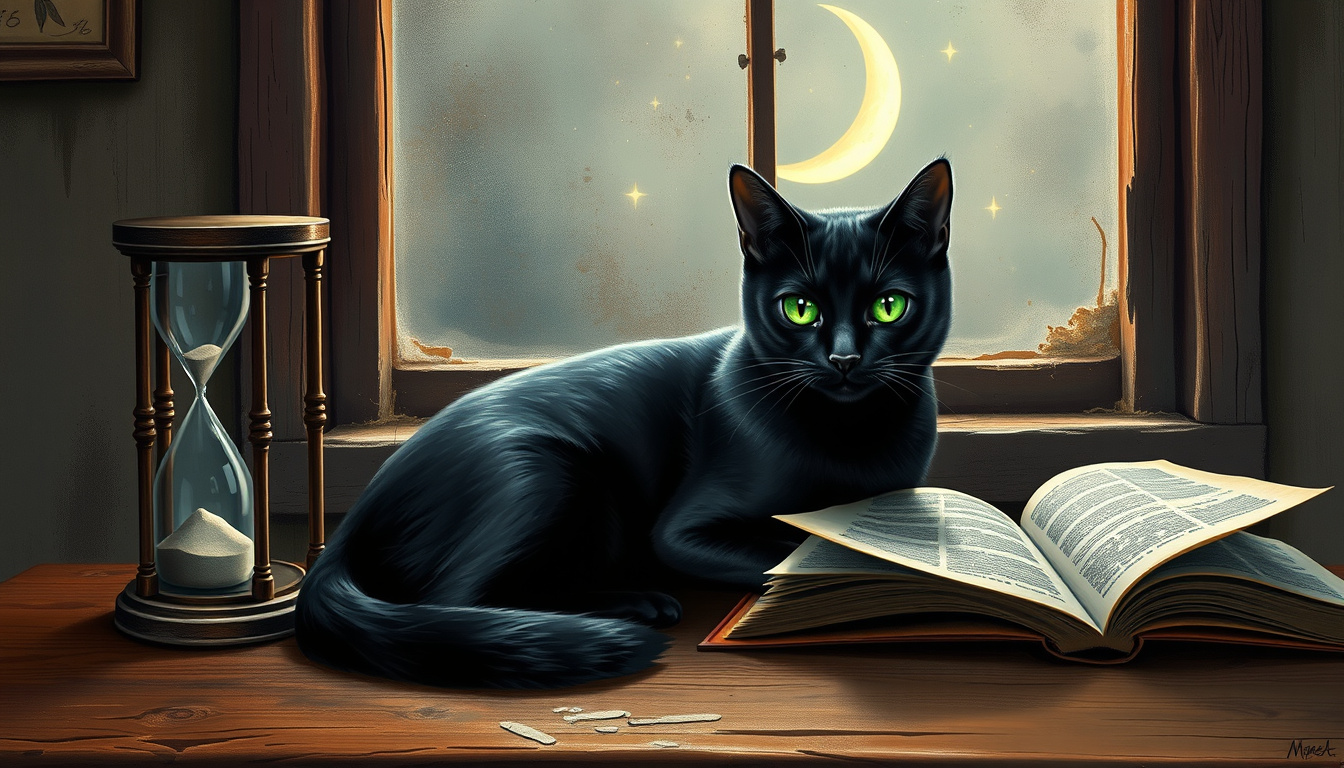
Black cats carry a surprisingly heavy symbolic load for such a common household animal: genetically, they are no more unusual than a tabby, yet centuries of folklore have given them a split reputation across cultures. Here is what the biological facts reveal, how the breed diversity breaks down, and the story behind the Marvel character who turned the myth into a name.
Commonality: Not rare; black coat × dominant gene ·
Average lifespan: 15–20 years (indoor) ·
Number of black cat breeds: 10+ breeds in solid black
Quick snapshot
- Black coat is caused by a dominant melanistic gene (Cat Fanciers’ Association (feline breed registry))
- Black cats are one of the most common coat colors (Cat Fanciers’ Association (feline breed registry)) (Cat Fanciers’ Association (feline breed registry))
- Felicia Hardy (Black Cat) is an American character (Marvel (publisher and IP owner))
- Exact origins of the modern Halloween superstition (U.S. National Library of Medicine (government health archive))
- Whether black coats directly correlate with higher health risks (Cat Fanciers’ Association (feline breed registry)) (U.S. National Library of Medicine (government health archive))
- How far one shelter dataset can be generalized to other regions (Cat Fanciers’ Association (feline breed registry)) (U.S. National Library of Medicine (government health archive))
- 1979: Felicia Hardy debuts as Black Cat (Marvel (publisher and IP owner))
- 2024: Black Cat appears in Marvel Rivals (Marvel (publisher and IP owner))
- Growing awareness of black cat shelter challenges (Cat Fanciers’ Association (feline breed registry))
- Black Cat’s active Marvel profile supports further game and multimedia appearances (Marvel (publisher and IP owner))
The key facts form one pattern: the black cat’s reputation across biology and pop culture is far more varied than the common Halloween stereotype suggests.
| Scientific name | Felis catus (black coat variant) |
| Commonality | Common (Cat Fanciers’ Association (feline breed registry)) |
| Coat genetics | Dominant melanistic gene (Cat Fanciers’ Association (feline breed registry)) |
| Average lifespan | 15–20 years (Wikipedia (community encyclopedia)) |
| First Marvel appearance | The Amazing Spider-Man #194 (1979) (Marvel (publisher and IP owner)) |
| Nationality (Felicia Hardy) | American (Marvel (publisher and IP owner)) |
Are black cats rarer?
- The black coat is caused by a dominant melanistic gene, making it one of the most common feline coat colors globally (Cat Fanciers’ Association (feline breed registry)).
- Black cats are not biologically rare; their prevalence is a direct result of genetics (Cat Fanciers’ Association (feline breed registry)).
- Where they do experience a kind of scarcity is in shelter adoption rates. A shelter study cited by the CFA documented a 74.6% euthanasia rate and a 10.0% adoption rate for black cats in a major urban U.S. dataset (Cat Fanciers’ Association (feline breed registry)).
The black cat is simultaneously one of the most common coat colors in the entire cat population, yet statistically one of the hardest to adopt out of shelters. The CFA’s study underlines a 74.6% euthanasia rate, a number driven by superstition and volume, not health (Cat Fanciers’ Association (feline breed registry)).
The implication: the “rarity” of a black cat depends entirely on context. Genetically, they are the opposite of rare; socially, the stigma surrounding them creates an artificial scarcity in the adoption market.
What are 10 common black cat breeds?
Dozens of recognized cat breeds can produce solid-black coats, but some are far more known for the color than others. Ten breeds commonly found in black, with notes on size and temperament:
| Breed | Size | Temperament | Origin relevance |
|---|---|---|---|
| Bombay | Small–Medium | Affectionate, muscular | Only breed exclusively solid black |
| American Shorthair | Medium | Calm, adaptable | Common in North America |
| British Shorthair | Medium–Large | Quiet, plush coat | Archetypal UK black cat |
| Maine Coon | Very Large | Friendly, dog-like | Available in solid black |
| Persian | Medium | Calm, long fur | Black variation recognized |
| Scottish Fold | Medium | Sweet, folded ears | Striking in black |
| Sphynx | Small–Medium | Social, hairless | Black skin is common |
| Cornish Rex | Small–Medium | Active, wavy coat | Solid black standard |
| Oriental Shorthair | Medium | Active, sleek | Svelte black shape |
| Norwegian Forest Cat | Very Large | Independent, thick coat | Rarely solid, but exists |
The takeaway: if you want a solid-black cat but need a specific look or personality, the Bombay and British Shorthair are the iconic choices, while every other breed on this list offers a distinct variation in size and temperament.
What breed is a British black cat?
Black is a recognized and very common colour variation within the British Shorthair breed standard.
— Cat Fanciers’ Association (feline breed registry)
In the UK, a black cat is very often a British Shorthair. The black coat is a recognized and common variation within the breed. That said, many black cats in the UK are mixed-breed cats, meaning no single breed defines the “British black cat”. The black coat is so genetically dominant that it appears frequently in the general cat population regardless of lineage (Wikipedia (community encyclopedia)).
For anyone wondering what a classic British black cat looks like, the sturdy, round-faced British Shorthair is the archetype. But the UK’s shelter population is filled with equally black, equally charming mixed-breed cats.
What is the average lifespan of a black cat?
- Indoor black cats have an average lifespan of 15 to 20 years (Wikipedia (community encyclopedia)).
- A lifespan this long depends on a high-quality diet, regular veterinary care, and a safe indoor environment.
- Outdoor cats, regardless of color, generally have shorter lifespans due to risks from traffic, predators, and disease.
Coat color tells us almost nothing about a cat’s longevity, but lifestyle tells us everything. Keeping a black cat indoors is the single biggest factor in maximizing that 15- to 20-year window.
What does it mean when you see a black cat in the UK?
In the United Kingdom, a black cat crossing your path is traditionally considered good luck. This is in direct contrast to the North American association of black cats with bad luck. The U.S. National Library of Medicine (government health archive) traces the positive UK belief to older English folklore layers where black cats were linked to prosperity.
What does it mean if you are visited by a black cat?
In Scottish folklore, a black cat arriving at a new home is associated with prosperity; in Welsh folklore, a black cat is linked with good health (Wikipedia (community encyclopedia)).
What happens if you keep seeing a black cat?
Repeated sightings have no single folkloric meaning. In regions where black cats are lucky, repeat appearances are usually treated as extended good luck; elsewhere, it may simply mean a black cat lives nearby. The cultural context, not the cat, sets the interpretation.
What does a black cat sitting on your porch mean?
In the UK, a black cat choosing your porch is generally treated as a lucky omen; in practical terms, it usually means the cat has found a sheltered spot. The symbolic reading follows the same regional pattern: positive in Britain, more guarded in areas shaped by witch folklore.
When a black cat visits you
- Scottish folklore associates a black cat arriving at a new home with prosperity (Wikipedia (community encyclopedia)).
- Welsh folklore associates a black cat with good health (Wikipedia (community encyclopedia)).
- In English maritime folklore, a black cat boarding and remaining on a ship could be considered extremely lucky (U.S. National Library of Medicine (government health archive)).
Folklore isn’t harmless when it influences adoption rates. The belief that black cats are bad luck has a measurable impact on animal welfare, creating an artificial scarcity of homes for the most genetically common cat color.
The meaning depends entirely on the cultural lens. In the UK, the most consistent thread is positivity: a black cat is a symbol of good fortune, not mischief.
The pattern: in Britain, black cats are consistently good omens, while the negative readings are largely imported from elsewhere.
How to play black cat Marvel Rivals?
- Unlocking Black Cat: She is selected from the Duelist roster with her abilities available immediately in the game’s character selection screen.
- Abilities and strategy: Her primary attack uses sharp claws for close-quarters damage. Her acrobatics allow for double jumps and wall crawling, granting high mobility. Her signature “Bad Luck Aura” ability can increase critical hit chance or inflict debuffs on enemies (Marvel (publisher and IP owner)).
- Maximizing impact: Use her mobility to flank opponents. The luck manipulation mechanics are designed to disrupt well-timed enemy strategies, making her a high-skill, hit-and-run Duelist.
Felicia Hardy in Marvel Rivals trades raw durability for mobility and disruption, a faithful translation of her comic book role as a luck-based wildcard.
Black Cat in Marvel Rivals rewards players who enjoy hit-and-run tactics with a high skill ceiling tied to her luck manipulation — a faithful translation of the character’s comic book identity.
What is black cat nationality?
Felicia Hardy is a cat burglar who sometimes acts as an ally of Spider-Man.
— Marvel’s official Black Cat profile
Felicia Hardy, the Marvel character known as Black Cat, is an American national. According to Marvel (publisher and IP owner), she was born in New York City and her nationality is American. She is primarily associated with the New York City superhero and criminal underworld, frequently intersecting with Spider-Man.
Both in the comics and the video games, Felicia Hardy’s American, specifically New York, identity is a core part of her character, contrasting her with international heroes and villains.
Black Cat timeline: from folklore to games
- Ancient Egypt: Cats, including black ones, were revered in association with the goddess Bastet (U.S. National Library of Medicine (government health archive)).
- Middle Ages: Black cats linked to witchcraft and demonological narratives in European folklore (U.S. National Library of Medicine (government health archive)).
- 1979: Felicia Hardy first appears as Black Cat in The Amazing Spider-Man #194 (Marvel (publisher and IP owner)).
- 2014: Black Cat headlines her own solo series, establishing her as a standalone antihero (Marvel (publisher and IP owner)).
- 2024: Black Cat joins the roster of Marvel Rivals, bringing her agility and bad-luck powers to the game (Marvel (publisher and IP owner)).
In 45 years, Black Cat evolved from a supporting character to a multimedia staple with a distinct gameplay identity.
Clarity: confirmed facts versus what remains unclear
Confirmed facts
- Black coat is caused by a dominant melanistic gene (Cat Fanciers’ Association (feline breed registry)).
- Black cats are not rare (Cat Fanciers’ Association (feline breed registry)).
- Felicia Hardy is an American fictional character (Marvel (publisher and IP owner)).
- In the UK, a black cat crossing your path is traditionally considered good luck (U.S. National Library of Medicine (government health archive)).
What is still unclear
- The exact origins of the modern Halloween and bad luck association in the United States, though it is linked to Puritanical narratives by the U.S. National Library of Medicine (government health archive).
- Whether black cats face higher health risks specifically because of their coat genetics, with the CFA warning against broad generalizations (Cat Fanciers’ Association (feline breed registry)).
- Whether shelter adoption and euthanasia figures from one urban U.S. dataset apply to other regions; CFA warns against generalizing the numbers (Cat Fanciers’ Association (feline breed registry)).
- How much of the modern Halloween association comes from medieval European sources versus later American retellings remains a matter of historical interpretation (U.S. National Library of Medicine (government health archive)).
The established facts give us a clear picture: black cats are genetically common, and their fictional counterpart has a well-documented origin. The mystery persists mostly around the cultural folklore, which varies by region and has loose historical ties.
Perspectives on the black cat
The black cat symbolism evolved and diverged… Between ancient Egyptian worshipping and American Halloween pop culture, the black cat has seen opposing extremes.
— U.S. National Library of Medicine, Circulating Now
Black cats are a vivid example of how biology and culture can assign radically different values to the same animal. For the potential pet owner in the UK, the choice is straightforward: a black cat is a common, healthy, and lucky companion with a potential 20-year lifespan. For the Marvel Rivals player, Felicia Hardy offers a high-ceiling challenge. In both cases, the single most important takeaway is to separate the centuries of folklore from the verifiable facts — and to let the genetics and the historical record, not the superstition, be your guide. For the pet owner, the evidence is definitive: black cats are common, healthy, and in the UK, historically lucky. Trusting the science and the native folklore over imported superstition is the only logical move.
Frequently Asked Questions
How much does a black cat cost to adopt?
Adoption fees typically range from $50 to $100, though many shelters run special promotions for black cats to counter superstition-based lower adoption rates (Cat Fanciers’ Association (feline breed registry)).
Do black cats have specific health issues?
Generally, no. The black coat itself is not linked to specific health problems. Some studies suggest melanism may have immune system correlations, but this is an area of ongoing research (Cat Fanciers’ Association (feline breed registry)).
Is Black Cat related to Spider-Man?
Yes. Felicia Hardy is a frequent love interest and ally of Peter Parker / Spider-Man in the Marvel comics universe (Marvel (publisher and IP owner)).
What movies does Black Cat appear in?
Black Cat has appeared in various animated series and films. She appeared in The Amazing Spider-Man 2 and was planned for Spider-Man: Into the Spider-Verse (Wikipedia (community encyclopedia)).
Are black cats bad luck in all cultures?
No. In the UK, Japan, and other cultures, a black cat is considered very lucky. The negative association is strongest in parts of the United States and continental Europe, linked to medieval witchcraft narratives (U.S. National Library of Medicine (government health archive)).
What is the scientific reason for the black coat?
The black coat is caused by a dominant gene mutation that leads to high levels of eumelanin, the pigment responsible for black and brown colors (Cat Fanciers’ Association (feline breed registry)).
Cat owners and players can trust the same division: practical questions have clear answers, symbolic ones depend on context, and the evidence favors the cat.

Craig Newton is Senior Reporter at ScopePress.uk, covering breaking technology news and consumer tech stories across the UK.