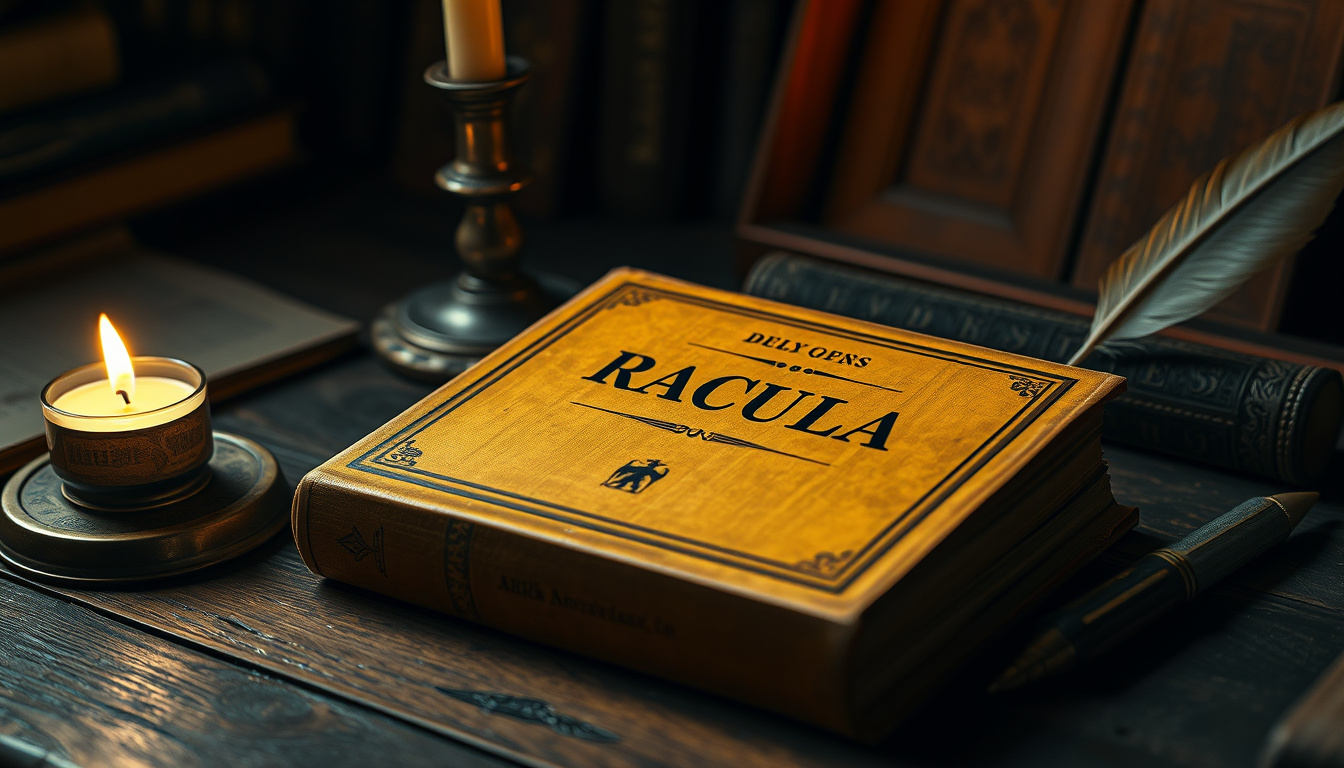
Few names conjure as many shadows as Bram Stoker, yet the man behind the monster had a life every bit as gripping as his fiction. Born in Dublin during the Great Famine and shaped by childhood illness, Stoker would go on to write Dracula — a novel that has haunted readers for more than a century. This article traces his journey from Clontarf to Whitby, unpacks the religious and scholarly debates around his legacy, and explains why a yellow paperback cover still sparks debate today.
Born: 8 November 1847, Clontarf, Dublin ·
Died: 20 April 1912, London ·
Known for: Author of Dracula (1897) ·
Age at death: 64
Quick snapshot
- Born 8 November 1847 in Clontarf, Dublin (Britannica (encyclopedia))
- Died 20 April 1912 in London from exhaustion and brain hemorrhage (Britannica (encyclopedia))
- Published Dracula in 1897 (Britannica (encyclopedia))
- Whether Stoker had syphilis remains unsubstantiated (Ryan Lawrence (literary historian)) (Instagram (social media))
- Exact nature of his relationship with Henry Irving is speculative (Instagram (social media))
- Whether the yellow cover was intentional publishing choice or practical decision is debated (Instagram (social media))
- 1847: Born in Dublin (Britannica (encyclopedia))
- 1871: Began work at Dublin Castle (Dublin Castle (government site))
- 1890: Visited Whitby (Wikipedia (community encyclopedia))
- 1897: Published Dracula (Britannica (encyclopedia))
- Queer interpretations of Dracula continue to evolve in academic and popular criticism (Holden T Walker (queer studies essay))
- Whitby’s Dracula tourism remains a significant economic draw for the town (Holden T Walker (queer studies essay))
| Field | Value |
|---|---|
| Full name | Abraham “Bram” Stoker |
| Birthplace | 15 Marino Crescent, Clontarf, Dublin |
| Born | |
| Education | Trinity College Dublin (BA, MA) |
| Spouse | Florence Balcombe (married 1878) |
| Number of novels | 12 (including Dracula) |
| Dracula published | |
| Died | , London, England |
Where did Bram Stoker live in Dublin?
Bram Stoker’s birthplace: 15 Marino Crescent
- Born at 15 Marino Crescent, Clontarf, a Dublin suburb on the north side of the city (Britannica (encyclopedia))
- His birth coincided with the Great Irish Famine of 1847 (Tourism Ireland (national tourism authority))
- Stoker was a sickly child and spent long periods confined to bed, during which his mother told him Irish ghost stories and folklore — early seeds of the Gothic imagination (Tourism Ireland (national tourism authority))
Education at Trinity College Dublin
- Stoker attended Trinity College Dublin, where he graduated with honours in mathematics (Britannica (encyclopedia))
- He was also president of the University Philosophical Society and an active athlete, winning a prize for sports (Wikipedia (community encyclopedia))
Early career and theatre management
- In August 1871, Stoker began work at Dublin Castle, following his father’s path as a civil servant (Dublin Castle (government site))
- He eventually rose to become Inspector of Petty Sessions, a senior administrative role (Dublin Castle (government site))
- In his spare time he worked as a theatre critic, which led to a fateful meeting with legendary actor-manager Henry Irving (Britannica (encyclopedia))
Two Dublins shaped Stoker: the administrative city of Dublin Castle where he learned discipline, and the mythic city of his mother’s fireside tales. Dracula is the fusion of both.
Why did Bram Stoker go to Whitby?
Whitby’s role in Dracula
- Stoker visited Whitby, a coastal town in North Yorkshire, in the summer of 1890 (Wikipedia (community encyclopedia))
- The town’s dramatic setting — a ruined abbey on a cliff, a harbour with 199 steps, and a graveyard on the headland — became the fictional Count Dracula’s landing point in England (Wikipedia (community encyclopedia))
- In the novel, Dracula comes ashore at Whitby in the form of a dog, then runs up the 199 steps to the graveyard of St Mary’s Church (Wikipedia (community encyclopedia))
The English Heritage connection
- Whitby Abbey’s Gothic ruins, managed by English Heritage (historic buildings conservation body), are described as having “inspired visitors including Bram Stoker”
- The cliffside cemetery and the abbey’s silhouette against the North Sea sky gave Stoker the raw material for his most atmospheric scenes
Real locations that inspired the novel
- Stoker researched local folklore, shipwreck stories, and a real Russian ship called the Demeter that ran aground at Whitby — he used the name and the shipwreck plot point in Dracula (English Heritage (historic buildings conservation body))
- He also borrowed the name “Swales” from a Whitby tombstone for a character in the novel
What illness did Bram Stoker have?
Details of Stoker’s health
- Stoker suffered a series of strokes in his later years, starting around 1911 (Britannica (encyclopedia))
- His childhood illness — which kept him bedridden until around age 7 — was never definitively diagnosed; some historians speculate it may have been a form of rheumatic fever (Tourism Ireland (national tourism authority))
Cause of death
- Bram Stoker died on in London (Britannica (encyclopedia))
- The official cause of death was exhaustion and brain hemorrhage (Britannica (encyclopedia))
Theories about his condition
- Some biographers have speculated that Stoker may have had tertiary syphilis, but this has never been confirmed by medical records and remains a fringe theory (Ryan Lawrence (literary historian))
- No primary-source evidence supports the syphilis claim; it is based on retrospective analysis of his symptoms
Was Bram Stoker Catholic or Protestant?
Stoker’s family religious background
- Bram Stoker was raised in the Church of Ireland, the Anglican (Protestant) denomination in Ireland (Britannica (encyclopedia))
- His father Abraham Stoker was a civil servant; both parents were Protestant
His own religious views
- Stoker’s personal faith is not extensively documented, but he was not known to be a devout churchgoer in adult life
- He was a member of the Freemasons, an organisation that often attracted liberal Protestants in Victorian Dublin
Influence on Dracula
- The novel is saturated with Catholic imagery — crucifixes, holy water, communion wafers — which reflected widespread Protestant anxieties about Catholic ritualism in Victorian Britain (Britannica (encyclopedia))
- Some scholars argue that Dracula represents a Catholic or foreign threat to Protestant English domesticity
Is Dracula a queer story?
Queer subtext in Dracula
- Modern scholars have extensively analysed homoerotic themes in Dracula, particularly in the relationship between Dracula and Jonathan Harker (Holden T Walker (queer studies essay))
- The novel stages “anxieties about sexuality, gender, and taboo desire” in ways that map neatly onto queer theory (Holden T Walker (queer studies essay))
- Lucy and Mina’s relationship can also be read as containing queer romantic or emotional bonds (Andrea Mariana (literary blog))
Historical context: Plato on homosexuality
- Some queer readings of Dracula reference Plato’s Symposium, which discusses same-sex love as a noble form of desire — offering a classical counterpoint to Victorian repression
- Stoker was well-educated in classics at Trinity College Dublin, and would have been familiar with these ideas
Critical interpretations by scholars
- The Berkshire Theatre Group (performing arts organisation) argues that “vampirism can be framed as a metaphor for threats to heteronormative Victorian order”
- Some critics have claimed Stoker himself was a closeted homosexual, but this is interpretive and not a verified biographical fact (Ryan Lawrence (literary historian))
Queer readings enrich Dracula‘s literary value — but they also risk projecting modern identity frameworks onto a Victorian text whose author’s private life remains largely undocumented. The ambiguity may be the point.
Why was Dracula‘s cover yellow?
The first edition cover design
- The first edition of Dracula (1897) was bound in plain yellow cloth with the title in black lettering on the cover and spine (Instagram (social media))
- There was no blood-red fangs or bat silhouettes — the original cover was strikingly simple
Symbolism of yellow in Victorian publishing
- Yellow covers were strongly associated with cheap, sensational fiction in the 1890s — known as “yellow-backs” — sold at railway stations to a mass audience
- By choosing a yellow binding, the publisher (Constable & Co.) was signalling that Dracula was popular entertainment, not literary fiction — a marketing decision, not a symbolic one
Yellow covers in context
- The association of yellow with horror and vampires came later, especially through mid-20th-century pulp paperbacks and film posters
- Modern “iconic yellow cover” images on social media often refer to later reprints, not the original 1897 binding (Instagram (social media))
Timeline
— Born in Clontarf, Dublin (Britannica (encyclopedia))
1864–1870 — Attends Trinity College Dublin, graduates with honours (Britannica (encyclopedia))
1871 — Begins work at Dublin Castle as a civil servant (Dublin Castle (government site))
1878 — Marries Florence Balcombe and becomes business manager of London’s Lyceum Theatre (Britannica (encyclopedia))
1890 — Visits Whitby; begins research for Dracula (English Heritage (historic buildings conservation body))
1897 — Publishes Dracula, his masterpiece (Britannica (encyclopedia))
1911 — Suffers a series of strokes (Britannica (encyclopedia))
— Dies in London; buried at Golders Green Crematorium (Britannica (encyclopedia))
Confirmed facts vs uncertainties
Confirmed facts
- Born 8 November 1847 in Clontarf, Dublin
- Attended Trinity College Dublin
- Married Florence Balcombe
- Visited Whitby in 1890
- Published Dracula in 1897
- Died 20 April 1912 from exhaustion and brain hemorrhage
- Raised in the Church of Ireland
What’s unclear
- Whether he had syphilis (unsubstantiated theory)
- Exact nature of his relationship with Henry Irving
- Whether Dracula was intentionally a queer allegory
- The true motivation for the yellow cover (practical vs. symbolic)
Quotes and sources
“Stoker is best known as the author of the Gothic horror novel Dracula, first published in 1897.”
— Britannica (encyclopedia)
“Whitby Abbey’s Gothic ruins inspired visitors including Bram Stoker.”
— English Heritage (historic buildings conservation body)
“A queer reading of Dracula can frame vampirism as a metaphor for threats to heteronormative Victorian order.”
“Stoker was born in Dublin during the Great Irish Famine in 1847.”
— Tourism Ireland (national tourism authority)
Bram Stoker lived a life of unusual intersections: a Protestant civil servant who managed a London theatre, a sickly boy who grew into a university athlete, an Irishman who set his most famous scene in an English seaside town. The story of his life — and the novel he left behind — is not a simple origin myth but a layered cultural artefact, still being reinterpreted more than a century after his death. For the modern reader, the choice is clear: read Dracula as a Victorian ghost story, a queer allegory, a religious panic novel, or all three — the text welcomes every interpretation Stoker’s life made possible.
Frequently asked questions
What is Bram Stoker’s full name?
Abraham “Bram” Stoker.
How many books did Bram Stoker write?
He wrote 12 novels, including Dracula, The Jewel of Seven Stars, and The Lair of the White Worm, along with several short story collections.
Did Bram Stoker ever meet Dracula?
No — Dracula is a fictional character. However, Stoker was inspired by the historical Vlad the Impaler, a 15th-century Wallachian ruler.
Was Bram Stoker rich?
He was not wealthy. His salary as a theatre manager and later as a writer provided a comfortable middle-class life, but he died with modest means.
What was Bram Stoker’s job?
He worked as a civil servant at Dublin Castle, then as a theatre critic and later as business manager of London’s Lyceum Theatre.
When did Bram Stoker write Dracula?
He wrote Dracula between 1890 and 1897, publishing it in May 1897.
Why is Bram Stoker famous?
He is famous as the author of Dracula, the most iconic vampire novel in literary history.
Did Bram Stoker have children?
Yes — he had one son, Irving Noel Thornley Stoker, born in 1879.
For readers and scholars alike, Bram Stoker remains a figure of enduring fascination — not despite the ambiguities in his biography, but because of them. The unanswered questions — about his health, his relationships, his intentions — keep his story alive in the same way Dracula himself refuses to stay dead.

Craig Newton is Senior Reporter at ScopePress.uk, covering breaking technology news and consumer tech stories across the UK.