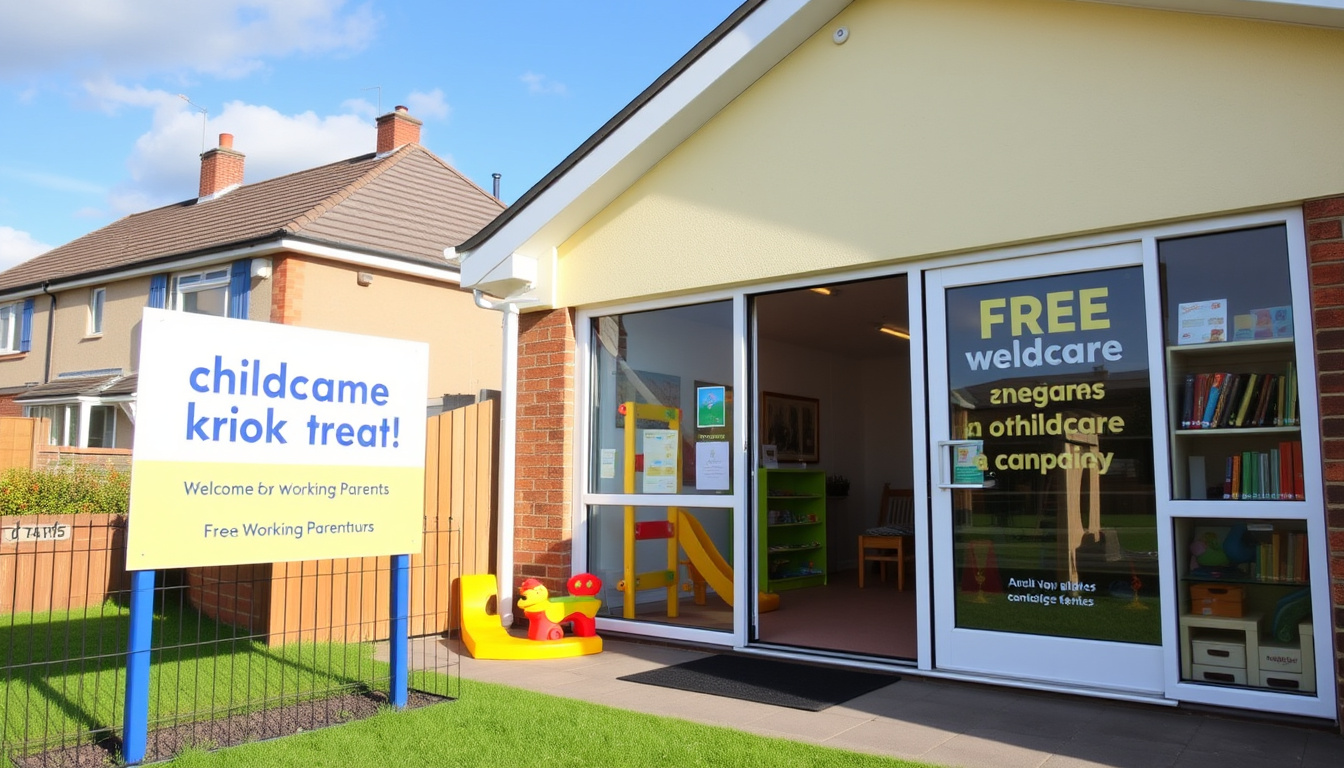
Childcare costs have a way of catching parents off guard, even when you’ve planned ahead. The good news is that both the UK and Ireland offer government-funded schemes that can sharply reduce nursery bills for working families — but the rules, ages, and amounts differ in key ways.
UK free childcare hours per week: 30 hours (term-time stretched over 52 weeks) ·
UK child age eligibility: 9 months to 4 years (expanded from April 2025) ·
Ireland NCS universal subsidy per hour: €2.14 (max 45 hours/week) ·
Ireland ECCE free pre-school hours: 3 hours/day, 5 days/week (15 hours/week) ·
Estimated number of eligible children in UK: Over 2 million (2025) ·
UK minimum weekly earnings per parent: £152 (under £100,000 adjusted net income)
Quick snapshot
- UK eligibility: income £152 – £100,000 per parent, child aged 9 months to 4 years (GOV.UK Education Hub (official guidance))
- Ireland NCS universal subsidy is €2.14 per hour for up to 45 hours/week (Citizens Information Ireland (official service))
- Future UK expansion beyond April 2025 – further rollouts may be announced
- Exact nursery top‑up fees after free hours – vary by provider
- Potential changes to NCS subsidy rates after budget adjustments
- April 2025: 30 hours free childcare fully expanded to cover 9‑month‑olds to 4‑year‑olds in England
- January 2026: NCS universal subsidy rate set at €2.14/hour
- UK parents must apply by 31 December 2025 for January 2026 30‑hour codes
- Ireland NCS applications open year‑round via ncs.gov.ie
The table below highlights the main differences between UK and Ireland childcare schemes.
| Metric | UK (England) | Ireland |
|---|---|---|
| Maximum free hours per week | 30 hours (term‑time, 38 weeks) | NCS: up to 45 hours subsidised at €2.14/hr ECCE: 15 hours free |
| Child age range | 9 months to 4 years | NCS: 6 months to 15 years ECCE: 2 years 8 months to 5 years |
| Income requirement (per parent) | £152 – £100,000 adjusted net income | NCS universal: no income limit; means‑tested top‑up available |
| Minimum earnings | £152/week (16h at NMW from April 2025) | Not applicable for universal subsidy |
| Self‑employed eligible? | Yes (if earning ≥ threshold; start‑up exception first 12 months) | Yes |
| Provider types | Registered nurseries, childminders, schools | Registered childminders and centre‑based childcare |
| Application platform | GOV.UK (30‑hour code) | ncs.gov.ie (NCS) |
Who is eligible for 30 hours free childcare in the UK?
To claim the 30 free hours in England, both parents (or the sole parent in a single‑parent household) must be working and earning at least the equivalent of 16 hours a week at the National Minimum Wage. From April 2025 that works out to £195 per week or £10,158 a year, according to GOV.UK Education Hub (official government guidance).
Income and employment requirements
Each parent’s adjusted net income must stay under £100,000. If either parent earns above that, the family loses eligibility entirely. The minimum earnings floor varies by age:
- Under 18 or apprentice: £1,570.40 before tax over 3 months
- 18–20: £2,080 over 3 months
- 21 and over: £2,539.68 over 3 months
These thresholds come from Angel Advance (debt advice service, citing official figures).
What about self‑employed?
Self‑employed parents qualify on the same income basis, but there’s a helpful concession: if you started your business less than 12 months ago, you can earn less and still be eligible, per GOV.UK (eligibility checker, official).
The implication: eligibility is tight but the hours are substantial for those who qualify.
What are the age requirements for free childcare in the UK and Ireland?
Age rules are where the two countries diverge most sharply.
UK: 9 months to 4 years
From April 2025, children in England qualify for 30 free hours from the age of 9 months up to the August after their 4th birthday, according to GOV.UK Education Hub (official rollout timeline). The expansion rolled out in phases: 15 hours for 2‑year‑olds from April 2024, then 15 hours for 9‑month‑olds from September 2024, and finally 30 hours for the full 9‑month‑to‑4‑year bracket from September 2025.
Ireland: ECCE for pre‑school children
The Early Childhood Care and Education (ECCE) scheme provides 15 hours a week of free pre‑school for children aged 2 years 8 months to 5 years. It operates during school terms and is funded by the Irish government, as Citizens Information Ireland (official public service) explains.
NCS universal subsidy: wider age band
The National Childcare Scheme covers children from 6 months to 15 years. The universal subsidy of €2.14 per hour applies regardless of income, up to 45 hours per week. For lower‑income families, a means‑tested subsidy can go higher – details on Citizens Information Ireland (NCS page).
The catch: ECCE and NCS hours cannot be stacked. If your child is in ECCE (15 free hours), you can use NCS for additional wrap‑around care, but the subsidy applies only to the extra hours.
How much will nursery cost with 30 free hours?
The 30 hours are not fully free in practice. They cover only term‑time – 38 weeks – unless your provider agrees to stretch them over 52 weeks (fewer hours per week). All extra hours, meals, nappies, and enrichment activities are charged at the nursery’s usual rate.
What parents still pay
Nursery top‑up fees vary wildly. A full‑time nursery place in England (50 hours/week) costs on average £250–£350 per week. After the 30 free hours, you typically pay for the remaining hours plus consumables. Some nurseries also add admin fees.
Comparing nanny vs nursery costs
Nannies charge roughly £10–£15 per hour. A full‑time nanny (40 hours/week) runs £400–£600 per week. Nursery, even with free hours, often costs £250–£350 per week for the same hours. Nannies offer one‑to‑one care and flexibility, but they are almost always more expensive for equivalent usage.
Using tax‑free childcare with free hours
You can combine 30 free hours with the UK tax‑free childcare scheme: the government tops up every £8 you pay with an extra £2, up to £2,000 per child per year (or £4,000 for disabled children). This applies to the fees you pay after the free hours, per GOV.UK (tax‑free childcare, official).
What this means: parents must budget for significant additional costs beyond the funded hours.
Can you get free childcare in Ireland?
Yes – through two separate schemes managed by the Department of Children, Equality, Disability, Integration and Youth.
National Childcare Scheme (NCS) subsidies
The NCS offers a universal subsidy of €2.14 per hour for up to 45 hours per week, available to all parents regardless of income. For families on lower earnings, a means‑tested subsidy can reach higher amounts. Applications are online at ncs.gov.ie (official NCS portal).
ECCE free pre‑school scheme
The ECCE scheme provides 15 hours per week of free pre‑school during school terms for children aged 2 years 8 months to 5 years. It’s funded by the Irish government and delivered by participating services – full details at Citizens Information Ireland (ECCE guide).
Free fees scheme for further education (not childcare)
A quick note: Ireland’s “free fees scheme” applies to third‑level tuition, not childcare. Don’t confuse the two.
The trade‑off: Ireland’s universal subsidy is an hourly discount, not free hours. You still pay the provider hourly rate minus €2.14. Means‑tested top‑ups can narrow the gap, but full‑time care for a baby may still cost €200–€300 per week.
How do you apply for free childcare?
Application processes differ completely between the UK and Ireland.
Applying for 30 hours in the UK
- When: You can apply from the time your child is 23 weeks old.
- What you need: National Insurance number, tax credits or Universal Credit details, and a bridging code if you’re moving from 15 to 30 hours.
- Where: GOV.UK (free childcare application portal)
- Deadline: For January 2026 start, apply by 31 December 2025.
- Result: You receive a code to give to your nursery or childminder. Reconfirmation every 3 months is required.
Applying for NCS in Ireland
- When: Year‑round; no deadline.
- What you need: PPS number, child’s birth certificate, and details of your chosen provider.
- Where: ncs.gov.ie (official NCS application portal)
- Result: Approval typically within 2 weeks. Subsidy vouchers are sent directly to the provider.
Documents needed
Both countries require proof of identity, income, and the child’s age. UK applicants need a National Insurance number; Irish applicants need a PPS number. Self‑employed parents may need to show recent tax returns.
UK families face a stricter income cap (£100k per parent) but get up to 30 genuinely free hours – albeit term‑time only. Irish families get a per‑hour discount with no cap, but can still face hefty top‑ups unless they qualify for means‑tested subsidy.
The pattern: application timing and documentation are critical; missing a UK deadline can delay access by a whole term.
Timeline: key dates in childcare expansion
The free childcare landscape has shifted fast since 2023. Here is a chronological overview.
- September 2023: UK extends free childcare to 2‑year‑olds from 15 to 30 hours (if eligible)
- April 2024: 15 hours free childcare for working parents of 2‑year‑olds begins
- September 2024: 15 hours free childcare for working parents of 9‑month‑olds begins
- April 2025: 30 hours free childcare for all eligible children from 9 months to 4 years
- 2010: Ireland introduces ECCE free pre‑school scheme
- November 2019: Ireland launches National Childcare Scheme (NCS)
- January 2026: NCS universal subsidy rate set at €2.14 per hour
The pattern: the UK has front‑loaded generous weekly hours in a short time, while Ireland relies on a long‑standing hourly subsidy that is more flexible but less generous per week.
What is confirmed and what is still unclear
Confirmed facts
- UK eligibility criteria: income thresholds £152–£100,000 per parent
- Ireland NCS universal subsidy rate €2.14 per hour as of 2026
- ECCE scheme provides 15 hours per week for pre‑school children
What’s unclear
- Future UK expansion beyond April 2025 (further rollouts may be announced)
- Potential changes to NCS subsidy rates after budget adjustments
- Exact nursery top‑up fees after free hours – vary by provider
You must be working and earning at least £152 a week – and each parent’s adjusted net income must be under £100,000 – to qualify for 30 hours free childcare in England.
GOV.UK (official eligibility page)
The universal subsidy is available to parents of any income level – it covers €2.14 per hour up to 45 hours per week.
Citizens Information Ireland (official NCS guide)
If you apply late for UK 30‑hour codes, you could miss a whole term. And in Ireland, means‑tested NCS applications require careful income documentation – a mistake can delay approval by weeks.
Upsides
- UK 30 free hours can save families £150–£250 per week per child
- Ireland NCS universal subsidy works for all incomes
- ECCE gives 15 free pre‑school hours regardless of employment status
- Both countries allow combining subsidies with tax‑free childcare or sibling discounts
Downsides
- UK 30 hours are term‑time only – parents still pay for school holidays
- Ireland’s €2.14/hour subsidy may not cover even half of nursery fees in Dublin
- Income cap in UK (£100k) eliminates families who slightly overshoot
- Application reconfirmation cycles can create gaps if paperwork lags
Summary: what the numbers mean for your family
The choice between UK and Ireland schemes isn’t about one being “better” – it’s about your family’s actual pattern of hours, income, and location. UK working families with two earners under £100k and a child aged 9 months to 4 years get the most generous raw hours. Irish families, especially those outside the means‑tested bracket, still face a meaningful gap between the subsidy and real costs. For a dual‑income household in London with a 2‑year‑old, the 30 free hours plus tax‑free childcare can cut the nursery bill by nearly half – but only if you apply before the deadline and check that your provider accepts the stretched model. In Dublin, the combination of NCS and ECCE can reduce a full‑time weekly bill from €350 to about €200, provided you use registered childcare and apply for the means‑tested top‑up.
The implication: careful planning and timely applications are essential to maximise support in either country.
For a detailed comparison of the UK and Ireland schemes, see free childcare for working parents which outlines eligibility and application steps.
Frequently asked questions
Can I get 30 free hours if I work part‑time?
Yes – as long as you earn at least £152 per week (equivalent to 16 hours at National Minimum Wage) and have adjusted net income under £100,000.
What happens if I earn over £100,000 in the UK?
You lose eligibility entirely. There is no graded reduction – it’s an all‑or‑nothing cap.
Can I use 30 free hours with a childminder?
Yes – as long as the childminder is registered with Ofsted and accepts the funding. Most do.
Does the NCS cover childminders in Ireland?
Yes – childminders registered with Tusla can accept NCS subsidies.
Is there free childcare for 1‑year‑olds in Ireland?
There is no universal free‑hour scheme for 1‑year‑olds, but the NCS universal subsidy (€2.14/hour) applies from 6 months of age.
How do I check my eligibility for 30 hours free childcare?
Use the official GOV.UK eligibility checker: GOV.UK eligibility tool
Can I combine 30 free hours with tax‑free childcare?
Yes – and it’s recommended. The tax‑free scheme tops up your paid fees by 20%, which can cover the extras the free hours don’t.
What documents do I need to apply for NCS?
You need your PPS number, your child’s PPS number and birth certificate, and details of your chosen childcare provider.
Related stories





George Pemberton is Consumer & Gaming Correspondent at ScopePress.uk, covering gaming, smart home and connectivity.