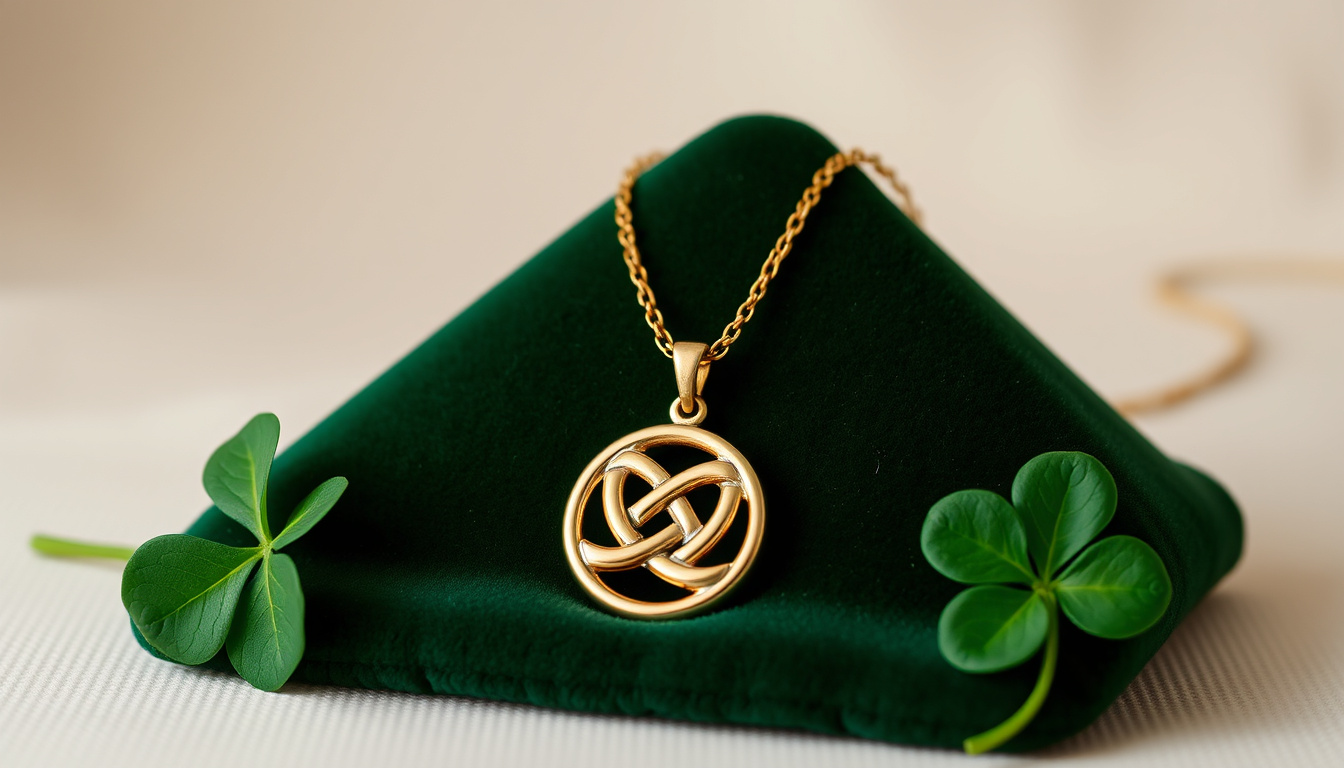
Gold necklaces have topped Irish jewellery wish lists for centuries, and the reason is more than just how they catch the light. From 9ct standards to hallmarking rules, this guide breaks down every decision so you can buy with confidence in Ireland.
Gold purity range: 9K to 24K (karat) ·
Common necklace lengths: 16 to 30 inches ·
Average weight for women’s gold chain: 2–10 grams ·
Hallmarking requirement in Ireland: Assay Office Dublin hallmark since 1637
Quick snapshot
- Irish law requires compulsory hallmarking for all gold articles with no weight exemption (Dublin Assay Office official legislation page)
- 9ct gold is 37.5% pure gold (375 parts per thousand) (Irish Statute Book official legislation)
- Dublin Assay Office has operated from Dublin Castle since 1637 (Dublin Assay Office official site)
- Exact average price of gold necklaces in Ireland fluctuates with spot gold market
- Long-term durability differences between 9K and 14K for everyday wear lack controlled studies
- Dublin Assay Office hallmarking dates back to 1637, continuous operation (Dublin Assay Office official site)
- Hallmarking Act 1981 codified Irish fineness standards (Irish Statute Book official legislation)
- Irish consumers can check any gold necklace for the Hibernia mark to verify official hallmarking
- Online retailers increasingly offer hallmark-certified gold with free shipping across Ireland
Four key gold properties worth knowing before you buy:
| Property | Value |
|---|---|
| Gold melting point | 1064°C |
| Gold density | 19.32 g/cm³ |
| Current gold spot price (approx) | $60 per gram (24K) |
| Minimum gold content for hallmark in Ireland | 9K (375 parts per thousand) |
What gold necklaces are best for men?
Men’s gold chain styles
- Curb chain: Uniform interlocking links, flat profile — popular for everyday wear. Thickness ranges from 2mm to 6mm. Men tend to prefer 3–5mm for a visible but not overpowering look.
- Rope chain: Twisted links create a textured, rope-like appearance. Heavier and more reflective, often chosen for pendants. A 3–4mm rope is a common starting point for men.
- Figaro chain: Pattern of three short links followed by one long link. Distinctive and classic, typically worn in yellow gold at 3–5mm width.
- Singapore chain: Twisted V-shaped links that lie flat. Modern and sleek, usually 2–4mm wide.
The choice of style largely comes down to personal preference and how the chain will be worn. A curb chain offers the most versatile everyday look, while a rope chain delivers more visual texture for the same weight. According to Martin Gear Jewellers (Irish family-run jeweller), the clasp is often the first point of wear on a chain — a lobster clasp provides the most secure closure for daily use.
Recommended lengths for men
- 20–22 inches (princess length): The most common length for men’s gold chains. Sits at or just below the collarbone, works over most necklines.
- 24 inches (matinee length): Falls to the upper chest, suits taller men or those who prefer a lower-hanging chain.
- 18–20 inches (choker range): Less common for men but worn with tighter collars or for a closer fit.
A 20-inch chain is the default recommendation for most men. It balances visibility with comfort and works with both open and closed collars.
Gold necklace weight for men
- Light chains (3–6 grams): Suitable for 9ct gold at 2–3mm width. Affordable, comfortable for daily wear, and less likely to feel heavy.
- Medium chains (7–12 grams): The sweet spot for men’s 14K or 18K chains at 3–4mm. Substantial without being bulky.
- Heavy chains (13–25 grams): Solid, weighty feel at 4–6mm width. Typically chosen for 9ct or 10K to keep the price manageable.
The trade-off: a heavier chain feels more substantial but costs more and may cause neck fatigue over long wear. For a first gold necklace, most men in Ireland start with a 9ct curb chain in the 5–8 gram range.
Where can I buy gold necklaces in Ireland?
Online vs physical stores
- Physical stores: You can inspect the hallmark, try the length, and feel the weight before buying. Irish high-street jewellers typically stock 9ct and 18K gold necklaces across a range of styles.
- Online stores: Wider selection of lengths, styles, and purity levels. Many Irish online jewellers offer free shipping and returns. The key is verifying the hallmark before purchase — every gold necklace sold in Ireland must carry an official Irish or EU-approved hallmark (The Irish Times (Ireland’s leading daily newspaper)).
Dublin Assay Office (Ireland’s official hallmarking authority) confirms that all precious metal articles sold in the State must bear an Irish hallmark, an International Convention hallmark, or an approved EU member state hallmark providing equivalent information. This applies equally to online and physical purchases.
Popular Irish jewelers
- Keanes Jewellers (Cork): Long-established family-run store with a wide range of 9ct and 18K gold chains. Known for personal service and hallmark certification.
- Fields Jewellers (Dublin): Multiple locations across Dublin, strong selection of men’s and women’s gold necklaces. Stock includes both 9ct and 18K options.
- One Dame Lane (Dublin): Specialist in fine jewellery, including solid gold necklaces with Irish hallmarks. Known for curated collections.
- Martin Gear Jewellers (Waterford): Family-run jeweller with a detailed guide on gold hallmarks and purity (Martin Gear Jewellers (Irish family-run jeweller)).
- Biddy Murphy (Cork): Irish jewellery designer offering hallmark-certified pieces with a focus on craftsmanship (Biddy Murphy (Irish jewellery designer)).
Hallmarking requirements
- Compulsory for all gold items: No weight exemption exists in Ireland — every gold necklace must be hallmarked (Dublin Assay Office (Ireland’s official hallmarking authority)).
- Three compulsory symbols: Maker’s or sponsor’s mark, Hibernia assay office mark, and metal/fineness mark (Dublin Assay Office PDF).
- Fineness marks: Irish law recognises 375, 417, 585, 750, 833, 916, 990, and 999 (Dublin Assay Office (Ireland’s official hallmarking authority)).
- Optional date letter: Changes on 1 January each year, allows you to identify the year of assay (Dublin Assay Office (Ireland’s official hallmarking authority)).
The implication: every gold necklace sold in Ireland — whether online or in-store — must carry these marks. If a seller cannot show a clear hallmark, the item is not legally compliant. The Hibernia symbol is the easiest quick check for Irish shoppers.
What is the difference between 9ct and solid gold necklaces?
Gold purity explained
- 9ct gold (375): 37.5% pure gold, 62.5% alloy metals. The most common gold standard in Ireland. Durable and affordable, used for everyday jewellery (Martin Gear Jewellers (Irish family-run jeweller)).
- 14ct gold (585): 58.5% pure gold. A good balance of purity and durability. Less common in Irish high-street jewellery but available from specialist retailers.
- 18ct gold (750): 75% pure gold. Richer colour, softer, more expensive. Preferred for fine jewellery and pieces worn less frequently.
- 22ct gold (916): 91.7% pure gold. Very soft, traditionally used for wedding bands and investment pieces.
- 24ct gold (999): 99.9% pure gold. Too soft for most necklace applications — primarily used for bullion and investment.
Irish Statute Book (official Irish legislation) defines the 9ct gold standard as 375 parts fine gold per 1,000 parts by weight, with the approved hallmark mark being the figure 375 in a rectangular shield with chamfered corners.
Durability and price trade-offs
- 9ct gold: Hardest of the common purities, resists scratches and dents. Best for daily wear, active lifestyles, and men’s chains. Lower cost per gram.
- 14ct gold: Softer than 9ct but still durable for regular wear. Richer gold colour. Moderate price point.
- 18ct gold: Noticeably softer. Shows wear over time with daily use. Higher price per gram, richer colour. Better for special-occasion pieces.
A GIA-trained jewellery expert notes that 18K gold is recommended for pieces worn daily, while 9K is better suited for active individuals who want the necklace to last without constant maintenance. The trade-off is colour saturation versus durability.
Is 9ct gold considered solid gold?
- Solid gold vs hollow: “Solid gold” means the piece is made of gold alloy throughout, with no hollow areas — not that it is pure gold. A 9ct solid gold necklace is solid metal, not hollow.
- 9ct is real gold: Yes — 9ct gold is legally recognised as gold in Ireland and the UK. It contains 37.5% pure gold by weight.
- Market distinction: In Ireland, “solid gold” often refers to 9ct, 14K, or 18K pieces that are made entirely of gold alloy (not plated or filled). Always check the hallmark for the exact fineness.
Biddy Murphy (Irish jewellery designer) explains that a full hallmark contains the sponsor’s mark, standard mark, fineness mark, assay office mark, and date letter — giving you the full picture of what you’re buying.
Six gold purity levels, one pattern: higher karat means richer colour but softer metal, while lower karat means better durability and lower cost.
| Karat | Fineness mark | % gold | Colour | Durability | Best for |
|---|---|---|---|---|---|
| 9K | 375 | 37.5% | Light yellow | Very high | Daily wear, men’s chains |
| 10K | 417 | 41.7% | Light yellow | High | Active lifestyle, budget-friendly |
| 14K | 585 | 58.5% | Yellow | Moderate | Everyday fine jewellery |
| 18K | 750 | 75% | Rich yellow | Moderate-low | Special occasions, heirloom pieces |
| 22K | 916 | 91.7% | Deep yellow | Low | Wedding bands, investment |
| 24K | 999 | 99.9% | Bright yellow | Very low | Bullion, investment |
Upsides
- Gold necklaces retain resale value, especially at higher purities
- 9ct gold is highly durable for daily wear and resistant to scratches
- Irish hallmarking guarantees the gold content is independently verified
- Gold is hypoallergenic — suitable for most skin types, even at 9ct
- Wide style range from classic curb chains to modern Singapore links
Downsides
- Higher purities (18K+) are soft and prone to scratching with daily wear
- Gold price fluctuates with the spot market, making budgeting harder
- 9ct gold has a lighter colour than 18K or 24K, which some find less appealing
- Heavier solid gold chains can be expensive, especially at 14K and above
- Resizing a gold necklace is possible but not always straightforward for certain chain styles
Confirmed facts vs what’s unclear
Confirmed facts
- Gold purity measured in karats is a well-established standard, with 9ct being 375 parts per thousand (Irish Statute Book official legislation)
- Irish hallmarking is required by law for all precious metal items with no weight exemption (Dublin Assay Office official legislation page)
- Gold necklaces can be resized by jewelers, though the process varies by chain style
- The Hibernia symbol is the official assay office mark for Ireland (The Irish Times (Ireland’s leading daily newspaper))
- Dublin Assay Office has operated continuously from Dublin Castle since 1637 (Dublin Assay Office official site)
What’s unclear
- Exact average price of gold necklaces in Ireland due to daily fluctuations in the spot gold market
- Long-term durability differences between 9K and 14K for everyday wear — no controlled studies exist
- Whether the optional date letter on hallmarks will be retained or phased out under future EU harmonisation
What the experts say
18K gold is a beautiful choice for a piece you wear daily — its rich colour and purity are unmatched. But for someone who works with their hands or leads an active lifestyle, 9K is the smarter choice. It’s significantly harder and will hold up better over time.
— GIA-trained jewellery expert, Dublin
The Irish hallmark gives consumers confidence that what they’re buying is exactly what it claims to be. Every hallmark is a guarantee — the metal has been independently tested and certified by the Assay Office.
— Dublin Assay Office, official statement
When you buy a gold necklace online, always ask for a photo of the hallmark stamp. If the seller can’t provide one, that’s a red flag. A legitimate Irish jeweller will be proud to show the Hibernia mark.
— Martin Gear Jewellers, Waterford
For Irish shoppers, the choice between 9ct and 18K gold comes down to a single question: how often will you wear it? Daily wearers get the best value from 9ct — it is durable, hallmarked, and affordable. For a special gift or a piece worn on occasion, 18K offers a richer colour and higher gold content. The common thread is the hallmark: every gold necklace sold in Ireland must carry it, and that mark is your independent guarantee of quality.
For the man looking for a first gold chain in Dublin, the recommendation is straightforward: a 9ct curb chain at 20 inches, 3–4mm wide, with a lobster clasp. For the woman shopping for a solid gold necklace online, 14K or 18K at 18 inches with a fine curb or Singapore link offers elegance and lasting value. The choice is ultimately about how the piece fits into your life — not just what it looks like in the store.
Related reading: **Double Bed Sizes & Buying Guide Ireland 2025** · **Bar Bar Stool in Ireland: Compare IKEA, JYSK & More**
irishstatutebook.ie, irishstatutebook.ie, civicpost.co.uk, assay.ie, assay.ie
Frequently asked questions
How to clean a gold necklace?
Mix warm water with a few drops of mild dish soap. Soak the necklace for 10–15 minutes, then gently brush with a soft toothbrush. Rinse with clean water and dry with a soft cloth. Avoid harsh chemicals and ultrasonic cleaners for delicate chains.
Can gold necklaces get wet?
Yes — gold is not damaged by water. However, frequent exposure to chlorinated water (swimming pools) or salt water can dull the finish over time. It is best to remove your gold necklace before swimming, showering, or applying lotions.
Is it safe to wear gold necklace every day?
Yes, especially if you choose 9ct or 14K gold. These purities are durable enough for daily wear. For active lifestyles, 9ct is the most practical choice. Remove the necklace before heavy physical activity to avoid tangling or stress on the clasp.
Do gold necklaces turn skin green?
Pure gold does not react with skin. However, the alloy metals in 9ct gold (such as copper or nickel) can sometimes cause a mild reaction in people with sensitive skin. This is uncommon and usually resolves by switching to a higher purity like 14K or 18K.
What is the best gold necklace for a man’s wedding band?
Many Irish men choose a 9ct or 14K gold chain in a curb or rope style at 20 inches to pair with a wedding band. The chain should be thick enough to hold a ring (3–4mm minimum). A lobster clasp is recommended for security.
How to tell if a gold necklace is real?
Check for the hallmark stamp. In Ireland, every gold necklace must carry the Hibernia symbol, a fineness mark (e.g., 375 for 9ct), and a maker’s mark. If there is no hallmark, the item is not legally compliant. A jeweller can also test the metal with an electronic tester.
Can I return a gold necklace in Ireland?
Most Irish jewellers offer a 14–30 day return policy on unworn gold necklaces with the original packaging and hallmark intact. Online purchases are covered by the Consumer Rights Directive, which gives you 14 days to cancel from the date of delivery.

Craig Newton is Senior Reporter at ScopePress.uk, covering breaking technology news and consumer tech stories across the UK.