Most people today know the name Mansa Musa from internet memes about the richest person in history, but behind the viral comparisons lies a real medieval ruler whose reign marked the golden age of the Mali Empire. Historians at Britannica (encyclopedic reference) describe him as a leader whose pilgrimage to Mecca in 1324 remains one of the most extravagant journeys ever recorded, and this piece pulls together the evidence to separate the man from the legend.
Estimated net worth (inflation-adjusted): $400 billion to $600 billion ·
Reign: 1312–1337 ·
Pilgrimage gold distributed: approximately 18 tons ·
Empire area at peak: Largest in West Africa ·
Lifespan: c. 1280 – c. 1337
Quick snapshot
- Ruled the Mali Empire from 1312 to 1337 (BBC Bitesize (educational resource))
- Undertook a famous hajj to Mecca in 1324 (BBC (news analysis))
- Built the Great Mosque of Timbuktu (Northwestern Magazine (university publication))
- Exact net worth in modern dollars is speculative (BBC (caution on estimates))
- Year of death debated: 1332 or 1337 (Qiraat Africa (historical source))
- Extent of personal vs state gold holdings unknown (BBC (caution on estimates))
- c. 1280: Birth (Qiraat Africa)
- 1312: Becomes Mansa (BBC Bitesize)
- 1324: Pilgrimage to Mecca (Britannica)
- 1324–1325: Goldsmithing and building projects; inflation in Cairo (BBC)
- 1337: Death (sources vary) (Wikipedia)
- Ongoing scholarly debate about his exact wealth
- Growing public curiosity fueled by comparisons to modern billionaires
- Mali’s cultural heritage tourism referencing Musa’s legacy
The very thing that made Mansa Musa famous — his generosity during the hajj — also caused a gold inflation in Cairo that took over a decade to correct. The same wealth that bought him fame temporarily devalued the currency of entire cities.
These key facts provide a quick reference for Mansa Musa’s biography.
| Attribute | Detail |
|---|---|
| Full name | Mansa Musa I (Musa Keita) |
| Title | Mansa (Emperor) of the Mali Empire |
| Born | c. 1280 |
| Died | c. 1337 |
| Predecessor | Abubakari II |
| Successor | Maghan I |
| Religion | Islam (Sunni) |
| Dynasty | Keita dynasty |
What was Mansa Musa famous for?
Role as ninth Mansa of the Mali Empire
Mansa Musa was the ninth ruler of the Mali Empire, ascending in 1312 after his predecessor Abubakari II reportedly embarked on an Atlantic expedition. Under his leadership, the empire reached its greatest territorial extent, spanning parts of modern-day Mauritania, Mali, Senegal, and other West African states (Northwestern Magazine (university publication)). He controlled key trans-Saharan trade routes and the region’s richest gold and salt mines.
Grandnephew of Sundiata Keita
Musa was the grandnephew of Sundiata Keita, the founder of the Mali Empire. This lineage placed him within the Keita dynasty, giving him both legitimacy and a responsibility to expand what his ancestor had built.
Expansion of empire and cultural patronage
During his reign, Musa transformed Timbuktu into a center of Islamic scholarship, building the Great Mosque (Djinguereber) and supporting universities and libraries. Britannica (encyclopedic reference) notes that he left a realm famed for its extent and riches.
The implication: Musa’s fame is not just about his personal wealth — it’s about how he used state resources to build lasting institutions that made Mali a cultural powerhouse.
How much is Mansa Musa worth today?
Estimates from historians and economists
The BBC reports that some estimates place Mansa Musa’s fortune at around $131 billion in modern terms, while others suggest a range of $400 billion to $600 billion when adjusted for inflation and purchasing power (BBC (news analysis)). The wide gap reflects the difficulty of converting medieval gold holdings into today’s financial system. Britannica (encyclopedic reference) calls him widely considered the wealthiest person in history.
Inflation-adjusted figures
Economists argue that any modern conversion is misleading because Musa controlled resources — gold, salt, trade routes — whose value fluctuated locally and had no global market. The Oxford Global History of Capitalism (academic paper) notes that Mali’s material wealth was in gold, but Musa’s greatest contribution was intangible: he built a network of knowledge and faith.
Comparison with modern billionaires
Even the lowest estimates place Musa far above today’s richest individuals. For instance, Elon Musk’s net worth hovers around $200 billion. Mansa Musa’s potential $400–600 billion would dwarf that. However, BBC (news analysis) explicitly cautions against treating these numbers as a straightforward net-worth calculation — Musa’s wealth was not liquid nor easily separable from the state treasury.
The catch: the more we try to pin a number on Mansa Musa, the more we realize that his power came from control over production and trade, not a bank account. That’s a fundamentally different kind of wealth.
Who’s richer, Mansa Musa or Elon Musk?
Eight rows, one pattern: the comparisons are flawed but revealing.
| Dimension | Mansa Musa | Elon Musk |
|---|---|---|
| Estimated peak wealth | $400 billion – $600 billion | ~$200 billion (2024) |
| Source of wealth | Gold and salt mines, trade routes | Equity in Tesla, SpaceX, X |
| Economic system | Medieval tribute & state treasury | Modern market capitalization |
| Liquidity | Low (resources, not cash) | High (public stock) |
| Impact on economy | Caused inflation by giving gold away | Influences tech sectors and markets |
| Historical context | Controlled ~50% of world’s gold supply | No such monopoly |
| Geographic scope | West Africa and trans-Saharan network | Global, but tied to US markets |
| Recognition | Legendary, often called richest ever | Billionaire status, widely known |
The trade-off: Mansa Musa’s wealth was concentrated in real commodities and territorial control, while Musk’s wealth is paper value tied to corporate performance. In a crisis, Musa could feed and arm an empire; Musk would see his net worth vanish with stock prices. The comparison illustrates how wealth definitions change across eras.
Wealth comparison metrics
When adjusting for inflation, Musa’s gold holdings would represent an enormous share of global GDP at the time. Modern billionaires control a much smaller fraction of global economic output.
Mansa Musa’s control of gold vs modern asset valuation
Musa controlled the Bambuk, Bure, and Galam goldfields, which produced the majority of gold used in North Africa and Europe. No modern billionaire controls such a dominant share of any commodity.
Adjusting for historical context
Historians emphasize that comparing pre-modern rulers to contemporary figures is ultimately an apples-to-oranges exercise. The BBC (news analysis) warns that modern net worth calculations obscure the very different economic structures of medieval empires.
Was Mansa Musa a good king?
Achievements in governance and infrastructure
Musa oversaw a golden age of trade, architecture, and learning. He built schools, libraries, and mosques, transforming Timbuktu into a world-renowned center of Islamic scholarship. Britannica (encyclopedic reference) notes the Great Mosque of Timbuktu as a lasting monument of his reign.
Musa’s investment in education and architecture outlasted his gold. The Sankore University and Djinguereber Mosque turned Timbuktu into a beacon of learning that attracted scholars from across the Islamic world for centuries.
Religious devotion and patronage of scholarship
A devout Sunni Muslim, Musa’s pilgrimage itself was an act of faith. He used the hajj to display Mali’s power and devotion, and upon return, he sponsored religious scholars and built mosques. The Oxford Global History of Capitalism (academic paper) describes his intangible contribution as equally significant as his material wealth.
Criticisms and controversies
The main criticism concerns the economic disruption caused by his pilgrimage. According to al-Umari, an Egyptian historian who wrote about Musa’s visit to Cairo, the emperor gave away so much gold that its value dropped and took more than a decade to recover. This suggests his generosity, while impressive, had unintended consequences for local economies. Additionally, historical records offer limited detail on how he treated his subjects or governed internally.
The pattern: Musa’s legacy as a “good king” rests on his patronage of culture and religion, but the economic fallout of his generosity complicates the picture. A ruler who could tank an entire city’s gold market with a single visit was both magnanimous and destabilizing.
How did Mansa Musa’s pilgrimage affect economies?
The 1324 hajj and distribution of gold
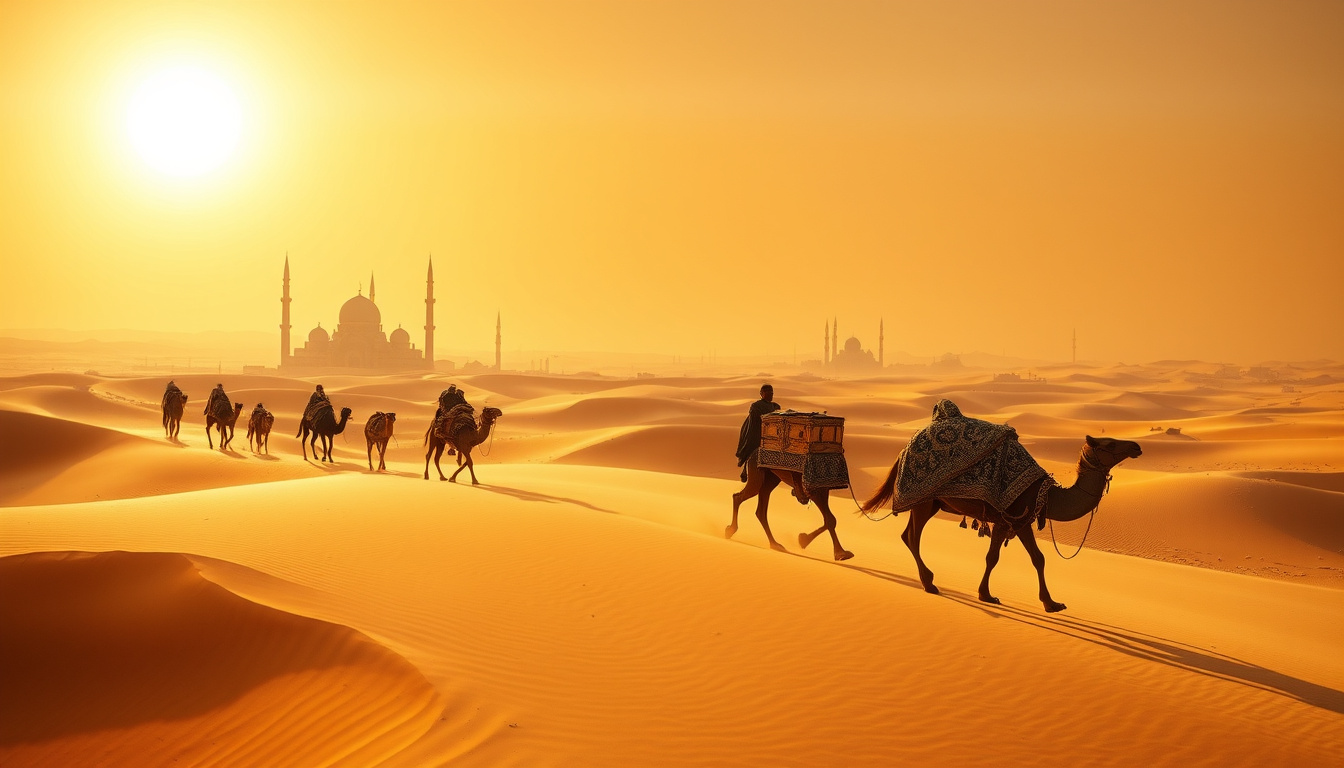
In 1324, Mansa Musa set out for Mecca with a caravan of 60,000 attendants and 80 camels each carrying up to 300 pounds of gold. Along the way, he distributed gold lavishly in Cairo, Medina, and Mecca. The Egyptian historian al-Umari recorded that Musa’s generosity was so extreme that the price of gold in Cairo fell by 10–25% and did not recover for over a decade (Britannica (encyclopedic reference)).
Inflation in Cairo and other cities
The sudden influx of gold caused a sharp devaluation. Merchants who had accumulated gold found their wealth diminished, while the price of goods rose. This episode is one of the earliest documented cases of commodity-driven inflation in the medieval world. BBC Bitesize (educational resource) notes that the empire was incredibly prosperous, but the pilgrimage’s impact on other regions was destabilizing.
Long-term economic consequences
The event demonstrated West Africa’s enormous gold wealth, boosting the Mali Empire’s reputation across the Islamic world and Europe. It also established Musa as a legendary figure. However, the inflationary shock in Cairo shows how even immense wealth can create economic distortion when introduced too quickly. BBC (news analysis) cautions that treating this as a simple story of “the richest man ever” overlooks the complex real-world effects.
The upshot: Mansa Musa’s pilgrimage is a case study in the paradox of wealth — the same gold that made him famous also temporarily impoverished the markets he passed through. For modern readers, it’s a reminder that excessive spending power can destabilize economies even when done with good intentions.
Timeline of Mansa Musa’s life
- c. 1280: Birth of Mansa Musa (Qiraat Africa (historical source))
- 1312: Becomes Mansa of the Mali Empire (BBC Bitesize)
- 1324: Pilgrimage to Mecca (Hajj) (Britannica)
- 1324–1325: Goldsmithing and building projects; inflation in Cairo (BBC)
- 1337: Death of Mansa Musa; succession by his son Maghan I (some sources say 1332) (Wikipedia (community encyclopedia))
Confirmed facts vs. what remains unclear
Confirmed facts
- Mansa Musa ruled the Mali Empire from 1312 to 1337 (BBC Bitesize)
- He undertook a famous pilgrimage to Mecca in 1324 (Britannica)
- He was a Muslim and built mosques and schools (Britannica)
- His wealth came from gold and salt trade (Wikipedia (community encyclopedia))
What’s unclear
- Exact net worth in modern currency is speculative (BBC)
- Year of death is debated (some sources say 1332 or 1337) (Qiraat Africa)
- Extent of his personal gold holdings vs. state treasury is unknown
- Cause of his death remains unknown (Qiraat Africa)
What contemporaries and scholars say
“This man flooded Cairo with his generosity. He gave away so much gold that the value of gold fell and did not recover for twelve years.”
— al-Umari, Egyptian historian, writing c. 1340, as recorded by Britannica
“I visited Mali some decades after Musa’s death and found it a land of justice and security. Travelers there are not robbed or mistreated.”
— Ibn Battuta, explorer, as recorded by Britannica
“Musa’s greatest contribution to the empire was intangible — he created a network of knowledge and faith that outlasted the gold.”
Summary
Mansa Musa’s legacy is not just about being the richest person in history — it’s about how he turned natural resources into a lasting civilization. For anyone trying to understand wealth in historical perspective, the contrast between Musa’s tangible empire and today’s digital fortunes reveals a fundamental truth: economic power is about resource control, infrastructure, and institutional legacy, not just numbers on a balance sheet. For modern readers, the implication is clear: true wealth is what you build, not what you spend.
our-ancestories.com, facebook.com, youtube.com, youtube.com, youtube.com, hauptreport.de
For a deeper look into the economic impact of his journey, explore Mansa Musas legendary wealth about Mansa Musa’s legendary wealth.
Frequently asked questions
What was Mansa Musa’s religion?
Mansa Musa was a devout Sunni Muslim. His faith motivated his famous pilgrimage to Mecca and his patronage of Islamic scholars and architecture, including the Great Mosque of Timbuktu (Britannica).
How did Mansa Musa die?
The exact circumstances of his death are unclear. Most sources place it around 1337, though some suggest 1332. Historical records do not provide a cause (Qiraat Africa).
Who was Mansa Musa’s wife?
Historical records mention that Mansa Musa had a wife named Inari Kunate, but very little is known about her. The Keita dynasty kept limited records on royal women.
Is there any living descendant of Mansa Musa?
Many families in West Africa claim descent from the Keita dynasty, but definitive genealogical evidence is scarce. The Keita lineage continues in traditional leadership roles in parts of Mali and Guinea.
What was the capital of the Mali Empire under Mansa Musa?
The capital was Niani, located in present-day Guinea. Niani served as the political and economic center of the empire during Musa’s reign.
How did Mansa Musa become the richest person in history?
He inherited control of the Mali Empire’s immense gold and salt resources, including the Bambuk and Bure goldfields, as well as trans-Saharan trade routes. His monopoly on these commodities generated enormous wealth (Wikipedia).
Did Mansa Musa really give away gold until it lost value?
Yes. According to the Egyptian historian al-Umari, Musa’s distribution of gold in Cairo during his 1324 pilgrimage caused the value of gold to drop significantly, and it took more than a decade to recover (Britannica).
Related stories





Craig Newton is Senior Reporter at ScopePress.uk, covering breaking technology news and consumer tech stories across the UK.