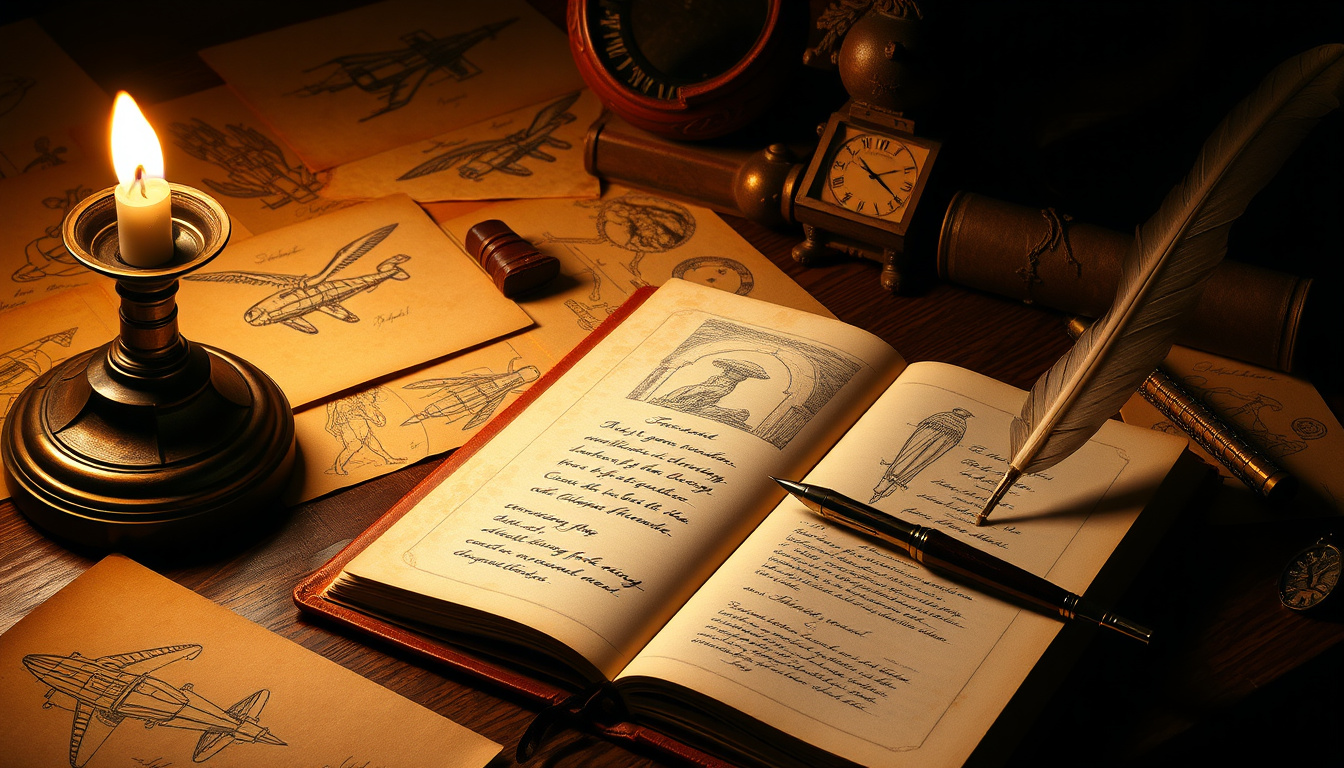
Leonardo da Vinci remains one of history’s most fascinating figures, but separating his documented achievements from the myths around his sexuality and death reveals a more complicated man. From his Medici patronage to his final years under King Francis I of France, the facts are as remarkable as the legends.
Born: April 15, 1452 ·
Died: May 2, 1519 ·
Famous works: Mona Lisa, The Last Supper, Vitruvian Man ·
Fields: Painting, engineering, anatomy, sculpture ·
Notable patrons: Lorenzo de Medici, Ludovico Sforza, King Francis I
Quick snapshot
- Born April 15, 1452 near Vinci, Republic of Florence (Britannica (encyclopedia))
- Died May 2, 1519 at Clos Lucé, France (Italian Art Society)
- Painted the Mona Lisa and The Last Supper (The Metropolitan Museum of Art (essay))
- Designed flying machines, war engines, and studied anatomy through dissection (Britannica (timeline))
- Exact sexual orientation – historical evidence suggests he was likely gay or bisexual, but no definitive proof (Britannica (encyclopedia))
- Identity of his lover – Salai and Francesco Melzi are candidates, but records are inconclusive (Britannica (encyclopedia))
- His last words – the famous “I have offended God and mankind” is apocryphal (Britannica (encyclopedia))
- 1452: Born in Vinci, Italy (Britannica (encyclopedia))
- 1519: Died in Amboise, France (Italian Art Society) (Britannica (encyclopedia))
- 1874: Current tomb built at Château d’Amboise (Google Arts & Culture (Château d’Amboise story))
- Visitors can see his tomb at the Chapel of Saint-Hubert, Château d’Amboise (Atlas Obscura (travel guide))
- Ongoing scholarship continues to examine his notebooks and attributions (The Metropolitan Museum of Art (essay))
Seven key facts paint a portrait of the man: from his full name to his diverse fields of mastery.
| Label | Value |
|---|---|
| Full name | Leonardo di ser Piero da Vinci |
| Born | April 15, 1452 |
| Died | May 2, 1519 |
| Occupation | Painter, engineer, scientist, sculptor, architect |
| Nationality | Italian |
| Notable works | Mona Lisa, The Last Supper, Vitruvian Man, Lady with an Ermine |
| Fields | Art, engineering, anatomy, optics, hydrology |
What is da Vinci known for?
Leonardo da Vinci is the archetype of the Renaissance polymath — a man who painted, designed, dissected, and theorised across disciplines. Fewer than 20 of his paintings survive, yet two of them — the Mona Lisa and The Last Supper — are among the most famous images in Western art.
What are 5 facts about da Vinci?
- He was born out of wedlock and received no formal education in Latin or Greek (Britannica (encyclopedia)).
- He apprenticed with Andrea del Verrocchio in Florence from about 1466 to 1472 (Britannica (encyclopedia)).
- He wrote his notebooks in mirror script, likely to keep his thoughts private (The Metropolitan Museum of Art (essay)).
- He designed flying machines, but none were built successfully in his lifetime (Britannica (timeline)).
- He was left-handed (Britannica (encyclopedia)).
What inventions did Leonardo da Vinci create?
His notebooks contain designs for a flying machine (ornithopter), a parachute, a tank, a giant crossbow, and improved hydraulic pumps. Most were theoretical, never built, but they reveal a mind obsessed with mechanics and motion (Britannica (encyclopedia)).
What are Leonardo da Vinci’s most famous paintings?
Beyond the Mona Lisa and The Last Supper, his notable works include Lady with an Ermine (1489–1491), the Virgin of the Rocks (two versions), and the Vitruvian Man (a drawing, c. 1490) (The Metropolitan Museum of Art (essay)).
The scarcity of surviving works — fewer than 20 confirmed paintings — makes each attribution a high-stakes event for museums and collectors, as seen in the 2017 sale of the Salvator Mundi for $450.3 million.
The implication: Leonardo’s fame is built on extraordinary quality, not quantity. Every surviving piece carries outsized cultural weight.
Was Leonardo da Vinci LGBTQ?
Historical evidence strongly suggests that Leonardo was gay or bisexual, though the terminology didn’t exist in Renaissance Florence. He never married and had no known children. In 1476, he was anonymously accused of sodomy with a male model, but the charges were dropped (Britannica (encyclopedia)).
Who was Da Vinci’s lover?
Two names repeatedly appear: Giacomo Caprotti, nicknamed Salai (“little devil”), who entered Leonardo’s household around 1490 as an apprentice and remained for decades; and Francesco Melzi, a young nobleman who became his companion and heir. Melzi was with Leonardo at his deathbed. The exact nature of these relationships is not documented, but most scholars interpret them as romantic (Britannica (encyclopedia)).
Did Leonardo da Vinci have a wife?
No. Leonardo never married, a fact that stands out in Renaissance Italy where marriage was the norm for men of his social standing. His will left everything to Melzi and Salai, not to any family of his own (Britannica (encyclopedia)).
Without explicit letters or confessions, we can’t assign a modern identity label to Leonardo. The historical record is suggestive but not definitive — a gap that fuels both scholarship and speculation.
What this means: For historians, the evidence tilts toward same-sex attraction; for the public, it makes Leonardo a rare early-modern figure whose private life remains a genuine puzzle.
Did da Vinci work for Medici?
Leonardo’s first major patron was Lorenzo de Medici (Lorenzo the Magnificent) in Florence. In 1482, Lorenzo sent Leonardo to Milan as a “peace offering” to Ludovico Sforza, carrying a silver lyre he had made. That move launched nearly 18 years of work for Sforza, including the painting of The Last Supper (Britannica (encyclopedia)).
Which other patrons did Leonardo work for?
- Ludovico Sforza, Duke of Milan (1482–1499): served as engineer, painter, and event planner; painted The Last Supper during this period (Britannica (encyclopedia)).
- Cesare Borgia (1502–1503): worked briefly as a military engineer (Britannica (encyclopedia)).
- King Francis I of France (1516–1519): granted him the Château du Clos Lucé, where he died (The Metropolitan Museum of Art (essay)).
Leonardo moved between patrons regularly, often leaving projects unfinished. His perfectionism and wide interests made him a bad employee but a brilliant freelancer — the Medici connection started that chain of mobility.
The trade-off: For patrons, hiring Leonardo meant getting a genius who might not deliver on time — or at all. For history, it meant a body of work scattered across Europe.
What were Leonardo da Vinci’s last words before he died?
Legend holds that Leonardo’s last words were: “I have offended God and mankind because my work did not reach the quality it should have.” This account comes from Giorgio Vasari’s Lives of the Artists, but Vasari wrote it decades after Leonardo’s death, and no contemporary witness confirms it (Britannica (encyclopedia)). Most modern biographers treat it as apocryphal.
How did Leonardo da Vinci die?
Leonardo died on May 2, 1519, at Clos Lucé in Amboise, France. Contemporary accounts mention a stroke as the likely cause, but no autopsy was performed. He was 67 (Britannica (encyclopedia)).
Why was Da Vinci’s grave destroyed?
His original burial church — the Collegiate Church of Saint-Florentin at Château d’Amboise — was badly damaged during the French Revolution and then demolished between 1806 and 1810. The destruction scattered the remains that had been interred there (Google Arts & Culture (Château d’Amboise story)).
The legendary last words make a good story but no reliable fact. Visitors to Amboise see a 19th-century tomb, not a verifiable original burial.
Why this matters: The uncertainty around his death and last words mirrors the larger pattern of Leonardo’s life — we know a lot, but the most intimate moments remain shrouded in legend.
Why is Leonardo da Vinci buried in Amboise France?
Leonardo moved to Amboise in 1516 at the invitation of King Francis I, who granted him the manor of Clos Lucé. He spent his last three years there as “premier painter, engineer, and architect” to the king. In his will, he requested burial at the Château Royal d’Amboise (The Metropolitan Museum of Art (essay)).
Where exactly is his tomb?
The current tomb lies in the Chapel of Saint-Hubert, a small Gothic chapel on the grounds of Château d’Amboise, overlooking the Loire River. It was installed in 1874 after bones believed to be Leonardo’s were unearthed during excavations in 1863 (Google Arts & Culture (Château d’Amboise story)).
When was he buried there?
Leonardo was originally interred on August 12, 1519, in the Collegiate Church of Saint-Florentin. The current tomb dates from 1874, after the original church was destroyed (Britannica (timeline)).
The implication: Even in death, Leonardo’s location reflects his final loyalty — not to Italy, but to the French king who gave him a home.
Timeline of Leonardo da Vinci’s Life
Eight milestones chart the arc of his career, from birth in rural Tuscany to a tomb in the Loire Valley.
| Date | Event | Source |
|---|---|---|
| 1452 | Born in Vinci, Italy | Britannica (encyclopedia) |
| 1466–1472 | Apprenticeship with Andrea del Verrocchio in Florence | Britannica (encyclopedia) |
| 1472 | Qualified as a master in the Guild of St Luke | Britannica (encyclopedia) |
| 1482–1499 | Worked for Ludovico Sforza in Milan; painted The Last Supper | Britannica (encyclopedia) |
| 1503–1506 | Started painting the Mona Lisa in Florence | The Metropolitan Museum of Art (essay) |
| 1513–1516 | Lived in Rome under Pope Leo X | Britannica (encyclopedia) |
| 1516–1519 | Moved to France under King Francis I | The Metropolitan Museum of Art (essay) |
| 1519 | Died in Amboise, France | Italian Art Society |
| 1874 | Current tomb built at Château d’Amboise | Google Arts & Culture (Château d’Amboise story) |
Confirmed facts
- Birth and death dates (1452–1519) – Britannica (encyclopedia)
- He painted the Mona Lisa and The Last Supper – The Metropolitan Museum of Art (essay)
- He designed many machines and studied anatomy – Britannica (timeline)
- He died in Amboise, France – Italian Art Society
What’s unclear
- His exact sexual orientation and identity – Britannica (encyclopedia)
- The identity of his lover (Salai or others) – Britannica (encyclopedia)
- His last words are apocryphal – Britannica (encyclopedia)
- The precise cause of death (possible stroke) – Britannica (encyclopedia)
The timeline underscores Leonardo’s peripatetic career and the many phases of his legacy — each phase marked by a different patron and set of projects.
Quotes from and about Leonardo
“Experience never errs; it is only your judgments that err.”
– Leonardo da Vinci, from his notebooks (Britannica (encyclopedia))
“He died in the arms of the king, but this is likely legend.”
– Giorgio Vasari, Lives of the Artists (c. 1550) (Britannica (encyclopedia))
The legend of Leonardo’s final moments — whether he truly regretted his work or simply died quietly — reflects how quickly fact and myth blurred after his death. For the modern reader, the safest conclusion is that he left this world as he lived: surrounded by unfinished business and unanswered questions. For anyone still chasing the myth, the real Leonardo — flawed, curious, and endlessly inventive — is worth the effort. Readers interested in other transformative artists may enjoy JMW Turner and William Morris.
davincilife.com, nicofranz.art, photographfrance.com, worldhistory.org, en.wikipedia.org, afreno.org, reportaktuell.ch
For a deeper exploration of the unanswered questions surrounding the Renaissance master, see Leonardo da Vinci life works mysteries.
Frequently asked questions
What is the Mona Lisa?
The Mona Lisa is a portrait painted by Leonardo da Vinci between 1503 and 1506, likely of Lisa Gherardini, a Florentine woman. It’s housed in the Louvre Museum in Paris and famous for its enigmatic smile and sfumato technique (Britannica (encyclopedia)).
How long did it take to paint the Last Supper?
Leonardo painted The Last Supper between 1495 and 1498, working on and off for about three years. It’s a mural in the refectory of the Convent of Santa Maria delle Grazie in Milan (Britannica (encyclopedia)).
Did Leonardo da Vinci have any children?
No documented evidence shows that Leonardo fathered children. He never married and his will left his estate to his companions Salai and Francesco Melzi (Britannica (encyclopedia)).
What is the most expensive da Vinci painting?
The Salvator Mundi sold for $450.3 million at Christie’s in 2017, the highest price ever paid for a painting. Its attribution to Leonardo is widely debated among art historians (Britannica (encyclopedia)).
Why is Leonardo da Vinci called a polymath?
A polymath is someone with expertise across multiple fields. Leonardo excelled in painting, engineering, anatomy, mathematics, optics, and music, making him the quintessential “Renaissance man” (The Metropolitan Museum of Art (essay)).
What was the Vitruvian Man supposed to represent?
The Vitruvian Man is a drawing c. 1490 that illustrates ideal human proportions based on the Roman architect Vitruvius. It shows a man inscribed in both a circle and a square, symbolising the harmony of the human form (Britannica (encyclopedia)).
These answers address the most common curiosities about da Vinci’s life and work, synthesising what historians agree on and where uncertainty remains.
Related stories




Craig Newton is Senior Reporter at ScopePress.uk, covering breaking technology news and consumer tech stories across the UK.