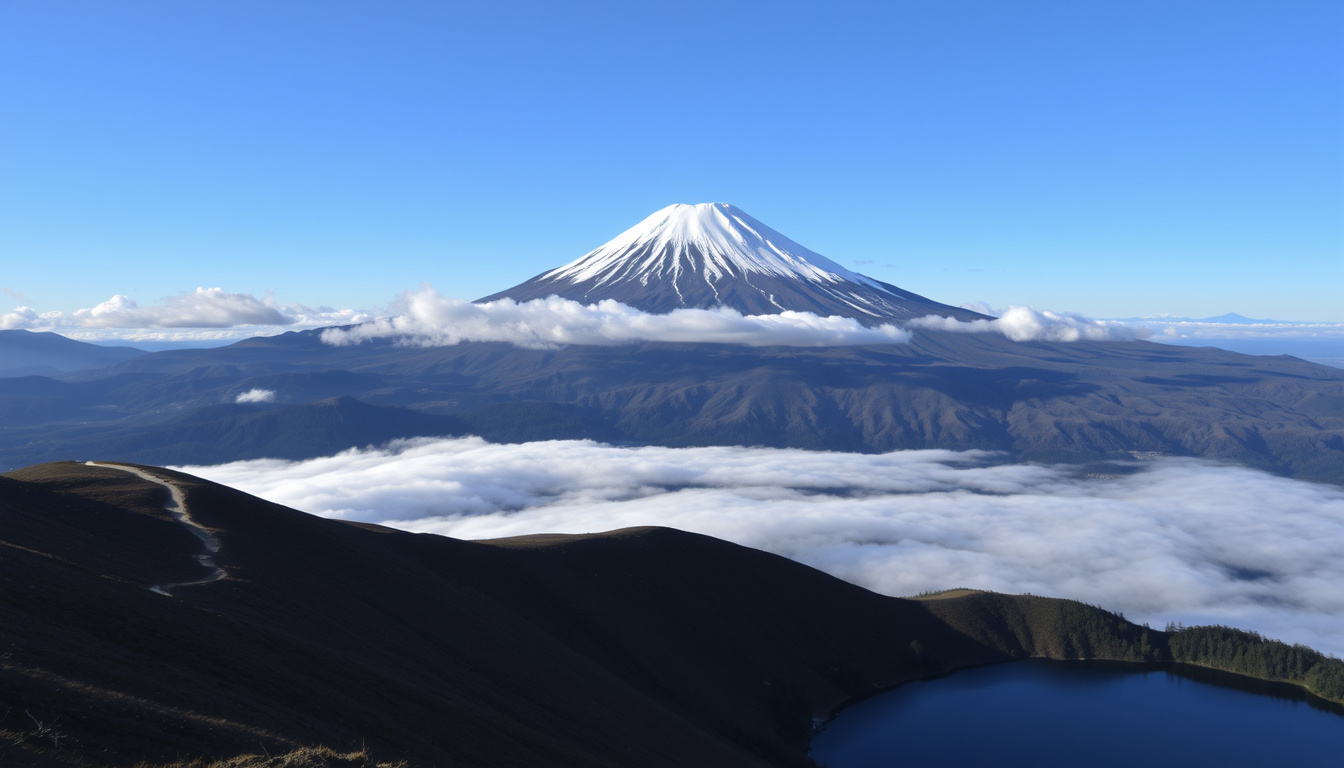
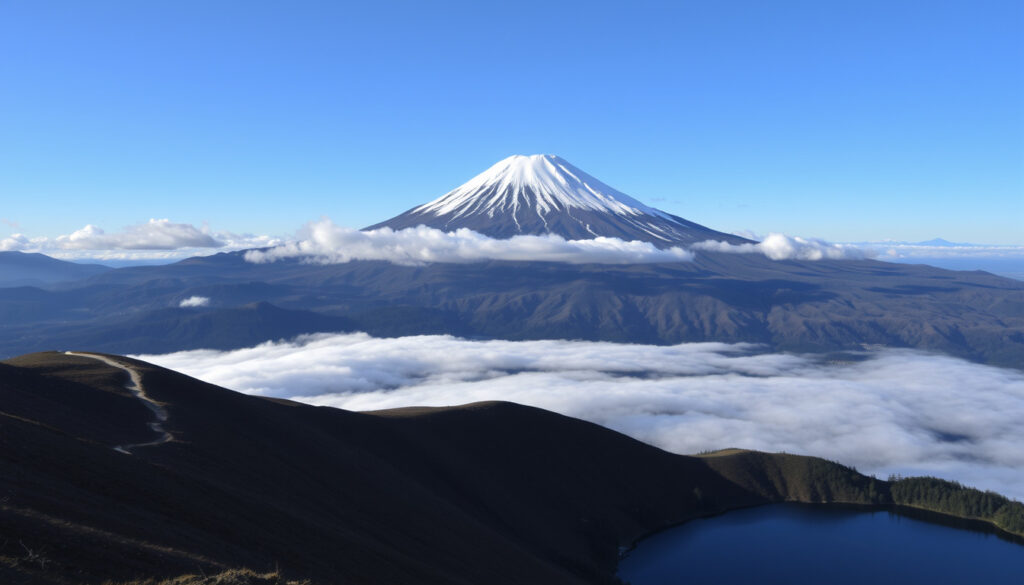
There’s a reason people return to Mount Fuji year after year. Japan’s highest peak isn’t just a mountain — it’s a cultural symbol, a UNESCO World Heritage site, and a bucket-list climb for thousands each season.
Height: 3,776 m (12,389 ft) · Location: Honshu, Japan · Last Eruption: 1707–1708 (Hoei eruption) · Climbing Season: July to early September
Quick snapshot
- Height: 3,776 m (Japan Guide – travel resource)
- Last eruption: 1707–1708 (Encyclopædia Britannica – reference work)
- UNESCO designation: 2013 (JNTO – Japan’s official tourism body)
- Exact annual climber count (estimated ~300,000 but varies)
- Next eruption prediction – uncertain
- Climate change impact on snow cap and trail conditions
- ~100,000 years ago: Volcanic activity began
- 663: First recorded ascent
- 1707–1708: Last eruption (Hoei)
- 2013: UNESCO World Heritage designation
- 2024: Climbing season with updated safety protocols
- 2026 season opens July 1–September 10 (Yoshida Trail) (Yamanashi Prefecture – official trail authority)
- Daily climber limits being considered (Yamanashi Prefecture – official trail authority)
- Improved monitoring for volcanic activity (Yamanashi Prefecture – official trail authority)
Key specifications for Mount Fuji are summarized in the table below.
| Attribute | Value |
|---|---|
| Elevation | 3,776 m (12,389 ft) |
| Location | Honshu, Japan |
| Volcano type | Active stratovolcano |
| Last eruption | 1707–1708 |
| First recorded ascent | 663 (monk) |
| Climbing season | July – early September |
| UNESCO status | 2013 |
Why is Fuji mountain so famous?
Cultural significance in Japanese art
- Mount Fuji has been a subject of Japanese woodblock prints (ukiyo‑e) for centuries, most famously in Hokusai’s Thirty‑six Views of Mount Fuji (JNTO – Japan’s official tourism body).
- The mountain appears in classical poetry, contemporary photography, and even as a logo for major Japanese brands.
Religious importance: Shinto and Buddhism
- Fuji is considered sacred in both Shinto and Buddhism. Shrines dot its base, and the climb itself has historically been a pilgrimage (Encyclopædia Britannica – reference work).
UNESCO World Heritage status
- In 2013, UNESCO designated Mount Fuji a World Heritage site as a “cultural landscape” — recognizing its influence on art, religion, and Japanese identity (JNTO – Japan’s official tourism body).
The implication: this cultural gravity continues to draw millions to its slopes each year.
Where is Mount Fuji located?
Geographical coordinates
- 35°21′39″N 138°43′39″E — on Honshu Island, Japan’s main island.
Proximity to Tokyo
- Mount Fuji lies about 100 km (62 mi) southwest of Tokyo. On clear winter days the peak is visible from the capital’s skyscrapers.
Region: Chubu
- The mountain straddles Yamanashi and Shizuoka prefectures in the Chubu region and is part of Fuji‑Hakone‑Izu National Park (JNTO – Japan’s official tourism body).
Tokyo has the world’s largest urban population within 100 km of an active volcano. For the 37 million people in the metro area, Mount Fuji is both a national symbol and a real geological neighbor.
What this means: proximity to a major city amplifies both the mountain’s appeal and the need for risk awareness.
How long does it take to climb Mount Fuji?
Typical ascent time from the 5th station
- Average ascent: 5–7 hours from the 5th station (Go‑gōme) to the summit (Japan Guide – travel resource).
- Descent takes 3–4 hours via the same Yoshida Trail.
Step-by-Step: Ascent and Descent (recommended two‑day itinerary)
- Day 1, Step 1: Take a bus or car to the 5th station (about 2.5 hours from Tokyo).
- Day 1, Step 2: Begin hiking in the afternoon, reaching a mountain hut for an overnight stay (5–6 hours).
- Day 2, Step 3: Start early (2–3 AM) to reach the summit for sunrise.
- Day 2, Step 4: After viewing the sunrise (Goraiko), descend the same trail (3–4 hours).
Most climbers start at the 5th station because the trailhead below is closed to private vehicles. The total hiking distance from 5th station round‑trip is roughly 15 km (Emma Goto – personal hiking blog).
Recommended two-day itinerary
- Plan for a total of 10–14 hours of hiking over two days.
- Reserve a hut in advance during peak season (July–August).
The pattern: a two-day plan maximizes both safety and the chance to see sunrise from the summit.
What are 5 facts about Mount Fuji?
Key facts at a glance
- Height: 3,776 m – Japan’s tallest peak (Japan Guide – travel resource).
- Volcano type: Active stratovolcano — it last erupted in 1707–1708 (Encyclopædia Britannica – reference work).
- Last eruption: The Hoei eruption (1707–1708) deposited ash on Edo (modern Tokyo).
- First recorded ascent: 663 by an anonymous monk — the earliest known climb.
- UNESCO World Heritage site: Designated in 2013 as a cultural landscape (JNTO – Japan’s official tourism body).
While the volcano is active, its last eruption was over 300 years ago. The Japanese Meteorological Agency monitors it 24/7 — but no one can predict the next event with certainty. For climbers, the risk is considered low, but it’s not zero.
The implication: ongoing monitoring is a reminder that Fuji is a living volcano, not a static monument.
Can beginners climb Fuji?
Physical preparation required
- Beginners can climb with proper preparation. The trail is non‑technical (no climbing equipment needed), but the altitude and steepness demand cardiovascular fitness.
- Altitude sickness is a real risk; ascending too fast can cause headaches, nausea, or worse.
Benefits of guided tours
- Joining a guided tour is recommended for novices. Operators handle logistics, provide equipment advice, and lead the pace. Commercial guided trips are offered by third‑party operators such as Explore‑Share – adventure tour aggregator.
Safety tips for first-timers
- Acclimatize: spend a night at a mountain hut rather than attempting a single‑day push.
- Bring warm layers (summit can drop to near freezing even in August) and waterproof gear ( – seasonal climbing guide).
- Start early (by 6 AM) to avoid afternoon thunderstorms — common in the climbing season.
Hiking outside the official season (July–early September) is strongly discouraged. Trails are not maintained, mountain huts are closed, and rescue services are limited. The Yoshida Route is explicitly marked as closed off‑season (AllTrails – trail database).
The catch: venturing outside the season turns a bucket‑list climb into a genuine safety risk.
Timeline: From Ancient Eruptions to Today
- ~100,000 years ago: Volcanic activity began, forming the current cone.
- 663: First recorded ascent by an anonymous monk (Japan Guide – travel resource).
- 1707–1708: Hoei eruption, the most recent. Ash fell on Edo (Tokyo). (Encyclopædia Britannica – reference work)
- 2013: UNESCO World Heritage designation.
- 2024: Climbing season opens with new safety protocols; reservation system launched for Yoshida Trail.
What We Know and What’s Unclear
Confirmed facts
- Height: 3,776 m (Japan Guide – travel resource)
- Location: Honshu, Japan (JNTO – Japan’s official tourism body)
- Last eruption: 1707–1708 (Encyclopædia Britannica – reference work)
- UNESCO designation: 2013 (JNTO – Japan’s official tourism body)
- Climbing season: July to early September (Japan Guide – travel resource)
What remains uncertain
- Exact number of annual climbers (estimates around 300,000 but unreliable counts)
- Next eruption prediction — seismic monitoring can’t forecast months ahead
- Climate change impact on snow cap duration and trail erosion
Perspectives from experts
“Mt. Fuji has been a subject of worship and art for centuries.”
— Japan National Tourism Organization – official tourism body
“Mount Fuji is an active stratovolcano that last erupted in 1707.”
— Encyclopædia Britannica – reference work
The trade‑off is clear: Mount Fuji offers an unforgettable experience — but only for those who respect its altitude, its season, and its unpredictability. For anyone planning a trip to Japan, the choice is straightforward: prepare properly and go within the official window, or risk a cold, dangerous, and potentially closed trail.
Frequently asked questions
Is Mount Fuji open year-round?
No. The official climbing season runs from early July to early September. Outside these months, trails are closed and facilities are not operating.
Do I need a permit to climb Mount Fuji?
No permit is required during the season, but a reservation system for the Yoshida Trail starts in 2026. Donations to maintain the trail are encouraged (Yamanashi Prefecture – official trail authority).
What is the elevation of Mount Fuji?
3,776 meters (12,389 feet) — Japan’s highest mountain.
Is Mount Fuji still active?
Yes, it is an active stratovolcano with its most recent eruption in 1707–1708 (Encyclopædia Britannica – reference work).
What should I wear to climb Mount Fuji?
Layered clothing, a waterproof jacket, warm mid‑layers, sturdy hiking boots, gloves, and a hat. Summit temperatures can drop near 0°C even in August ( – seasonal climbing guide).
Can I see Mount Fuji from Tokyo on a clear day?
Yes, on clear winter mornings the mountain is visible from high‑rise buildings in central Tokyo.
How old is Mount Fuji?
The current volcanic cone is estimated to be about 10,000 years old, with the earliest volcanic activity dating back ~100,000 years.
Related reading
- British Airways Executive Club: Membership, Login, Avios Guide – travel logistics for reaching Japan.
- South America Countries and Regions: List With Capitals – another geography guide for travelers.
mount-fuji.com, vagabond3.com, reddit.com, youtube.com, globetrottingpeanuts.com, notiziedirette.it
For those planning an ascent, a detailed Mount Fuji climbing guide offers practical advice on routes and safety.
Related stories





Craig Newton is Senior Reporter at ScopePress.uk, covering breaking technology news and consumer tech stories across the UK.