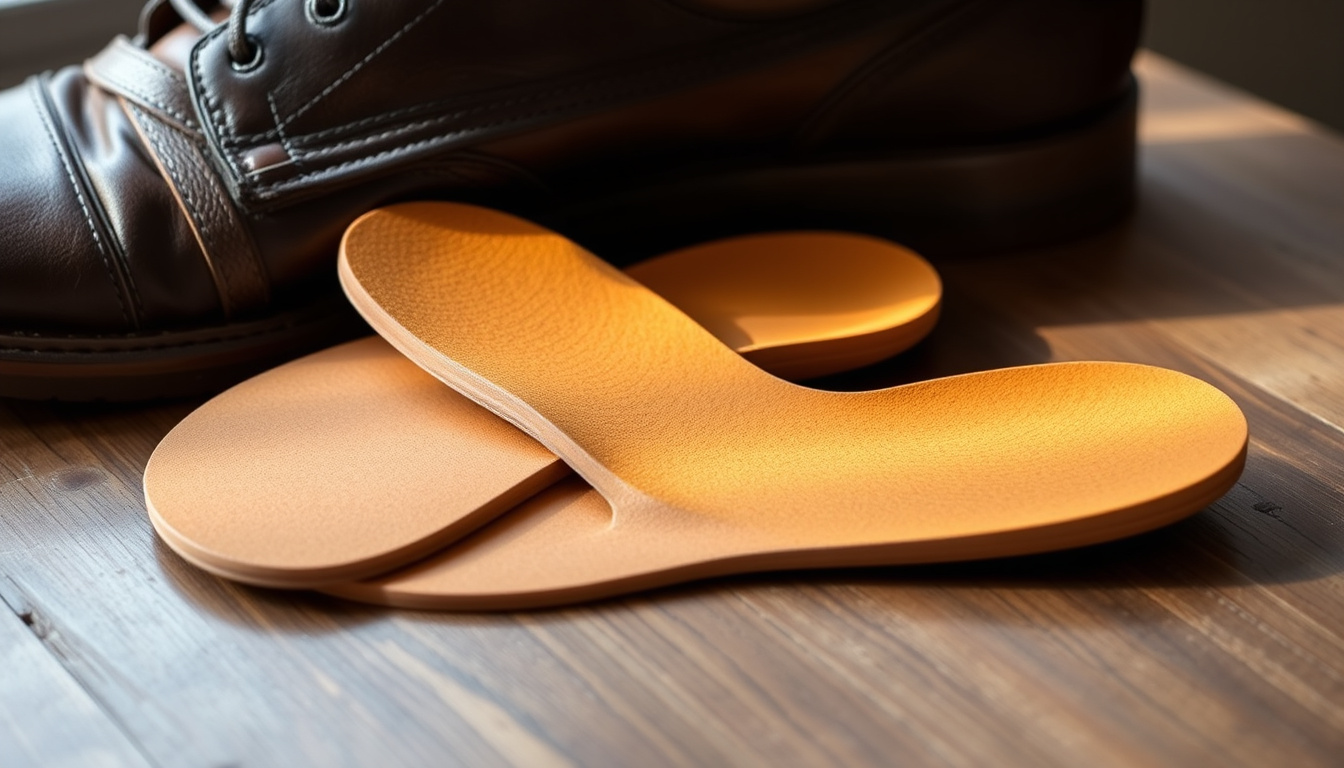
Most people don’t think about shoe insoles until a long walking day makes the feet file an official complaint. If you’ve weighed foam against gel in a pharmacy aisle, you’re in good company — NHS podiatry treats insoles as a first-line tool for foot pain, noting they can support and cushion the foot or change the way you walk (Guy’s and St Thomas’ NHS Foundation Trust (NHS patient guidance)). What the NHS recommends and what the bestseller lists sell don’t always line up; here’s how to tell the difference.
Adults who experience foot pain at some point: over 75% (American Podiatric Medical Association) ·
Insoles with supportive shoes help: about 75% of the time (Gloucester Health & Care NHS Trust) ·
NHS replacement interval: every 6–12 months (NHS guidance) ·
Custom orthotics in the UK: £100–£400 (NHS and private clinics) ·
Global insoles market (2023): $4.2 billion (Grand View Research)
Quick snapshot
- A simple shop-bought arch support may reduce strain and help painful flat-foot symptoms (East Sussex Healthcare NHS Trust). (Gloucester Health & Care NHS Trust (NHS podiatry service))
- Insoles can reduce pain, may tilt the heel outward, and support the arch (Gloucester Health & Care NHS Trust (NHS podiatry service)).
- Soft over-the-counter orthoses can relieve symptoms of symptomatic flat feet (St George’s University Hospitals NHS Foundation Trust (NHS orthotics guidance)).
- For painless flat feet in children, evidence does not support orthotic management (St George’s University Hospitals NHS Foundation Trust (NHS orthotics guidance)).
- Generic insoles are less predictable when pain has no clear biomechanical cause (Chelsea and Westminster Hospital NHS Foundation Trust). (St George’s University Hospitals NHS Foundation Trust (NHS orthotics guidance))
- An insole makes the shoe better — it does not permanently change the foot (Guy’s and St Thomas’ NHS Foundation Trust). (St George’s University Hospitals NHS Foundation Trust (NHS orthotics guidance))
- Replace daily-wear insoles every 6–12 months; high-impact activity can shorten that window (NHS guidance).
- When foot pain returns after improvement, the insole or the shoe is usually past its useful life (NHS guidance).
- Soft foam and gel lose cushioning invisibly, long before they look worn (NHS guidance).
- If basic insoles don’t settle symptoms, NHS podiatry may prescribe a custom in-shoe orthotic (East Sussex Healthcare NHS Trust). (Kent Community Health NHS Foundation Trust (NHS children’s health leaflet))
- For children with flat feet, stretching and strengthening exercises come first, with orthoses as a possible addition (Kent Community Health NHS Foundation Trust (NHS children’s health leaflet)).
- Put the insole in the right shoe: laced, supportive footwear does half the work (Gloucester Health & Care NHS Trust). (Kent Community Health NHS Foundation Trust (NHS children’s health leaflet))
Key facts at a glance
Four numbers explain most insole decisions: the £5 shelf, the £400 clinic, the six-month replacement, and the 75% who get better.
| NHS recommendation for general use | Foam or gel insoles with arch support, replaced every 6–12 months (NHS guidance) |
| Typical cost range (UK) | £5–£25 off-the-shelf; £100–£400 custom orthotics |
| Common materials | Polyurethane foam, silicone gel, EVA, memory foam |
| Average lifespan | 6 months for daily wear; 3 months for high-impact activities |
| What insoles can do | Support and cushion the foot, or change the way you walk (Guy’s and St Thomas’ NHS Foundation Trust) |
| What insoles can’t do | Change foot shape or form new arches (NHS guidance) |
| Conditions with best evidence | Painful flat feet and shoe-related foot strain (NHS podiatry guidance) |
The pattern is the same across every NHS source: support, not restructuring. Keep that expectation and the rest of the buying decision gets simpler.
Is it good to put insoles in shoes?
The short answer is yes for most common foot pain — provided the shoe does its half of the job. The longer answer depends on matching the insole to your foot type and being realistic about what it can change.
General benefits of shoe insoles
- Insoles support and cushion the foot or change the way you walk (Guy’s and St Thomas’ NHS Foundation Trust).
- Orthoses can hold the foot in a neutral position when walking (Chelsea and Westminster Hospital NHS Foundation Trust).
- Simple arch supports can reduce strain in painful flat feet before you consider anything custom (East Sussex Healthcare NHS Trust).
Put simply, insoles give your foot a more supportive surface than the shoe’s original footbed. The benefit appears when the shoe stops fighting the insole.
For most walking-related pain, an insole is the cheapest first experiment the NHS actually endorses — start simple, and let a week of walking judge the result.
Potential risks and drawbacks
- Insoles do not change the shape of your feet or form new arches (Guy’s and St Thomas’ NHS Foundation Trust (NHS flat-feet guidance)).
- Orthoses do not cure poor alignment, and they are generally only effective in laced training shoes (Chelsea and Westminster Hospital NHS Foundation Trust (NHS foot health leaflet)).
- Unsupportive shoes will stop you feeling better; Gloucester’s podiatry team also advises against barefoot walking and very thin-soled shoes (Gloucester Health & Care NHS Trust).
An insole overcorrects nothing. If the shoe is the problem, the insole is working for a losing team — and the pain will tell you before the insole wears out.
Insoles are a support tool, not a correction tool. The strongest evidence sits with painful flat feet and shoe-related strain — exactly where cheap fixes work best.
Who should consider using insoles
- People with symptomatic flat feet: soft over-the-counter orthoses may be as effective as custom insoles (St George’s University Hospitals NHS Foundation Trust).
- People with plantar fasciitis or high arches are the other classic candidates — NHS guidance points to foam or gel insoles with arch support.
- Children with flat feet usually need exercises and stretching before orthoses (Kent Community Health NHS Foundation Trust).
The implication: insoles are a targeted tool, not a general wellness product. Buy them when there’s a specific complaint — not because the shelf display looks convincing.
This approach keeps expectations grounded in what insoles can actually deliver.
What is the difference between shoe inserts and insoles?
The terms blur on shop shelves, but the functional split is clear: inserts add something to the shoe, insoles replace the footbed, and orthotics are a prescribed sub-set of insoles.
Definition of shoe inserts
- A shoe insert is anything placed inside the shoe — an umbrella term for insoles, cushions, and orthotic supports.
- In NHS patient guidance, insoles are themselves described as shoe inserts (Guy’s and St Thomas’ NHS Foundation Trust).
- In retail language, “insert” usually means a support layer added on top of the existing footbed rather than a full replacement.
Definition of insoles
- Insoles replace the shoe’s original footbed and run from heel to toe.
- They are usually foam, gel, or a combination, and the NHS’s working definition says they can change the way you walk.
- When an insole is prescribed by a podiatrist it becomes an orthosis — an in-shoe device intended to resist pronation and influence pain or foot function (East Sussex Healthcare NHS Trust (NHS podiatry fact sheet)).
Key differences in function and design
- Inserts typically add a layer of support; insoles replace the footbed entirely.
- Cushioning insoles focus on shock absorption; structured inserts focus on arch support and alignment.
- Custom orthotics are built from a clinical assessment and are usually stiffer than anything on a pharmacy shelf.
The distinction matters because it changes what you buy: a cushioning insole won’t fix an alignment problem, and a rigid orthotic won’t fix a shock-absorption problem.
Which are the best insoles for shoes?
Bestseller lists rank popularity, not biomechanics. The best insole is the one matched to your foot type, your activity, and the shoe you’ll wear it in.
NHS-recommended insoles
- NHS guidance points to foam or gel insoles with arch support for common foot problems.
- Orthoses are generally only effective in laced training shoes — the shoe has to hold them in place (Chelsea and Westminster Hospital NHS Foundation Trust).
- Some NHS trusts advise starting with a simple arch support before anything custom (East Sussex Healthcare NHS Trust).
Podiatrist-recommended brands and materials
- Materials matter more than brands: polyurethane foam for control, silicone gel for impact, memory foam for pressure relief.
- Pharmacy brands such as Scholl, Superfeet, and FootActive dominate shelves; podiatrists tend to look at arch profile and stiffness first.
- When over-the-counter options fail, an NHS podiatrist may prescribe a bespoke in-shoe orthotic to resist pronation (East Sussex Healthcare NHS Trust).
Top-rated insoles for walking, flat feet, and boots
- Walking: choose shock-absorbing insoles with moisture-wicking tops.
- Flat feet: a simple arch support is the rational first step before custom orthotics.
- Boots: a thin, firm insole reduces heel slip and keeps toes from jamming into the front of the toe box.
If you’re shopping for shoes that may reduce the need for insoles altogether, the same material logic applies — here’s a podiatrist’s view of Skechers sandals and whether their comfort claims hold up.
The pattern: for most feet, the best insole is the cheapest one that matches the complaint. Price becomes relevant only when the cheap fix fails.
This logic keeps your choice rooted in what the evidence actually supports.
Is foam or gel insoles better?
Foam and gel answer different questions: foam says “structure,” gel says “impact.”
Foam insoles: properties and use cases
- Foam insoles — polyurethane, EVA, or memory foam — provide firm support and mold to the foot over time.
- They suit standing-heavy days, stiff boots, and feet that want a stable base.
- A structured foam insole behaves more like a light orthotic, which is why podiatrists reach for it when alignment is the issue.
Gel insoles: properties and use cases
- Gel insoles offer superior shock absorption and are ideal for high-impact activities like running, hiking, and long pavement days.
- Silicone gel compresses under load and rebounds, reducing pressure under the heel and forefoot.
- The trade-off: gel cushions well but guides the arch less than a structured foam.
How to choose between foam and gel based on activity
- All-day walking: combination foam-gel builds balance support and cushioning.
- Running and high-impact sport: gel, or a gel heel insert, softens heel strike.
- Flat feet and overpronation: structured foam or a semi-rigid orthotic supports the arch better than soft gel alone.
- If you’re torn, the clinical evidence softens the fight: soft over-the-counter orthoses can relieve symptoms of symptomatic flat feet, so you don’t need the most expensive material to start (St George’s University Hospitals NHS Foundation Trust).
If one foot loves foam and the other hates gel, the problem isn’t the material — it’s the missing arch profile under each foot.
The trade-off: gel protects, foam controls. Buy the one that matches your complaint — cushioning for impact, support for alignment.
This approach ensures you’re reacting to your symptoms, not marketing claims.
How often should insoles be replaced?
Insoles wear out invisibly. The foam compresses, the gel hardens, and the foot quietly absorbs the difference.
Signs your insoles need replacing
- Visible creasing, flattening, or a permanent heel imprint.
- Cushioning that feels dead — a thumbnail pressed into the heel bed doesn’t rebound.
- Old foot pain creeping back after months of improvement (NHS guidance).
General replacement timeline by insole type
- Daily-wear foam or gel insoles: every 6–12 months.
- High-impact use, running, or heavy standing: every 3–6 months.
- Custom orthotics: follow the podiatrist’s review schedule rather than a calendar.
Factors that shorten insole lifespan
- Body weight and the impact of each step.
- Shoe flexibility — a bendy shoe flexes the insole more and fatigues it faster.
- Heat and moisture from sweaty feet break down foam faster.
The pattern is simple: if the support is gone, the insole is gone. Replace on a schedule, not on looks.
Foam, gel, or custom: side-by-side comparison
Three options dominate the UK market, and the difference comes down to one trade-off: how much structure you want versus how much shock you need to absorb.
| Factor | Foam insoles | Gel insoles | Custom orthotics |
|---|---|---|---|
| Primary job | Firm support and arch guidance | Shock absorption | Biomechanical correction |
| Best for | Standing, flat feet, boots | Running, high-impact walking | Persistent pain other insoles haven’t solved (East Sussex Healthcare NHS Trust) |
| Typical price (UK) | £5–£20 | £10–£25 | £100–£400 (NHS or private clinic) |
| Lifespan | 3–6 months heavy use; 6–12 months daily | 3–6 months heavy use | Set by podiatry review |
The takeaway: most people can start with foam or gel and only move to custom when the cheap fix fails. Price should follow failure, not fear.
Pros and cons of wearing insoles
Upsides
- Cheap first intervention: £5–£25 off the shelf, versus £100–£400 for custom.
- Insoles can reduce pain and support the arch while you walk (Gloucester Health & Care NHS Trust).
- They’re reversible — nothing is permanently changed in the foot or the shoe.
- They can change the way you walk, which spreads pressure more evenly (Guy’s and St Thomas’ NHS Foundation Trust).
Downsides
- Insoles won’t form arches or change foot shape (Guy’s and St Thomas’ NHS Foundation Trust).
- They only work in supportive shoes; unsupportive footwear will stop you feeling better (Gloucester Health & Care NHS Trust).
- A wrong arch profile can create new pressure points.
- Soft insoles wear out in months, not years.
The trade-off: the same device that reduces strain can create pressure if the arch profile is wrong — start broad, adjust fast.
How to choose the right insole for your shoes
- Check your arch at home. Wet your foot, step on a piece of paper, and study the imprint: more foot on the paper means a flatter arch that will want support.
- Match material to complaint. Impact pain → gel; arch strain → firm foam; both → combination foam-gel.
- Buy in your shoe size. Most insoles are sized and many can be trimmed; the insole should sit flat from heel to toe.
- Fit them in the shoe you’ll actually wear. Orthoses are generally only effective in laced training shoes (Chelsea and Westminster Hospital NHS Foundation Trust).
- Break in gradually. Start with two hours a day, then build up over a week.
- Diary the pain. If symptoms don’t improve in two to four weeks, escalate to a podiatry referral instead of buying a pricier insole.
Why this matters: a stepped approach turns insole shopping from a lottery into an experiment — one data point at a time.
Confirmed facts vs. what’s still unclear
Confirmed facts
- Insoles support and cushion the foot or change the way you walk (Guy’s and St Thomas’ NHS Foundation Trust).
- Simple arch supports reduce strain in painful flat feet (East Sussex Healthcare NHS Trust).
- Children’s flat feet are managed first with stretching and strengthening exercises (Kent Community Health NHS Foundation Trust (NHS children’s health leaflet)).
What’s unclear
- Whether generic insoles match custom orthotics outside the specific group studied — adults with symptomatic flat feet (St George’s University Hospitals NHS Foundation Trust).
- The long-term outcome of wearing insoles without a professional assessment (Gloucester Health & Care NHS Trust).
- Whether any insole can change foot structure over years; today’s evidence says insoles don’t form arches (Guy’s and St Thomas’ NHS Foundation Trust).
Why this matters: the gap between confirmed and unclear is exactly where misinformation lives — shop with both lists in mind.
What the experts say
Insoles are shoe inserts that can support and cushion the foot or change the way you walk.
Guy’s and St Thomas’ NHS Foundation Trust (NHS patient guidance)
Shoes and insoles will usually help about 75% of the time.
Orthoses do not cure poor alignment, but can provide support and are generally only effective in laced training shoes.
Chelsea and Westminster Hospital NHS Foundation Trust (NHS foot health leaflet)
A shop-bought simple arch support insole may reduce strain and help painful symptoms in flat feet.
What this means: all four are NHS institutions describing the same intervention — support, not correction. The commercial aisle sells magic; the evidence sells mechanics.
The verdict
The pattern is consistent across every NHS source we’ve consulted: insoles work when they’re simple, well-fitted, and paired with supportive shoes. The retail shelf wants you to believe a £40 insole fixes what a £10 one can’t; the evidence says start cheap and escalate only if the pain asks for it. For the average UK walker, the decision is clear: try a foam or gel arch support in a laced, supportive shoe first — or keep absorbing the cost of doing nothing in your feet, knees, and hips.
Related reading
If insoles are the fix, the shoe is the other half — see how podiatrists apply the same logic to sandals.
clch.nhs.uk, dchft.nhs.uk, elht.nhs.uk, nhsdorset.nhs.uk, bookings.hants.gov.uk
Frequently asked questions
What are the disadvantages of wearing insoles?
Insoles don’t change foot shape or form arches, and the wrong arch profile can create new pressure points. They only work inside supportive shoes: orthoses in particular are generally only effective in laced training shoes (Chelsea and Westminster Hospital NHS Foundation Trust).
Do you buy insoles the same size as your shoe?
Yes — insoles are sold in shoe sizes and many are designed to be trimmed. The insole should sit flat under your whole foot, from heel to toes, with no curling at the front. If the shoe fits snugly, try a thinner insole first.
What can I use instead of an insole?
Supportive lace-up shoes, well-cushioned trainers, and — for some conditions — stretching and strengthening exercises. In children’s flat feet, exercises are the first-line management, with orthoses as a possible addition (Kent Community Health NHS Foundation Trust).
How do you know what insoles you need?
Look at the two variables that matter: arch type and pain pattern. A flatter imprint and arch strain point to arch support; heel or forefoot pain points to cushioning; pain that only appears during specific activities points to a gel or sport-specific insole. If symptoms persist for weeks, NHS podiatry can assess you and prescribe an in-shoe orthotic (East Sussex Healthcare NHS Trust).
What kind of insoles do podiatrists recommend?
Podiatrists generally recommend materials and arch profiles over brand names. For common foot pain, the NHS recommends foam or gel insoles with arch support. For persistent pronation or alignment problems, a custom or semi-rigid orthotic may be prescribed — the point is to address function, not just comfort.
Related stories





Craig Newton is Senior Reporter at ScopePress.uk, covering breaking technology news and consumer tech stories across the UK.