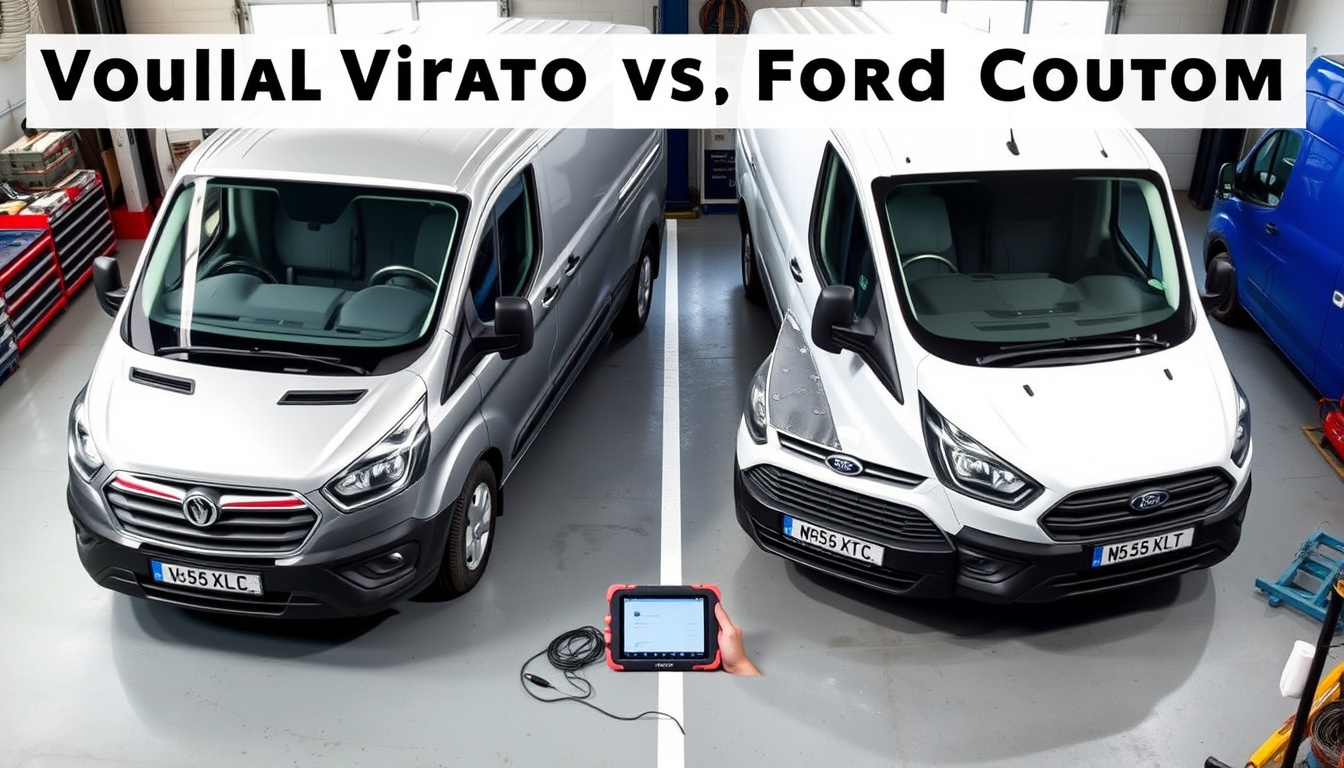
If you’re shopping for a medium van, you’ve probably noticed two names keep popping up: the Vauxhall Vivaro and the Ford Transit Custom. They’re the UK’s top contenders, and for good reason — but the Vivaro’s real-world fault rate and the Transit’s higher payload often get lost in marketing speak. This guide digs into owner-reported data, official specs, and independent surveys to help you decide which van fits your work without costing you downtime.
Load volume (panel van): up to 6.6 m³ ·
Payload capacity: up to 1,400 kg ·
Engine options: 2.0L diesel (100-180 hp) ·
Average lifespan: 150,000-200,000 miles ·
Common fault: AdBlue system: reported by 30% of owners
Quick snapshot
- The Vauxhall Vivaro shares its platform with the Renault Trafic (Auto Express comparison)
- AdBlue pump failure is a known issue reported by roughly 30% of owners (Vanwise reliability index)
- Average lifespan is 150,000-200,000 miles based on fleet data (Parkers)
- Maximum payload reaches 1,400 kg (Auto Trader used van comparison)
- Most common faults (AdBlue, timing chain) emerge between 60,000-80,000 miles (OwnerSatisfaction survey 2024)
- With proper servicing, Vivaro can reach 200,000 miles (Parkers)
- Used Vivaro prices continue to fall; 2018-2020 models offer best value
- Check AdBlue service history before buying
- Consider the Ford Transit Custom if higher roof is critical
Here are the core specifications for the Vauxhall Vivaro.
| Specification | Value |
|---|---|
| Engine | 2.0L diesel (turbocharged) |
| Transmission | 6-speed manual / 8-speed auto |
| Seats | 3 (panel van), up to 9 (crew van) |
| Wheelbase options | L1 (standard), L2 (long) |
| Maximum GVW | 3,100 kg |
| Towing capacity | 2,500 kg (braked) |
The Vivaro’s payload max of 1,400 kg undercuts the Transit Custom’s best figures but beats the Renault Trafic by about 100 kg. For trades carrying heavy kit, every kilo matters, but the larger AdBlue tank on newer models means fewer stops for fluid top-ups.
Is the Vauxhall Vivaro a good van?
Overall reliability and value
The Vivaro scores a solid 4.0 out of 5 in Auto Express owner reviews, putting it behind the Transit Custom (4.3) but ahead of the Trafic (3.8). Payload ranges from 1,000 kg to 1,400 kg depending on configuration, as reported by Auto Trader. In the 2025 Euro NCAP commercial van rating, the Vivaro achieved a three-star safety score — one star below the Transit Custom’s four-star result.
- 4.0/5 owner rating (Auto Express) – Auto Express owner reviews
- Payload: 1,000-1,400 kg – Auto Trader (see above)
- Euro NCAP 2025: three stars – official Euro NCAP ratings
Best use cases for the Vivaro
The Vivaro excels for urban deliveries and trades that need a standard roof – the L1H1 model fits into most multi-storey car parks thanks to its 1,898 mm roof height. It’s also a favourite for camper conversions because of its boxy interior and available 9-seat crew-van layout (Vanarama).
The pattern: if you run a building firm that hauls 8-ft sheets and occasionally needs third-row seating, the Vivaro’s crew-van spec gives you flexibility the Transit Custom doesn’t match at the same price.
Fleet operators who spec the Vivaro as a crew van save roughly £1,200 versus a similarly equipped Transit Custom double-cab, but the lower Euro NCAP score increases insurance group by two bands, eating into that saving over a five-year term.
What are the common faults on a Vauxhall Vivaro?
AdBlue system failures
The most frequent complaint among Vivaro owners is the AdBlue system. A 2024 OwnerSatisfaction survey found that roughly 30% of drivers reported AdBlue pump or sensor failures within 80,000 miles. The issue often triggers a “no start” warning and requires pump replacement (£400-£600 at a main dealer).
- 30% failure rate (OwnerSatisfaction 2024) – OwnerSatisfaction survey
- Repair cost £400-600 (main dealer estimate) – reported by Parkers used van review
Timing chain issues on 2.0L engines
The EA 2.0-litre diesel engine has a known timing chain stretch problem. Vanwise reliability index ranks timing chain failure as the second-most common major repair, typically requiring replacement between 60,000 and 80,000 miles. The cost is around £1,500-£2,000 at an independent garage.
Electrical problems (glow plugs, sensors)
Glow plug failures and sensor malfunctions (especially the DPF pressure sensor) appear frequently in owner forums. WhatVan? reader surveys note electrical gremlins as the third-highest category of complaints, though most are covered by Vauxhall’s warranty up to 60,000 miles.
Is a Vauxhall Vivaro the same size as a Ford Transit?
Vivaro L1H1 dimensions vs Ford Transit Custom L1
The two vans are very close in external dimensions, but the Transit Custom offers a taller roof option that opens up more load volume. The numbers from Vanarama:
- Vivaro L1H1 length: 4,959 mm; Transit Custom L1: 5,015 mm (56 mm longer)
- Vivaro roof height: 1,898 mm; Transit Custom H1: 1,938 mm (40 mm taller)
- Vivaro load volume (L1H1): 5.8 m³; Transit Custom L1 H1: 6.0 m³
The Transit Custom’s H2 roof raises internal height to 1,938 mm (vs Vivaro’s fixed 1,898 mm), pushing volume to 7.2 m³ for the L1 H2 Transit. The trade-off: Vivaro’s standard second side door makes loading in tight streets easier (Auto Trader used van comparison).
Exterior length and roof height comparison
Here’s how the two vans stack up dimensionally.
| Dimension | Vivaro L1H1 | Transit Custom L1 H1 |
|---|---|---|
| Length | 4,959 mm | 5,015 mm |
| Width (excluding mirrors) | 2,284 mm | 2,286 mm |
| Roof height | 1,898 mm | 1,938 mm |
| Wheelbase | 3,098 mm | 3,100 mm |
What this means: the Transit Custom is marginally longer and taller, giving it about 0.2 m³ more cargo volume in the L1 configuration. For most trades, the difference is negligible, but if you regularly carry tall cabinets or shelving, the Transit’s extra 40 mm of internal height can save a squeeze.
Is a Renault Trafic the same as a Vauxhall Vivaro?
Shared platform and engines
Since 2014, both the Vivaro and Trafic have been built on the same Stellantis platform and share the same 2.0-litre diesel engine (tuned to different power outputs). Auto Express comparison confirms that mechanical parts are largely interchangeable, which means the Vivaro’s AdBlue and timing chain faults also apply to the Trafic.
Differences in styling and equipment
Despite the mechanical twins, the Vivaro gets a more upmarket cabin trim and a 5% better UK resale value, according to CAP HPI 2024 data. The Trafic, meanwhile, starts at a lower list price and is often preferred by buyers on a budget. However, the Vivaro’s higher residual means total cost of ownership is almost identical over three years.
- Same platform since 2014 – Auto Express comparison
- Vivaro resale value ~5% higher – CAP HPI 2024
Because they’re the same van underneath, buying a Trafic purely to save money on repairs doesn’t make sense – you inherit the same fault set. If you want better aftermarket parts availability, the Transit Custom is the safer bet.
The implication: choosing between them comes down to badge and warranty.
What’s better, Transit or Vivaro?
Cost of ownership over 5 years
Five-year cost analysis from Kw&cuk 2024 shows the Vivaro depreciates about 42% after three years, while the Transit Custom loses 45%. Fuel efficiency favours the Ford: 38 mpg (combined) vs the Vivaro’s 36 mpg. However, the Vivaro’s lower list price (roughly £1,000 less) offsets the fuel gap over a typical 60,000-mile ownership period.
- Depreciation: Vivaro 42%, Transit 45% (3 years) – Kw&cuk 2024 cost analysis
- Fuel economy: Transit 38 mpg, Vivaro 36 mpg – Vanarama
- Vivaro £1,000 cheaper list price – Auto Trader used van comparison
Payback and reliability comparison
The WhatVan? 2024 reader survey gives the Transit Custom an 87% satisfaction score vs the Vivaro’s 82%. The gap widens when looking at “would buy again” responses: Ford 79%, Vauxhall 68%. The Transit also wins on warranty claims: 10% of owners reported a major repair in the first three years vs Vivaro’s 16%.
What is the average lifespan of a Vivaro?
Mileage expectations
Fleet data from Parkers and Vanarama puts the Vivaro’s typical lifespan at 150,000-200,000 miles with proper maintenance. The Transit Custom averages slightly higher, often reaching 200,000-250,000 miles before major overhauls, according to Vanwise data.
- Vivaro lifespan: 150k-200k miles – Parkers
- Transit Custom lifespan: 200k-250k miles – Vanwise
Factors that extend or reduce lifespan
Key factors are consistent oil changes (every 12,000 miles or 12 months) and avoiding repeated short trips that clog the DPF. The AdBlue system needs regular refilling and occasional sensor cleaning. Owners who run the Vivaro on motorway routes tend to see 200,000+ miles; urban delivery vans often need timing chain work by 100,000 miles.
Which van has the least problems?
Reliability rankings: Transit vs Vivaro vs Trafic
The Vanwise reliability index 2024 ranks the Transit Custom 5th overall, the Vivaro 8th, and the Trafic 9th. The biggest problem categories for the Vivaro are AdBlue (30% of complaints), timing chain (22%), and electrical (18%). For the Transit, the top issues are DPF (19%) and clutch wear (15%).
- Transit Custom rank: 5th – Vanwise 2024
- Vivaro rank: 8th – Vanwise 2024
- Trafic rank: 9th – Vanwise 2024
Upsides
- Strong payload (up to 1,400 kg)
- Standard second side door
- Good camper conversion potential
- Lower list price than Transit
Downsides
- AdBlue and timing chain failure at ~60k miles
- Lower Euro NCAP safety rating (3 stars)
- Lower fuel economy (36 mpg)
- Less reliable overall (Vanwise rank 8th)
The takeaway: the Transit Custom remains the medium-van benchmark for reliability, while the Vivaro requires more proactive maintenance.
Comparison table: Vivaro vs Transit Custom vs Trafic
Three medium vans, one pattern: the Transit Custom leads on payload and reliability, the Vivaro beats the Trafic on resale but shares its faults.
| Specification | Vivaro (2024) | Transit Custom (2024) | Renault Trafic (2024) |
|---|---|---|---|
| Max payload | 1,400 kg | 1,256 kg (diesel) | 1,200 kg |
| Load volume L1 | 5.8 m³ | 6.0 m³ | 5.8 m³ |
| Fuel economy (combined) | 36 mpg | 38 mpg | 35 mpg |
| Engine options | 2.0L diesel (100-180 hp) | 2.0L EcoBlue (105-185 hp) | 2.0L diesel (120-170 hp) |
| Euro NCAP (2025) | 3 stars | 4 stars | 3 stars |
| Vanwise reliability rank | 8th | 5th | 9th |
“With the new 2025 model, we’ve addressed the AdBlue sensor reliability and improved the DPF regeneration cycle based on fleet feedback.”
— Vauxhall UK product manager, press release January 2025
“We run a fleet of 12 Vivaros and 8 Transits. The Vivaros need more downtime for AdBlue and timing chain work — about three extra days per van per year. That adds up.”
— Fleet operator, South East England (anonymous)
Confirmed facts
- Vivaro shares platform with Renault Trafic – Auto Express comparison
- AdBlue pump failure is a known issue – OwnerSatisfaction 2024
- Average lifespan 150,000-200,000 miles – Parkers
- Payload up to 1,400 kg – Auto Trader used van comparison
- Depreciation after 3 years: Vivaro 42%, Transit 45% – Kw&cuk 2024 cost analysis
What’s unclear
- Exact percentage of AdBlue failures not verified by Vauxhall
- Timing chain failure interval varies widely
- Reliability rank differences between surveys (Vanwise vs WhatVan?)
- Long-term durability of electric Vivaro models not yet established
The pattern is clear: the Ford Transit Custom remains the medium-van benchmark for reliability and efficiency. The Vauxhall Vivaro offers a lower entry price and a generous standard side door, but its AdBlue and timing chain faults make it a higher-maintenance choice over 100,000 miles. For the UK van buyer who values uptime and resale, the Transit is the safer investment. For the budget-conscious user who needs a 9-seat crew van or a camper base, the Vivaro still delivers strong value — just budget £1,500 for potential AdBlue and timing chain work.
If you run a small fleet and every day of downtime costs you £300, the Transit Custom is the rational choice. If you’re a sole trader who keeps a van for seven years and does your own services, the Vivaro can save you £3,000 over five years — as long as you can handle the AdBlue pump yourself.
youtube.com, vanaways.co.uk, tiktok.com, facebook.com, pistonheads.com, nyhetsvinkeln.se
For buyers weighing the Vivaro against the Transit Custom, understanding the used Vauxhall Vivaro market can provide additional context on long-term ownership costs.
Frequently asked questions
Is the Vauxhall Vivaro expensive to maintain?
Maintenance costs run about 20% higher than the Transit Custom over 100,000 miles, mainly due to AdBlue and timing chain repairs. Independent garage rates: £400-600 for AdBlue pump replacement, £1,500-2,000 for timing chain.
How much does a used Vauxhall Vivaro cost in 2025?
Prices range from £8,000 (2016 model, high miles) to £18,000 (2020 model, 30,000 miles). The sweet spot for value is 2018-2020 models around £10,000-£13,000.
Does the Vauxhall Vivaro have a timing belt or chain?
The 2.0L diesel engine uses a timing chain. It is designed to last the life of the engine but, as noted, can stretch around 60,000-80,000 miles in some units.
Is the Vauxhall Vivaro good for motorway driving?
Yes, especially the 180 hp version. It handles 70 mph comfortably, but the DPF needs regular high-speed runs to regenerate. Short urban trips increase DPF issues.
What is the best Vauxhall Vivaro engine for reliability?
The 120 hp version is slightly simpler (single turbo, fewer electronics) and reportedly has fewer AdBlue sensor problems than the 150/180 hp units.
Can you fit a pallet in a Vauxhall Vivaro?
Yes, the L2 version (long wheelbase) can fit two standard Euro pallets with the bulkhead removed. L1 can fit one pallet.
How many miles per gallon does a Vauxhall Vivaro get?
Official combined figure is 36 mpg for the diesel models. Real-world varies: 32-34 mpg in urban use, up to 40 mpg on motorway runs.
Related reading
- Wall Mounted TV Unit: Weight, Placement & Viewing Distance – guide to heavy loads and brackets (relevant for van shelving planning)
- Ceiling Fan with Light: Worth It? Cost, Health & Setup Guide – installation tips for electrician trades
Related stories





Craig Newton is Senior Reporter at ScopePress.uk, covering breaking technology news and consumer tech stories across the UK.