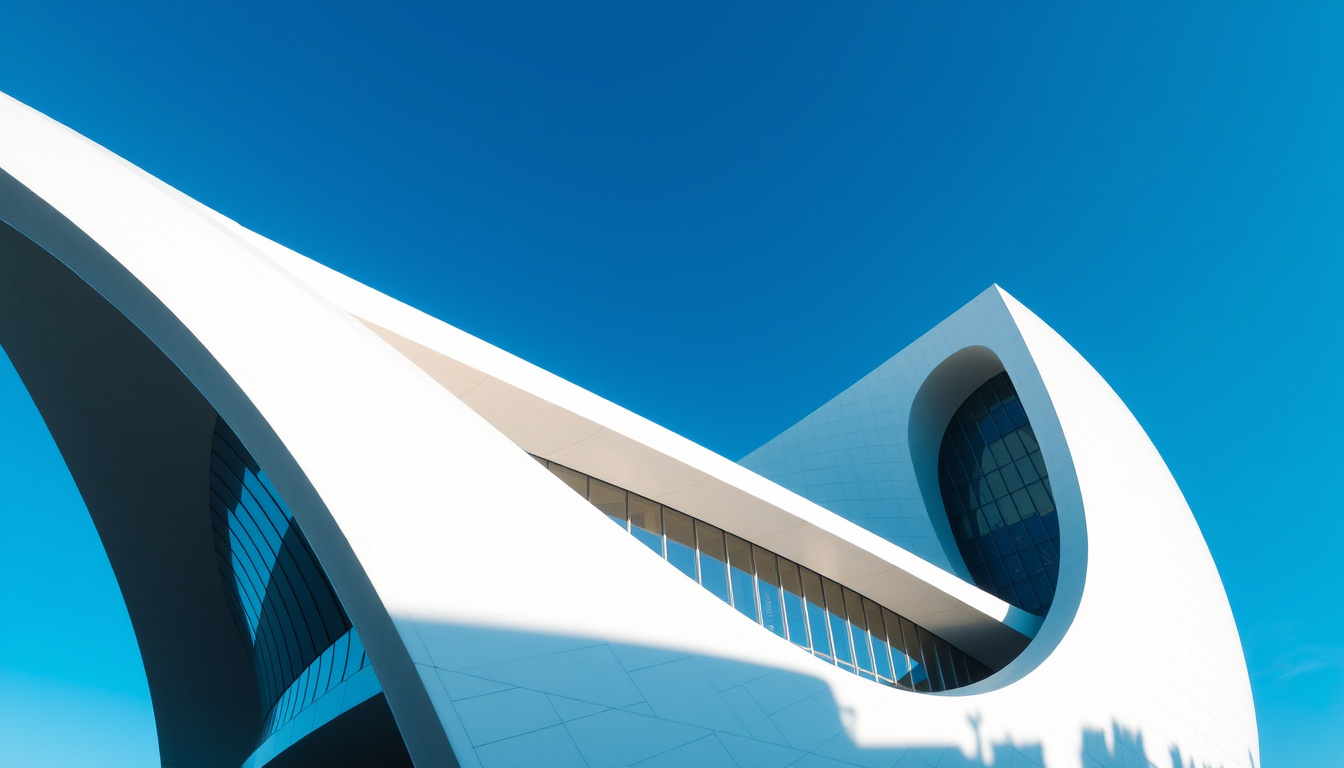
Most people know the name Zaha Hadid even if they can’t name a single building. That’s partly because she was the first woman to win the Pritzker Architecture Prize in 2004, and partly because her flowing, angled designs still look like they arrived from the future. This article follows the money, the controversies, and the buildings to see what her legacy actually rests on.
Born: October 31, 1950, Baghdad, Iraq ·
Died: March 31, 2016, Miami, Florida (Aged 65) ·
Nationality: Iraqi-British ·
Key Award: Pritzker Architecture Prize (2004) ·
Estimated Net Worth at Death: $95 million
Quick snapshot
- First woman to win the Pritzker Architecture Prize in 2004 (Design Museum, London design institution)
- Born October 31, 1950, in Baghdad, Iraq (Britannica, encyclopedic biography reference)
- Died March 31, 2016, in Miami, Florida, at age 65 (British Heritage, historical culture publication)
- Exact personal liquid wealth at death was never itemized in a public probate record
- Whether smoking directly caused her heart attack is not clinically proven, though she was widely reported to be a heavy smoker
- How estate assets are divided among family members has not been made public
- Reported counts of unfinished projects vary from 35 to 36 depending on the source
- 1993: Vitra Fire Station, her first major built work (Praemium Imperiale, international arts award body)
- 2004: Becomes the first woman to win the Pritzker Prize (METALOCUS, international architecture publication)
- 2016: Dies at 65 in Miami (Zaha Hadid Foundation, official archive)
- 36 projects were unfinished at her death (Britannica, encyclopedic profiles)
- More than 35 projects remained in progress when she died (Wallpaper*, international design publication)
- The Zaha Hadid Foundation now safeguards her archive and legacy (Zaha Hadid Foundation, official archive)
The pattern: six rows of data all point the same way — Hadid’s biography was already international before the first building bearing her name even opened.
| Attribute | Detail |
|---|---|
| Full Name | Dame Zaha Hadid |
| Born | October 31, 1950, Baghdad, Iraq |
| Died | March 31, 2016, Miami, Florida, USA |
| Nationality | Iraqi-British |
| Education | American University of Beirut; Architectural Association School of Architecture |
| Key Award | Pritzker Architecture Prize, 2004 |
Did Zaha Hadid have any children?
No — and this is one of the few facts about her private life that biographers state without qualification. Hadid never married and had no children, a fact that appears across profiles from London’s Design Museum to encyclopedic references and shapes every inheritance question below. It was a deliberate trade-off, and it quietly determined what happened to her name, her firm, and her fortune after 2016.
With no spouse or direct heirs, the “who inherited Zaha Hadid’s fortune” question was always going to be answered by institutions, not by a family dynasty.
Is Zaha Hadid related to Gigi Hadid?
- No documented family link connects the architect and the model.
- The shared surname is a coincidence that resurfaces in search engines every few months.
Zaha Hadid was born in Baghdad in 1950; Gigi Hadid’s family history sits in an entirely separate line of the same surname. No one in either family has ever confirmed a connection, and no biography of either woman mentions the other. The relationship rumor is a textbook case of “famous same surname.”
The implication: when a surname becomes famous twice, the internet builds a family tree out of thin air. Hadid’s real biography never needed one.
Does Zaha Hadid have a husband?
- Hadid never married.
- No major profile from her lifetime names a long-term partner.
The “husband” question persists because Hadid’s life refused a comfortable template: a towering public career and no visible private partner. Her answer was to outwork everyone else and let the buildings act as biography. The absence of a spouse is the entire answer, and it is also the point.
Was Zaha Hadid a millionaire?
Yes, by any meaningful measure. Press estimates at the time of her death placed her net worth near $95 million, a figure repeated in obituary coverage and celebrity net worth summaries ever since. The honest caveat: no detailed public probate filing itemized the fortune, so the number is best read as an informed press estimate, not a forensic accounting.
Who inherited Zaha Hadid’s wealth?
- Her family inherited the financial estate.
- The Zaha Hadid Foundation controls the archive and legacy (Wallpaper*, international design publication).
Because Hadid had no children, the estate went to her relatives. The foundation’s London archive — described in Wallpaper*’s coverage as the physical home of her working legacy — is the clearest sign of how the cultural side of the inheritance was partitioned: family for the money, foundation for the name. That split explains why “who inherited Zaha Hadid’s fortune” always gets a two-part answer.
Until the foundation publishes audited accounts or a probate record surfaces, the $95 million figure will keep circulating as confirmed fact. It is an estimate, not a receipt.
The trade-off: Hadid built a business large enough to outlive her, but the exact size of her personal fortune now lives in press memory rather than public record.
What is Zaha Hadid’s most famous piece of work?
The nearest thing to a consensus is the Heydar Aliyev Center in Baku, Azerbaijan. Its white, gravity-defying curves became the most reproduced symbol of Hadid’s style, and Wikipedia’s project list for Zaha Hadid Architects includes it as one of the firm’s signature works (Wikipedia, community-edited encyclopedia).
What are the other famous Zaha Hadid buildings?
- Vitra Fire Station, Germany
- Bergisel Ski-Jump, Austria
- Phaeno Science Center, Germany
- BMW Central Building, Germany
- Rosenthal Center for Contemporary Art, Cincinnati, USA
- Maggie’s Cancer Care Centre, Scotland
Praemium Imperiale’s laureate biography, an award-body reference, lists this exact sequence as part of her major completed work, including Maggie’s as her first UK building (Praemium Imperiale, international arts award body). The London Aquatics Centre, built for the 2012 Olympics, is the project British audiences are most likely to see in person, and the MAXXI museum in Rome is the one that sealed her place in the European cultural establishment.
The pattern: her fame rests less on one singular masterpiece than on a proof-of-concept moment in Germany and two decades of increasingly assured civic work.
What was the cause of Zaha Hadid’s death?
Zaha Hadid died on March 31, 2016, in Miami, Florida, from a heart attack while being treated for bronchitis (British Heritage, historical culture publication). She was 65. The sequence — respiratory infection, then cardiac arrest — is medically common, but it reopened the public conversation about the pace she kept for forty years.
Was Zaha Hadid a smoker?
- Widely reported to be a heavy smoker for most of her career.
- No clinical proof directly links the smoking to her heart attack.
She was being treated for bronchitis when the heart attack struck, as recorded in the profile above — and that is as far as the verified medical record goes. Whether smoking caused the heart attack cannot be settled from a biography, and the “heavy smoker” reputation comes from reporting rather than a detailed clinical record.
An international practice on Hadid’s scale means relentless travel, and relentless travel does not help a respiratory infection. The medical record is the quiet reminder that her work ethic had a physical price.
Where is Zaha Hadid buried?
- Brookwood Cemetery, Woking, England.
Hadid is buried at Brookwood Cemetery in Woking, England. The location fits the arc of her life: an Iraqi-born architect who made London her base for more than four decades and now rests in an English graveyard. Her grave is private, which suits someone who preferred the buildings to speak.
The catch: the cause-of-death questions that keep trending promise a hidden story. The verified one is ordinary — bronchitis, a heart attack, and a burial in England. The drama was in the architecture.
What were the controversies surrounding Zaha Hadid?
The most damaging controversy of her final years involved Qatar. Her firm designed the Al Janoub Stadium, a 2022 World Cup venue, and Wikipedia’s history of Zaha Hadid Architects records that the project drew criticism over allegations of worker deaths during construction (Wikipedia, community-edited encyclopedia). The story attached to her name with unusual force because she was the most visible architect working in the Gulf, even though the allegations centered on site labor conditions rather than her design.
- Al Janoub Stadium worker-welfare allegations
- Statements on women in the Middle East that drew backlash
- Scrutiny of business practices and legal disputes over projects
The same Wikipedia history describes Hadid’s blunt comments about women in the Middle East as another flashpoint. She rejected the Western framing of Arab women as passive victims, which won her praise from some critics and accusations of defensiveness from others. Her business practices — including fee disputes and project delays — were a quieter but constant source of criticism throughout her career.
The catch: her international commissions and her unfiltered public statements made her a lightning rod in a way most star architects never experience. The controversies are now part of the archive, and they will stay there.
What was Zaha Hadid’s most famous quote?
The line that follows her everywhere — quoted in lectures, on merchandise, and on architecture-themed social accounts — is “There are 360 degrees, so why stick to one?” She used it in interviews to explain why her buildings rejected straight lines and right angles, and it remains the clearest summary of her working method.
What are some interesting facts about Zaha Hadid?
- She completed roughly 35 buildings during her lifetime, with more than 35 projects still in progress when she died (Wallpaper*, international design publication).
- According to Wikipedia’s project history, her firm’s portfolio also includes the official Olympic torch for Tokyo 2020 (Wikipedia, community-edited encyclopedia).
- The Zaha Hadid Foundation in London now holds the drawings, models, and working archive of her practice (Wallpaper*, international design publication).
What this means: Hadid’s most quoted line is not a slogan — it is a design philosophy. The “360 degrees” quote explains the same refusal to conform that produced her most famous buildings.
Timeline: Zaha Hadid’s life at a glance
Her career moved in two acts: long years of paper projects, then a relentless stream of built work after the Pritzker Prize.
- 1950 — Born in Baghdad, Iraq
- 1972–1980 — Moves to London, studies at the Architectural Association, and founds Zaha Hadid Architects
- 1993 — Completes the Vitra Fire Station, her first major built work (Praemium Imperiale, international arts award body)
- 2004 — Wins the Pritzker Prize, the first woman to do so (METALOCUS, international architecture publication)
- 2010–2012 — MAXXI in Rome, the London Aquatics Centre, and the Heydar Aliyev Center in Baku all open
- 2016 — Dies of a heart attack in Miami at age 65 (Zaha Hadid Foundation, official archive)
The pattern: the second half of the timeline is dense because the first half refused to compromise. Once the Pritzker unlocked the door, the projects came in waves.
Confirmed facts vs. open questions
Confirmed facts
- First woman to win the Pritzker Prize in 2004 (Design Museum, London design institution)
- Born in Baghdad on October 31, 1950 (Britannica, encyclopedic biography reference)
- Died in Miami on March 31, 2016, at age 65 (British Heritage, historical culture publication)
Open questions
- Exact net worth at death was never confirmed in a public record
- Direct link between smoking and heart attack is not clinically proven
- Precise estate distribution among relatives has not been made public
- Unfinished-project counts vary from 35 to 36 depending on the source
The balance tilts in one direction: the architecture is documented, while the money stays opaque. For a public figure who guarded her privacy, that mix is exactly what she intended.
Zaha Hadid in her own words
“There are 360 degrees, so why stick to one?”
Zaha Hadid, on her approach to architectural form (Design Museum, London design institution)
“…fractured the geometry of buildings…”
Pritzker Architecture Prize jury, 2004 award citation (METALOCUS, international architecture publication)
What this means: the two quotes frame the public Hadid perfectly — her own words resisted dogma, and the jury’s words described an architect who broke every formal rule in sight.
What the legacy actually means
The contradiction is now the story: a woman who demanded total freedom in geometry also built a commercial enterprise that could survive her death. Her buildings still appear on five continents, and her name still pulls millions of searches — for her net worth, her children, her death, and her quote. For architecture students entering the profession now, the implication is practical: study the curves, but also study the contracts and the controversies, or you will inherit only half the lesson.
Related reading
- Jane Austen: Biography, Facts & Death — another literary-cultural biography with verified life details and unanswered questions.
- Carl Sagan: His Famous Lines, Controversy, and Genius — a parallel story of a public intellectual whose words outlived him.
Frequently asked questions
How did Zaha Hadid begin her career in architecture?
Hadid was born in Baghdad in 1950, studied mathematics in Beirut, then moved to London to attend the Architectural Association. She founded her own studio, Zaha Hadid Architects, in 1980, and spent the next decade fighting to get her radical designs built.
What architectural style is Zaha Hadid most known for?
She is associated with parametric design and deconstructivism — fluid, angular forms that ignored the straight line. The label “Queen of the Curve” followed her for the last two decades of her career.
How many buildings did Zaha Hadid complete in her lifetime?
Roughly 35 buildings were completed during her life, with more than 35 projects still in progress when she died, according to design publication Wallpaper*.
Did Zaha Hadid face professional criticism during her career?
Yes. The sharpest criticism involved allegations of worker deaths during construction of her Qatar World Cup stadium project. She also drew backlash for comments about women in the Middle East and for business practices that critics called sprawling.
What is the Zaha Hadid Foundation and what does it do?
The Zaha Hadid Foundation preserves her archive, drawings, and models, and acts as the institutional custodian of her legacy. Its London archive is the physical center of that effort.
Who was Zaha Hadid’s romantic partner?
No long-term romantic partner is named in any major biographical profile. Hadid never married and had no children, which is why inheritance questions have always focused on her family and foundation.
What was Zaha Hadid’s role in industrial design and fashion?
Beyond architecture, her studio extended the same visual language into furniture, product design, and fashion collaborations, making her name global outside the building industry as well.
Related stories





Craig Newton is Senior Reporter at ScopePress.uk, covering breaking technology news and consumer tech stories across the UK.