
Weather shapes daily decisions for millions of people, from planning outdoor activities to determining what to wear. Understanding current conditions and forecasts requires access to reliable data sources and knowing how to interpret the information presented across various platforms.
Search engines have evolved to provide immediate, location-specific weather information through knowledge panels, interactive radar maps, and real-time updates. Major providers like The Weather Channel and AccuWeather dominate search results, capturing approximately 40-50% of top organic positions through structured data integration and comprehensive forecasting tools.
What Is the Weather Today?
Current weather conditions provide the foundation for daily planning. Local weather packs typically display 3-7 day forecasts with temperature readings, humidity levels, and precipitation chances that update in real-time. These search features prioritize visual, location-specific results over traditional blue links, adapting to both informational and transactional user intents.
Weather conditions today vary significantly by region, with most areas experiencing a combination of temperature, cloud cover, wind, and precipitation factors that together determine the overall feel of the day.
| Metric | Typical Value | Unit |
|---|---|---|
| Temperature | Varies by location and season | °F / °C |
| Humidity | 30-70% average range | Percentage |
| Wind Speed | 5-20 mph typical | mph / km/h |
| UV Index | 0-11+ scale | Numerical |
| Visibility | 6-10 miles clear | miles / km |
Understanding Current Temperature Readings
Temperature measurements represent one of the most sought-after pieces of weather information. The current reading reflects atmospheric conditions measured by nearby weather stations, typically updated every few minutes. These stations collect data from thermometers positioned at standardized heights to ensure consistency across reporting locations.
Weather Conditions at a Glance
Beyond temperature, weather conditions encompass cloud cover, precipitation type and intensity, wind direction and speed, and atmospheric pressure. Weather.com and AccuWeather provide real-time condition updates through interactive widgets that combine these elements into easily digestible summaries. Research indicates that 80-90% of weather queries trigger local packs with these comprehensive overviews.
What Is the Weather Forecast?
Weather forecasts range from hourly predictions to extended 10-day outlooks, each serving different planning purposes. Short-term forecasts leverage high-resolution modeling data, while longer-range predictions rely on statistical patterns and global climate models from organizations such as the European Centre for Medium-Range Weather Forecasts (ECMWF) and the National Oceanic and Atmospheric Administration (NOAA).
Hourly Weather Breakdown
Hourly forecasts provide detailed predictions for the immediate 24-48 hour period, showing expected temperature changes, precipitation timing, and wind shifts. AccuWeather’s MinuteCast feature offers precipitation forecasts down to the minute for specific locations, though forecast accuracy decreases significantly beyond the 6-hour window.
Extended Forecasts and 10-Day Outlooks
Ten-day forecasts aggregate data from multiple global models to project weather trends further into the future. While useful for general planning, these extended outlooks carry substantial uncertainty. Forecast confidence typically drops below 60% after five days, making same-week predictions more reliable than weekend planning based on Monday forecasts.
Meteorologists express forecast uncertainty through probability percentages. Precipitation chances indicate the likelihood of measurable rain occurring at any point in the forecast area during the specified time period.
How Do I Check the Weather?
Multiple platforms provide weather information, each offering distinct advantages. Government sources like the National Weather Service at weather.gov deliver official forecasts with strong emphasis on safety alerts and severe weather warnings. Commercial services supplement official data with enhanced visualization, mobile apps, and user-friendly interfaces.
Official Weather Sources
The National Weather Service operates a nationwide network of weather stations and radar systems, providing authoritative forecasts for the United States. NOAA coordinates these efforts and maintains climate databases that inform long-range predictions. Government sources prioritize accuracy and public safety over commercial considerations, making them trusted references for critical weather decisions.
Weather Apps and Mobile Access
Mobile weather applications dominate how people access forecasts, with GPS-based personalization delivering location-specific information automatically. App listings appear prominently in search results for queries like “weather apps,” featuring store previews and download options. AccuWeather and The Weather Channel apps maintain high click-through rates through push notifications and real-time alerts.
Understanding Weather Radar
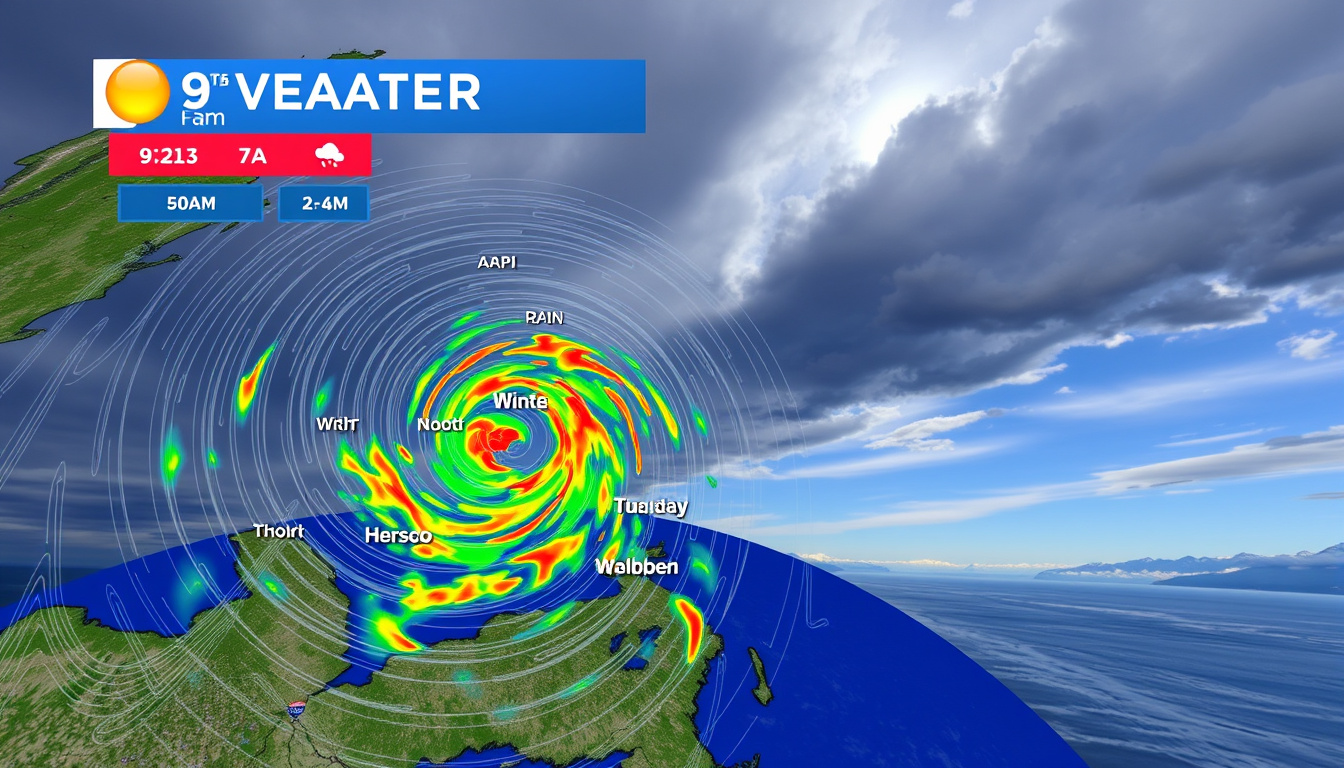
Weather radar systems detect precipitation intensity and movement, providing crucial information for short-term forecasting. The National Weather Service operates NEXRAD radar stations across the country, while commercial providers like AccuWeather offer enhanced radar visualizations with storm tracking and precipitation estimates. Video and image carousels featuring radar animations appear frequently in search results for queries about weather radar.
During active weather events, always prioritize official warnings from the National Weather Service over social media or unverified sources. Radar features intensify during storms, with historical data showing significant SERP volatility during severe weather events.
How Weather Data Is Collected
Modern weather forecasting relies on multiple data collection methods operating continuously around the globe. Surface weather stations measure temperature, pressure, humidity, and wind at ground level, while upper-air stations launch weather balloons twice daily to profile atmospheric conditions from the surface to the stratosphere.
- Surface weather stations record ground-level conditions every minute to several times per hour
- Weather balloons profile temperature, humidity, and wind at various altitudes twice daily
- Radar systems emit signals that reflect off precipitation particles to detect storm structure
- Satellites capture visible and infrared imagery of cloud systems and storm development
- Ocean buoys measure sea surface temperatures and wave conditions
- Aircraft report atmospheric conditions during routine flights worldwide
- Community observers contribute supplementary data through citizen science programs
What We Know and What Remains Uncertain
Weather prediction combines scientific modeling with statistical probability, meaning forecasts express likelihood rather than certainty.
| Established Information | Information That Remains Unclear |
|---|---|
| Current temperature readings from local stations | Exact timing of precipitation arrival within minutes |
| General forecast trends for 24-48 hours | Specific rainfall amounts for particular locations |
| Radar-detected storm positions and movement | Whether thunderstorms will produce severe weather |
| Seasonal climate patterns and averages | Local variations caused by terrain or urban heat islands |
The Science Behind Weather Prediction
Weather forecasting combines atmospheric science, computer modeling, and observational data to project future conditions. Numerical weather prediction models simulate atmospheric behavior using complex equations that describe fluid dynamics, thermodynamics, and radiation processes. These models divide the atmosphere into three-dimensional grid points, calculating changes across each point at regular intervals.
Global forecast models like those operated by the ECMWF and NOAA’s Global Forecast System process millions of observations daily, including satellite data, aircraft reports, and surface measurements. Ensemble forecasting runs multiple model variations to estimate prediction uncertainty, with spread between solutions indicating forecast confidence levels.
Weather forecasting represents one of the most sophisticated applications of applied mathematics, requiring supercomputer resources that rank among the world’s fastest systems to process atmospheric data into actionable predictions.
European Centre for Medium-Range Weather Forecasts (ECMWF)
Summary
Understanding weather conditions and forecasts requires knowing which sources to consult and how to interpret the information they provide. Current conditions can be verified through local weather stations and real-time widgets, while forecasts range from highly reliable short-term predictions to increasingly uncertain extended outlooks. Mobile applications and official government sources like weather.gov and NOAA provide complementary information that together support informed decision-making. For related guidance on information evaluation, see What Is Critical Thinking – Definition, Skills and Development Guide.
Frequently Asked Questions
Is it going to rain today?
Precipitation chances appear in forecasts as percentage probabilities indicating the likelihood of measurable rain occurring anywhere in the forecast area. Check hourly forecasts for timing details and radar imagery for real-time storm tracking.
How accurate is the weather forecast?
24-hour forecasts typically exceed 90% accuracy for temperature predictions. Forecast reliability decreases gradually, with 5-day forecasts around 80% accurate and 10-day outlooks dropping to approximately 60% confidence.
What does the weather radar show?
Radar displays show precipitation intensity and movement using color-coded maps. Greens indicate light rain, yellows moderate precipitation, and reds or purples suggest heavy rain or severe weather. Animation shows storm direction and speed.
How often do weather forecasts update?
Most weather services update forecasts at least twice daily, with severe weather situations triggering more frequent revisions. Radar data updates every 4-6 minutes during active weather, while surface observations typically refresh every 1-5 minutes.
What’s the difference between weather and climate?
Weather describes short-term atmospheric conditions over hours to days, while climate represents average weather patterns over decades. Climate.gov provides resources for understanding long-term climate trends and their relationship to daily conditions.
Related stories





Aisha Khan is AI & Software Correspondent at ScopePress.uk, covering artificial intelligence, software, apps and cybersecurity.