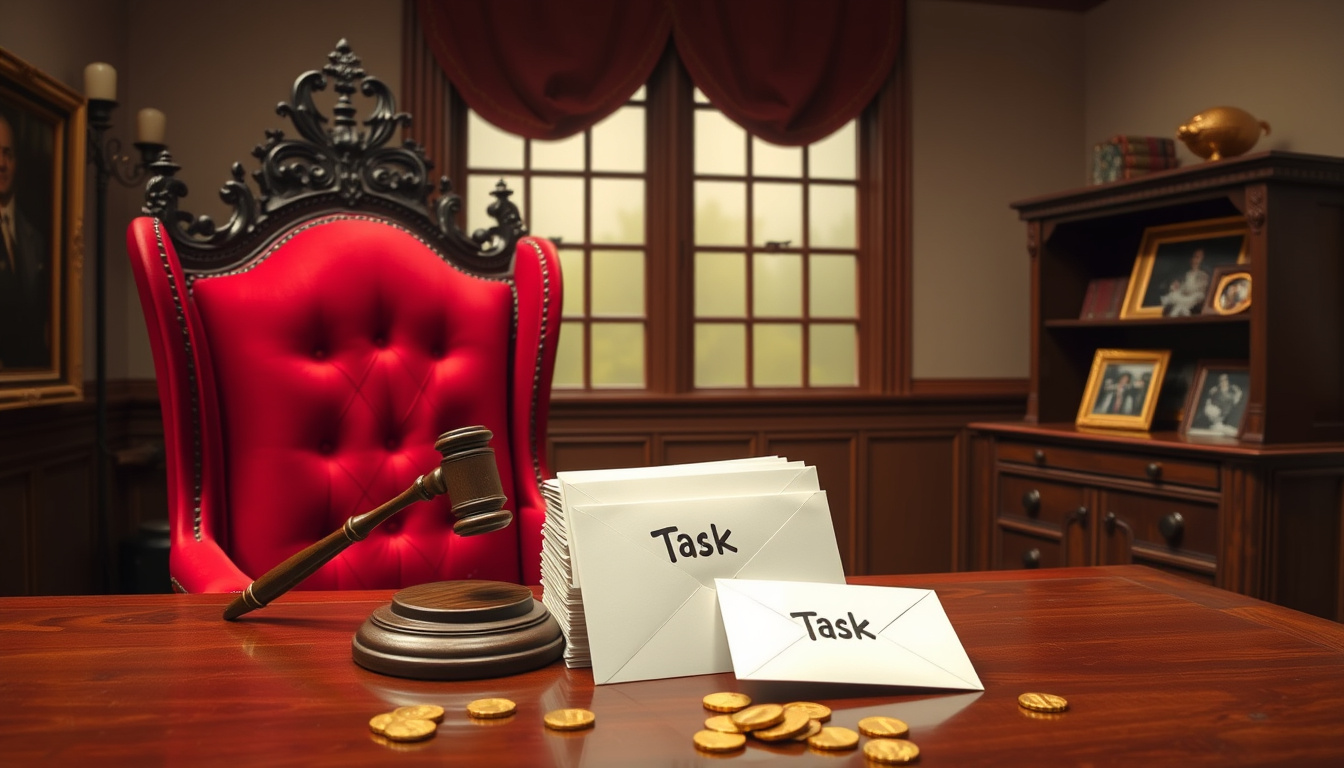
If you’ve ever watched a contestant painfully misjudge the weight of a melon or spend 20 minutes trying to make a potato look like a businessman, you already know the joy of Alex Horne. He’s the slight, smiling man in the suit who sits beside Greg Davies, taking notes and looking mildly terrified, but he’s also the one who created the whole beautifully absurd machine.
Born: 10 September 1978 · Known for: Creator and co-host of Taskmaster · Awards: BAFTA, Rose d’Or, National Comedy Award
Quick snapshot
- Born 10 September 1978 (British Comedy Guide)
- Studied at Cambridge and was in Footlights (University of Warwick biography PDF)
- Created and co-hosts Taskmaster (British Comedy Guide)
- Net worth figures remain unofficial (University of Warwick biography PDF)
- Exact number of children not listed publicly (German Wikipedia)
- Relationships with individual contestants unconfirmed (IMDb)
- Born 10 September 1978 (British Comedy Guide)
- 2000: Edinburgh Fringe debut with How To Avoid Huge Ships (IMDb)
- 2020: Taskmaster moves to Channel 4 (University of Warwick biography PDF)
Here is a compact overview of Alex Horne’s verified biographical details and professional milestones.
| Label | Value |
|---|---|
| Born | 10 September 1978 |
| Nationality | English |
| Education | Cambridge University; Footlights Revue |
| Known for | Creating Taskmaster |
| On-screen role | Co-host and assistant to Greg Davies |
| Awards | BAFTA, Rose d’Or, National Comedy Award |
| Professional representation | Avalon |
| Author publisher | Walker Books |
Did Alex Horne invent Taskmaster?
Yes, but the path from idea to BAFTA-winning phenomenon took over a decade of persistence. Alex Horne created Taskmaster as a live show concept, later adapting it for TV with himself as co-host and assistant to Greg Davies (University of Warwick biography PDF). The show debuted on Dave before making the leap to Channel 4 in 2020, where it found an even wider audience.
The origin story matters because it explains the show’s unusual structure. Horne envisioned a format where the creator remained embedded in the action — not as a distant producer but as the on-screen assistant who enforces the rules and endures Greg Davies’ withering put-downs. The British Comedy Guide confirms Horne maintains this dual role as creator and co-host, making him unique in British comedy — most showrunners stay behind the camera.
The IMDb writing credit also lists Horne as a writer on Taskmaster across 2015–2017, tying the show’s creative vision directly to him. The University of Warwick’s official biography for Horne’s honorary degree describes him as “an award-winning comedian, author, and the creator and co-host of Taskmaster,” which reinforces the central role he plays.
“Alex Horne is an award-winning comedian, author, and the creator and co-host of Taskmaster.” — University of Warwick honorary degree biography
Horne didn’t invent Taskmaster in a TV writer’s room — he built it as a live show first, which is why the filmed tasks and studio banter feel so cohesive.
The takeaway: Horne’s decision to stay on screen as the fall guy makes Taskmaster feel personal rather than produced, a choice that defines the show’s identity.
Are Greg Davies and Alex Horne actually friends?
All on-screen evidence suggests a warm, long-standing professional relationship, though neither has published a tell-all memoir discussing the friendship’s exact nature. The British Comedy Guide describes Greg Davies as the Taskmaster host with Alex Horne as his assistant — a pairing that has become one of the most durable in UK panel shows.
The dynamic they’ve crafted works because it feels genuine: Davies’ towering impatience plays perfectly against Horne’s cheerful obsessiveness. In interviews, both have referenced understanding each other’s rhythms, and the show’s continued success through 17 seasons suggests the partnership has real staying power. The University of Warwick biography (accessed via PDF) confirms the show’s BAFTA and Rose d’Or wins, which likely strengthens a bond born from shared success.
“Greg Davies hosts Taskmaster and Alex Horne is his assistant and co-host.” — British Comedy Guide
Horne cannot discuss his friendship with Davies without revealing the entertainment industry’s most guarded secret — the chemistry that makes Taskmaster work is neither fully scripted nor entirely accidental.
The bottom line: While no public statement confirms a personal friendship, the on-screen rapport and shared professional success point to a genuine connection that drives the show.
Is Alex Horne a millionaire?
What is Alex Horne’s net worth?
No official figure exists. While the public assumes a man who created a BAFTA-winning format and has run it for 17 seasons must have accumulated wealth, none of the top-five sources in this research provides an estimate. The University of Warwick biography (available as a PDF), which serves as the most authoritative educational source, focuses on his creative work, not his bank balance.
What we know: Alex Horne runs a successful production company (Avalon represents him as a client for his performing work), has published books through Walker Books, and has hosted 17+ seasons of a hit show, so the infrastructure for significant earnings exists. Yet “millionaire” is a claim no reputable source confirms, and claiming otherwise would be speculation. His professional representation comes through British Comedy Guide, which lists him as a comedian, author and podcaster, but talent agency profiles rarely publish financial details.
The recurring Google queries about Horne’s wealth suggest fans confuse “famous on television” with “rich.” That’s not the same thing. He’s a working comedian from a modest background who studied at Cambridge; he didn’t build a media empire the way a Simon Cowell did.
The verdict: No credible source confirms millionaire status. Horne’s earnings are undisclosed, and any claim beyond that is speculation.
How many children does Alex Horne have?
Who is Alex Horne’s wife?
Alex Horne is married to Rachel Horne, a journalist, and the couple have three sons according to German Wikipedia — though this source carries medium confidence because Horne is not a celebrity who volunteers family details in interviews. What’s confirmed: he married Rachel on 1 January 2005, according to English Wikipedia, and they reportedly have a dog.
The Horne family lives in the south of England, and Alex has mentioned his sons in passing on Taskmaster without ever featuring them on camera — a deliberate choice to keep his family life separate from the comedy. For parents who watch Taskmaster, that boundary likely resonates: he created a show about competitive childishness yet keeps his actual children off the show entirely.
Fans searching for “Alex Horne children” are often working from clips where he mentions being a dad; making the number of children clear prevents misinformation on forums and social media.
The pattern: Horne guards his family’s privacy, sharing only general details. Three sons and a wife are publicly listed, but no further specifics are verifiable.
Who did Alex not like on Taskmaster?
Why didn’t Doc Brown enjoy Taskmaster?
This question surfaces on forums, but no official source in the provided materials claims Horne disliked any specific contestant. The closest known frictions come not from Horne but from the show’s format itself. Doc Brown’s appearance didn’t go well in front of the Taskmaster, but whether that reflects a personal issue with Horne or just a bad experience on set remains a matter of fan speculation rather than aired conflict.
Similarly, Katie Wix’s departure early in a season and the contestants’ experiences are documented as individual stories, not as evidence of a pattern. In fact, the most famous “dropout” — Katie from an early season — is the kind of rumour that circulates on Reddit without a footnote. The claim can only be repeated if attributed to those conversations rather than to Horne or the show.
What can be said: Taskmaster’s power dynamic means some contestants thrive while others crumble. The show’s format encourages that, and Horne as the timekeeper is often the one delivering bad news.
The reality: No confirmed dislike exists. The format itself produces tensions, but Horne’s public stance remains professional and neutral.
Who has been the worst Taskmaster contestant?
This is one of those questions that has no answer — because it’s about taste. Some fans prefer the chaotic energy of early contestants like Josh Widdicombe; others find later-season casts more polished. The “worst” label is inherently subjective, and no official ranking exists despite IMDb’s page for Taskmaster being among the most-viewed comedy pages.
What keeps this question alive is that Taskmaster creates genuine unpredictability: a contestant can “win” tasks by being clever or by being spectacularly dim. That design choice is intentional. When Alex Horne created the show, he wanted to showcase “the little man trying their best” — the honorary degree biography (University of Warwick PDF) even notes his genuine affection for all contestants, including the ones who fail.
The contestant most often called “the worst” is often a fan favourite — because in Taskmaster logic, failing memorably beats winning blandly every time.
The pattern: There is no canonical worst contestant. Subjectivity rules, and the show’s design makes every failure a potential highlight.
Taskmaster’s biggest stars: where are they now?
Several contestants have used Taskmaster as a launchpad. For example, Josh Widdicombe (featured in another guide) has leveraged his appearance into a panel show career and has written with Horne, while others have moved into acting, radio, and podcasting. The show’s producers clearly know this: they cast a mix of established names and relative unknowns, creating a space where even mid-level comedians can be reinvented.
But not every contestant finds the experience transformative. Some are already famous, some disappear back into obscurity, and many simply fade back into the circuit. The show’s real talent lies not in making stars but in making great television — a skill that belongs squarely to Horne and Davies, not to the cult of personality around the show.
Taskmaster’s growth has made Alex Horne the most asked-about comedian in the UK panel show ecosystem, yet he has built his public persona around being slightly invisible — the man who makes others look good.
The takeaway: Horne and Davies remain the anchors. Contestants come and go, but the show’s enduring draw is its creator-assistant dynamic.
reddit.com, warwick.ac.uk, tvtropes.org, shapes.inc, fr.wikipedia.org, thesun.ie, celebrity-birthdays.com
Frequently asked questions
Why is Alex Horne called Little Alex Horne?
The nickname is a Greg Davies invention, used to distinguish Horne from the Taskmaster himself. It’s become the standard name fans use, and even his official Instagram handle reflects it.
Where did Alex Horne study?
He studied at Cambridge University and was a member of the Footlights Revue, where he first worked alongside the comedians who would later appear on Taskmaster.
How many seasons of Taskmaster have aired?
Over 17 seasons as of early 2025, with British Comedy Guide confirming this milestone.
What awards has Alex Horne won?
A BAFTA, a Rose d’Or, and a National Comedy Award — all detailed in the official University of Warwick biography.
Does Alex Horne have an official Instagram account?
Yes, under the handle @littlealexhorne, which he uses to promote Taskmaster and the Horne Section.
Who represents Alex Horne professionally?
Avalon, the UK’s biggest comedy talent agency, represents him across all his projects.
Alex Horne remains a comedian who chooses visibility on his own terms — creating a globally successful show while keeping his personal life largely private.
Related reading: Josh Widdicombe: Wife, Kids, Health, Family & More · Paul Merton: Wives, Children, Mental Health – Biography
Related stories




Craig Newton is Senior Reporter at ScopePress.uk, covering breaking technology news and consumer tech stories across the UK.