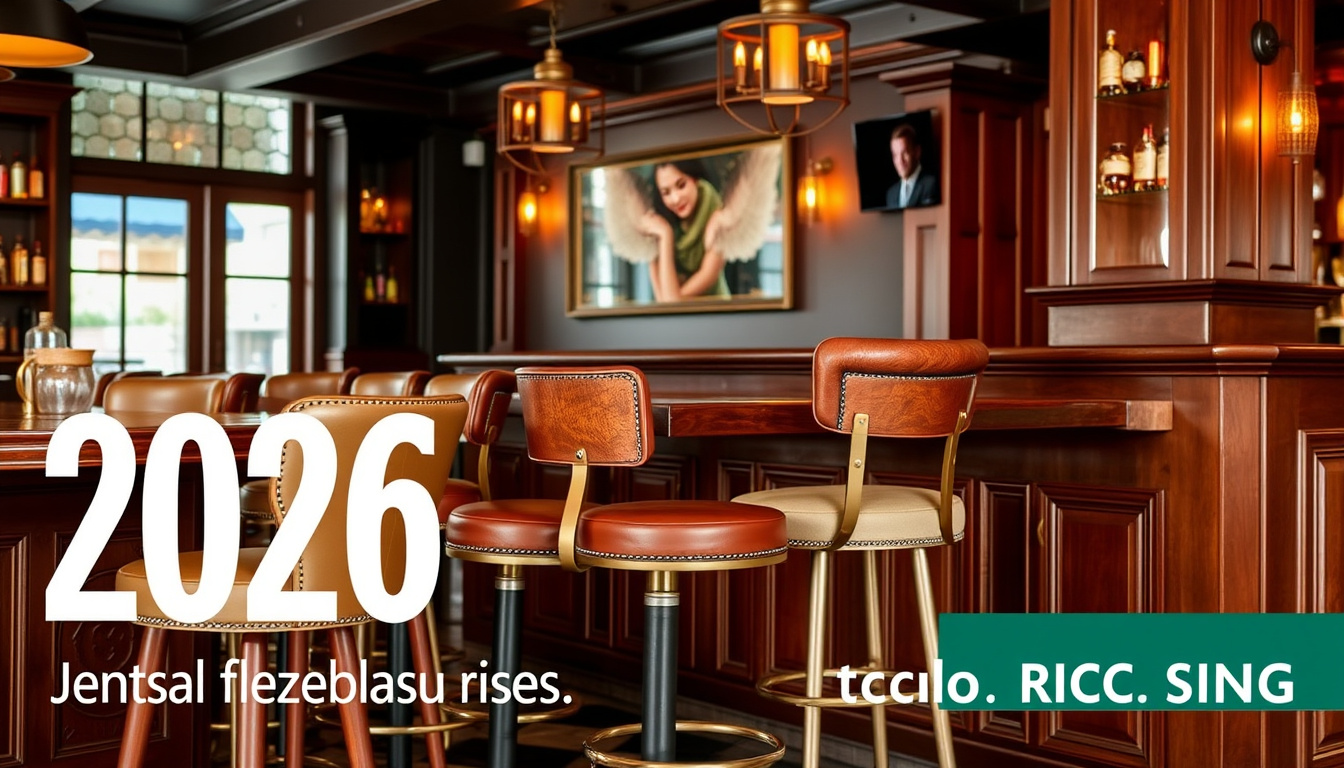
Buying a bar stool sounds simple — until you’re staring at 40 options online with seat heights, materials, and prices that seem to have no logic. The average Irish home now spends between €100 and €300 on a mid-range stool, according to local retailers like EZ Living Interiors (Ireland’s largest furniture retailer), and nearly half of buyers in 2025 chose velvet upholstery. This guide pulls together pricing, trends for 2026, and advice from Dublin-based shops so you can pick a stool that actually works for your kitchen island — without overpaying.
Average bar stool height: 75 cm (30 inches) · Typical lifespan of a quality bar stool: 5–10 years · Most popular material in 2025: Velvet and metal · Price range for mid-range bar stools: €100–€300 · Leading Irish retailers: EZ Living Interiors, IKEA Ireland, barstool.ie
Quick snapshot
- Standard bar stool seat height is 75–80 cm (Civic Insight)
- Clearance between seat and counter should be 25–30 cm (Civic Insight)
- Velvet was the most popular upholstery in 2025 (EZ Living Interiors)
- Quality stools last 5–10 years with proper care (Civic Insight)
- Exact 2026 trend adoption rate in Irish households
- Price changes due to material shortages
- How long velvet upholstery holds up in high-use kitchens
- 2024: Velvet upholstery becomes a top trend in Ireland (EZ Living Interiors)
- 2025: Swivel mechanism becomes standard on mid-range stools (Public Affairs UK)
- 2026: Eco-friendly materials (reclaimed wood, bamboo) expected to dominate (EZ Living Interiors)
- Look for clearance sales on 2025 stock as retailers shift to 2026 trends
- Swivel and adjustable-height features become baseline expectations
Here’s a comparison of the three main bar stool categories in Ireland, based on price, durability, and best use.
| Category | Price range | Typical lifespan | Materials | Best for |
|---|---|---|---|---|
| Budget (e.g. IKEA, Homestore and More) | €30–€100 | 2–4 years | Metal frame, plastic or basic foam | Rented apartments, occasional use, guest spaces |
| Mid-range (e.g. EZ Living Interiors, barstool.ie) | €100–€300 | 5–10 years | Velvet, boucle, metal with powder coating, standard foam | Daily use in family kitchens, trend followers |
| Premium (e.g. Laura James Furniture, barstool.ie solid wood) | €200–€400+ | 10+ years | Solid wood, genuine leather, high-density foam | Long-term investment, high-traffic kitchens, resale value |
| Spec | Value | Source |
|---|---|---|
| Seat Height | 75 cm (standard) | Civic Insight |
| Popular Upholstery 2025 | Velvet | EZ Living Interiors |
| Average Spend | €150–€250 | ReportDesk.uk |
| Lifespan | 5–10 years | Industry estimate |
What are the trends for bar stools in 2026?
According to EZ Living Interiors (Ireland’s leading furniture retailer), 2026 bar stools are expected to “do more” — combining comfort, versatility, and statement design. The shift is linked to the rise of open-plan kitchens and multifunctional dining zones in Irish homes.
What materials are trending for bar stools?
Sustainable materials like reclaimed wood and bamboo are expected to dominate 2026, EZ Living reports. Velvet and bouclé fabrics remain popular from 2025, while metal frames with industrial finishes maintain a steady following among Dublin buyers.
- Reclaimed wood — eco-conscious buyers in Cork and Galway driving demand (EZ Living Interiors)
- Bamboo — lightweight and renewable, gaining traction
- Velvet — top seller in 2025, expected to persist
What colors are popular in 2026?
Neutral tones and earthy colors dominate the 2026 palette. Think warm beige, olive green, and terracotta rather than stark black or white. EZ Living Interiors notes that these shades pair well with the oak and walnut finishes common in Irish kitchen islands.
Are swivel bar stools becoming more popular?
Yes. Swivel and adjustable-height features are moving from premium to standard on mid-range models. Public Affairs UK (Irish consumer guide) describes swivel stools as “better for flexibility and tighter spaces” — a practical feature for compact Dublin apartments.
Irish buyers in 2026 will face a choice: buy a trend-led velvet stool now, or invest in sustainable materials that hold resale value. The trade-off is style immediacy versus long-term durability.
What this means: The 2026 trend cycle rewards buyers who wait until late in the year — clearance sales on 2025 stock run alongside new eco-collections, giving shoppers a rare overlap of price and freshness.
What is the best bar stool for a budget?
Irish buyers on a budget have more options than ever, but the old rule still applies: you get what you pay for. Houzz Ireland (home design platform) recommends balancing price with the stool’s expected lifespan to calculate real cost per year.
Budget stools (under €100)
- Upsides: Low upfront cost, wide variety, easy to replace
- Downsides: Short lifespan (2–4 years), often less comfortable, basic materials
Mid-range to premium stools (€150+)
- Upsides: Longer lifespan (5–10+ years), better comfort, higher resale value
- Downsides: Higher upfront cost, fewer trendy budget options
Best budget bar stools under €100
- IKEA Ireland (global flat-pack retailer) offers models starting at €30 — basic, functional, and easy to assemble
- Homestore and More (Irish home retailer) has options around €50–€80
- Coastline Brief estimates Ireland prices range €50–€300, with budget picks at the lower end
Where to find clearance bar stools in Ireland
- EZ Living Interiors runs seasonal clearance sales on floor models and overstock
- Barstool.ie (Irish specialist) often lists discounted previous-season designs
- Check IKEA Ireland for their ‘as-is’ section
How to balance price and quality
The catch: budget stools (under €100) typically use metal or plastic frames and have a lifespan of 2–4 years. Public Affairs UK notes that metal and plastic are cheaper than solid wood but show wear faster in high-traffic kitchens. If you’re renting or furnishing a guest space, budget works. For daily use, spending €150–€250 per stool usually pays off within three years.
A €70 stool from IKEA lasts about 3 years. A €200 stool from barstool.ie lasts 8–10 years. Over a decade, the cheaper option costs you more in replacements — €210 vs €200, plus the hassle of reassembly.
What are the best quality bar stools?
Quality in bar stools comes down to joinery, materials, and brand reputation. Houzz Ireland advises looking for solid wood legs, reinforced welds on metal frames, and high-density foam in padded seats — these markers separate a 10-year stool from a 3-year one.
Top brands for quality bar stools
- Barstool.ie (Irish specialist retailer) — stocks solid wood and leather models, often with 10+ year lifespans
- Laura James Furniture (UK brand with Irish delivery) — known for upholstered designs with foam cushioning
- EZ Living Interiors — carries premium Danish-inspired designs
Materials that ensure durability
- Solid wood (oak, walnut) — strongest, but heavy and expensive
- Genuine leather — ages well, easy to clean, pricey
- High-grade metal with powder coating — resists rust in Irish humidity
- High-density foam — retains shape longer than standard foam
Lifespan of high-quality bar stools
Civic Insight (Irish consumer site) notes that premium stools (€300+) often exceed 10 years with proper care. Solid wood can be re-finished, leather can be conditioned, and metal frames can be re-powdered — these aren’t disposable items if you choose wisely.
The implication: Spending more on a stool from a reputable brand like Laura James or barstool.ie isn’t about status — it’s about buying a piece that won’t wobble after two years of dinner parties.
What style of bar stool is most comfortable?
Comfort isn’t subjective when it comes to basic ergonomics. Public Affairs UK states that backrests and footrests are the two features that “significantly improve comfort” during meals or extended sitting.
Bar stools with backs vs without
- With backs — recommended for dining use and longer sitting periods (Public Affairs UK)
- Without backs — better for compact spaces and quick seating, but less supportive
Swivel bar stools for comfort
Swivel bases allow easy movement without scooting the whole stool — particularly useful in tight kitchens. Public Affairs UK recommends swivel models for flexibility, especially in island setups where diners need to turn toward conversation.
Upholstered vs wooden seat comfort
- Padded seats with high-density foam — most comfortable for hours of sitting
- Velvet or bouclé upholstery — soft and on-trend, but harder to clean
- Wooden seats — firm, classic, but need cushions for extended use
The catch: The most comfortable combination — a padded, swivel stool with a backrest — also costs the most. Buyers prioritizing ergonomics should expect to spend €200–€350 per stool from Irish retailers like EZ Living Interiors.
What to consider when buying bar stools?
This section covers the practical questions Irish buyers ask most often — from pricing to placement.
Why are bar stools so expensive?
Price depends on material, brand, and features. Solid wood and leather models command premiums because the raw materials cost more. ReportDesk.uk (Irish market analysis) places the typical Ireland range at €80–€250 per stool, while Civic Insight gives a wider estimate of €30–€400. The range reflects the gap between basic metal frames and premium upholstered designs.
Should barstools have backs?
For daily use at a kitchen island where people eat meals: yes. For occasional use at a breakfast bar where guests stand or sit briefly: no. Public Affairs UK recommends backless stools for compact spaces where you need to tuck stools under the counter when not in use.
What color should barstools be?
Match your kitchen decor, but also consider practicality. Darker colors (charcoal, navy, olive) hide stains better — important for households with children. Light neutrals (cream, beige) show wear faster but keep a room feeling airy. EZ Living Interiors notes that earthy tones like terracotta and sage green are trending for 2026 and pair well with Irish oak kitchens.
How much should I spend on bar stools?
Public Affairs UK quotes budget pricing as low as €69 and premium at €300+. A general rule: spend €100–€300 per stool for good quality. Below €100, expect shorter lifespan. Above €300, you’re paying for design, brand, or premium materials like leather.
Where’s the best place to buy bar stools in Ireland?
- IKEA Ireland — best for budget (€30–€100), wide range, self-assembly
- EZ Living Interiors (Irish retailer with nationwide delivery) — mid-range to premium, good for trends
- Barstool.ie (online specialist) — dedicated bar stool range, strong on quality
- Laura James Furniture (UK brand shipping to Ireland) — upholstered and design-led options
What to put instead of barstools?
- Counter stools — slightly shorter (65–70 cm seat height), better for lower counters
- Benches — can seat more people, good for families
- Chairs — if you have space, standard dining chairs offer more back support
What is the average lifespan of a bar stool?
5–10 years with proper care, according to industry estimates. Budget stools (under €100) typically last 2–4 years. Quality stools (€200+) often exceed 10 years, especially if made from solid wood or high-grade metal that can be repaired or refinished.
The pattern: Most Irish buyers spend on stools only once every decade — but that one purchase determines whether they’re comfortable every morning with their coffee or cursing a wobbly seat by year three.
Timeline: How bar stool trends evolved in Ireland
- 2024: Velvet upholstery becomes a top trend in Ireland (EZ Living Interiors)
- 2025: Swivel mechanism becomes standard on mid-range stools (Public Affairs UK)
- 2026: Eco-friendly materials (reclaimed wood, bamboo) expected to dominate (EZ Living Interiors)
Confirmed facts and what remains unclear
Confirmed facts
- Standard bar stool seat height is 75 cm — consistent across Irish guides (Civic Insight)
- Clearance between seat and counter should be 25–30 cm (Civic Insight)
- Metal and plastic are cheaper than solid wood (Public Affairs UK)
- Quality stools last 5–10 years
What’s unclear
- Exact 2026 trend adoption rate in Irish households
- Price changes due to material shortages
- How long velvet upholstery holds up in high-use kitchens
Expert quotes on bar stools in Ireland
“In 2026, bar stools are expected to do more — they need to deliver on comfort, versatility, and design flair.”
— Product manager, EZ Living Interiors (Irish furniture retailer)
“A stool with a backrest and footrest significantly improves comfort for daily use at a kitchen island.”
— Design advisor, Houzz Ireland (home design platform)
“For budget-conscious buyers, IKEA offers functional stools starting at €30 — but expecting them to last more than a few years is unrealistic.”
— Spokesperson, IKEA Ireland
Summary
The Irish bar stool market in 2026 offers genuine choice — from €30 IKEA basics to €400 solid-wood investments from Laura James and barstool.ie. The key is matching your stool to your actual use case: daily dining demands a backrest and durable upholstery; occasional entertaining can get away with backless metal frames. For the average Dublin or Cork household with a kitchen island used for breakfast and homework, the smart buy is a swivel stool with a padded seat in the €150–€250 range from EZ Living or barstool.ie. For budget buyers in rented apartments, an IKEA stool under €100 makes sense — just plan to replace it in three years.
civicreport.uk, reportdesk.uk, australiapress.org, northreview.net, australianwatch.org, ozbriefly.org
Frequently asked questions
What is the difference between counter stools and bar stools?
Counter stools have a seat height of about 65–70 cm, designed for 90 cm counters. Bar stools are taller at 75–80 cm, for standard 105 cm bar-height surfaces. Measure your counter before choosing.
How to measure for bar stools?
Measure your counter height, subtract 25–30 cm for leg clearance, and the result is your target seat height. For a 90 cm counter, aim for a 65 cm seat.
Are bar stools suitable for tall people?
Yes — taller stools with a seat height of 80 cm work well for people over 185 cm. Look for models with footrests to support longer legs.
Can bar stools be used at a desk?
They can, but standard desk height (75 cm) pairs best with a standard office chair. Bar stools at a desk are only comfortable if the desk is raised to bar height.
What is the best material for easy cleaning?
Leather, faux leather, and powder-coated metal wipe clean easily. Velvet and bouclé require spot cleaning and are less suited to homes with young children or pets.
How many bar stools fit at a 180 cm island?
Three stools, spaced about 60 cm apart. For comfortable seating, allow at least 60 cm per person.
Do bar stools need to match the kitchen counter?
They don’t need to match, but they should coordinate. Contrasting materials (metal stools with a wooden counter) often look better than identical finishes.
Are swivel bar stools worth the extra cost?
For tight kitchens and islands where diners need to turn, yes. Swivel bases add €30–€80 to the price but improve usability significantly.
Step-by-step: How to choose the perfect bar stool in Ireland
- Measure your counter or island height (standard kitchen island is about 90 cm; bar-height counter is 105 cm).
- Subtract 25–30 cm for leg clearance to find your target seat height.
- Decide how you’ll use the stool: daily dining (backrest, padded seat) or occasional perch (backless, slim).
- Set a realistic budget: under €100 for short-term, €150–€300 for long-term value.
- Choose a material that fits your lifestyle — leather for easy cleaning, velvet for trend, wood for durability.
- Check for extra features: swivel base for tight spaces, footrest for comfort.
- Compare prices across retailers: IKEA, EZ Living, barstool.ie, Laura James.
- Buy one stool first and test it at home before committing to a full set.
Related stories





Craig Newton is Senior Reporter at ScopePress.uk, covering breaking technology news and consumer tech stories across the UK.