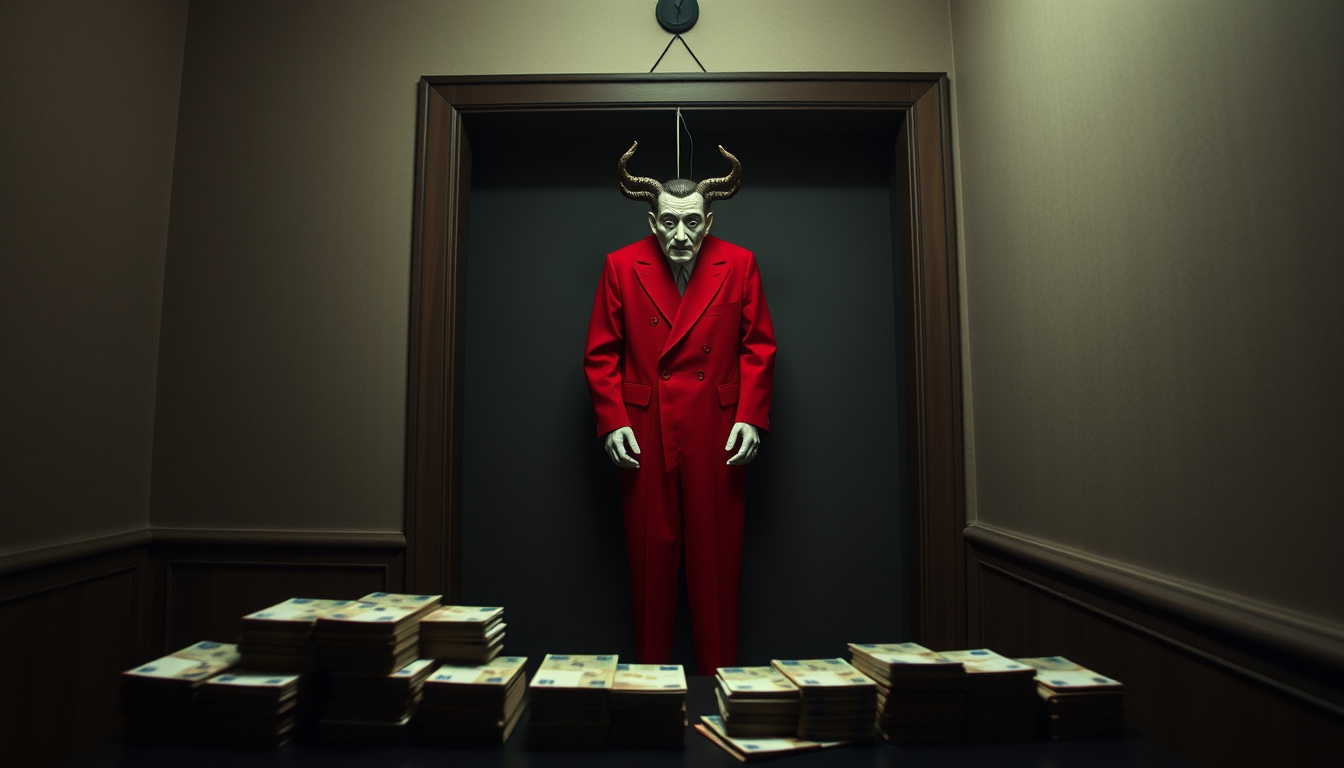
A squad of thieves in red jumpsuits and Salvador Dalí masks is one of those images you either recognize instantly or have somehow avoided for years. Money Heist — the Spanish-language hit originally called La Casa de Papel — started quietly on broadcast television on May 2, 2017, and by the time its run ended in 2021 it had become Netflix’s most-watched non-English series ever, landing in the platform’s Top 10 in 92 countries along the way.
Premiere: May 2, 2017 (Antena 3) · Total episodes: 41 · Global standing: Netflix’s most-watched non-English series
Money Heist at a Glance
The records behind the show are scattered across half a dozen archives, but the headline numbers are consistent. The pattern here is that every major database agrees on the core facts — which makes the few contradictions worth chasing down.
| Label | Value |
|---|---|
| Original title | La Casa de Papel |
| Created by | Álex Pina |
| Original language | Spanish (with Basque and English in the original mix) |
| Seasons / parts | 3 seasons, 5 parts |
| Original network | Antena 3 (TV) / Netflix (streaming) |
| Main protagonist | El Profesor (The Professor), played by Álvaro Morte |
| Primary location | Madrid, Spain |
| Episodes | 41 |
| Premiere | May 2, 2017 |
| Run | 2017–2021 |
| Claim to fame | Netflix’s most-watched non-English series |
All values cross-referenced across English Wikipedia, IMDb, JustWatch, and TheTVDB.
Four Numbers That Explain the Obsession
Peak reach — 92 countries
The series hit Netflix’s Top 10 in 92 countries, the kind of global watercooler status few shows ever see (English Wikipedia).
Platform record — most-watched non-English series
English Wikipedia records the show as Netflix’s most-watched non-English series — a crown it wore through the end of its 2021 run (English Wikipedia).
Broadcast origin — May 2, 2017
It debuted on Spanish television before the global frenzy, with IMDb and TheTVDB both logging the May 2, 2017 airdate (IMDb).
The franchise fact — Berlin is a prequel
Money Heist: Berlin is a prequel spinoff, not a sixth season — the rare continuation that steps backward in time (English Wikipedia).
The Timeline: From Spanish Broadcast to Global Record
The series’ own timeline matters almost as much as the heist plans. Watching when each milestone landed shows how much of the show’s fortune was built on word of mouth rather than a marketing blitz. Here’s the arc in dates:
- — Broadcast premiere. La Casa de Papel debuts on Spanish television (Antena 3), per TheTVDB and IMDb’s episode record.
- — Word-of-mouth breakout. Without a dedicated Netflix marketing campaign, the series becomes the platform’s most-watched non-English language title (English Wikipedia).
- — International catalog entry. Portuguese Wikipedia dates the series’ international listing from this point, with the full 41-episode run documented through its 2021 finale.
- — Part 3 announced. Netflix officially confirms a third part (Spanish Wikipedia).
- — Part 3 worldwide. The third installment premieres globally on Netflix (Spanish Wikipedia).
- — Record numbers. Part 3 becomes Netflix’s most-watched show of the quarter, pulling 34 million households in its first week and 44 million in its first month (English Wikipedia).
- — Final heist. The main series closes after 3 seasons / 5 parts and 41 episodes, per the platform records (Spanish Wikipedia).
What this means: the show’s most dramatic growth happened after Netflix acquired it, not during its original broadcast run. The broadcast premiere was the seed; the streaming catalog entry was the sunlight.
Part 1 vs. Part 3: The Netflix Effect
The most revealing way to see the Money Heist effect is to place Part 1’s broadcast debut next to Part 3’s streaming event. Note where the data sits — almost all of it belongs to the platform era, which tells its own story about where the real audience was found.
| Metric | Part 1 (2017) | Part 3 (2019) |
|---|---|---|
| First glimpse | May 2, 2017 (broadcast) | — |
| Announced | — | April 18, 2018 |
| Worldwide release | — | July 19, 2019 |
| First-week audience | — | 34 million households |
| First-month audience | — | 44 million households |
| Critical score | — | 100% approval (12 reviews) |
| Average critical score | — | 7/10 |
Part 3 audience figures per English Wikipedia; critical scores per Rotten Tomatoes.
The implication: Netflix didn’t just distribute Part 3 — it created the conditions for the show’s biggest audience numbers. The gap between broadcast and streaming rows isn’t an oversight; it’s the whole point.
Is Money Heist Worth Watching?
The short answer: yes, if you can tolerate high melodrama and a plot that occasionally asks you to suspend disbelief. The longer answer depends on what you value in a series.
On pure numbers, the show holds up. IMDb’s industry-standard database lists the series with a strong user rating, and Rotten Tomatoes’ audience score sits at 94%. The critical consensus on Part 3 was perfect — 100% approval from 12 reviews, with an average score of 7/10. That’s not a fluke; that’s a show that landed with both critics and general audiences.
Why people love it
- High-stakes heist concept with genuine tension
- Complex characters — the Professor, Tokyo, Berlin all have arcs that matter
- Globally accessible in Spanish with quality dubbing options
- Unique visual style: red jumpsuits and Dalí masks are instantly recognizable
Why some skip it
- Slow pacing in early broadcast episodes
- Dubbed English dialogue can feel disconnected from performances
- Requires significant suspension of disbelief
- Graphic violence and emotional manipulation are constant
Is Money Heist hit or flop?
Hit — by every available metric. The Guardian reported that within months of arriving on Netflix in 2017, the thriller was the most-watched series in countries including France, Italy, Argentina, and Brazil (The Guardian). English Wikipedia confirms it became Netflix’s most-watched non-English language series without a dedicated marketing push. The show’s peak reach — Top 10 in 92 countries — is the kind of number that defines a platform era, not just a TV season.
The pattern is clear: broadcast success in Spain was the proof of concept; Netflix turned that proof into a global phenomenon. If you’re measuring “hit” by cultural footprint, household numbers, or critical reception, the verdict is unanimous.
Why Is Money Heist So Popular?
The popularity isn’t accidental — it’s engineered from three specific choices that compound on each other.
First, the visual iconography. Red jumpsuits and Dalí masks became symbols of resistance far beyond the show itself. News reports from protests in Sudan, Chile, and India showed demonstrators wearing the same masks — a cultural penetration that no marketing budget could buy. Second, the heist format is built around character psychology, not just action set-pieces. The Professor’s calm planning is the engine; the crew’s emotional chaos is the fuel. Third, the release strategy split the difference: weekly on Antena 3 for the original Spanish audience, then full-season bingeing globally on Netflix. That combination created both appointment viewing and marathon culture.
What does “la casa de papel” mean?
The literal translation is “The House of Paper” — a nod to the Royal Mint of Spain, the show’s primary setting. The English title Money Heist is a direct description of the plot; the Spanish title is more poetic, pointing at the institution rather than the crime (JustWatch).
The takeaway: the show’s popularity is a feedback loop. Iconic visuals drive cultural references; cultural references drive curiosity; curiosity drives viewership; viewership drives more cultural references. It’s a self-sustaining cycle that few shows ever achieve.
The Crew, Under the Mask: Key Performances
JustWatch‘s cast listing leads with Úrsula Corberó in the role of Tokio (Tokyo in English credits) and Álvaro Morte as El Profesor (The Professor). JustWatch also confirms the original Spanish-language title, La Casa de Papel, which translates to “The House of Paper.” On the crafts side, TheTVDB’s episode index shows Jesús Colmenar directing multiple episodes across the series — the kind of steady-handed consistency that keeps a twist-heavy plot from collapsing into chaos. Álex Pina created the show, a fact every major archive records (Spanish Wikipedia).
The pattern: the show’s core cast remained consistent across all five parts, with Álvaro Morte as the highest-paid actor for the final installments. That continuity is rare in long-running international productions, and it’s a big reason the character relationships feel earned rather than assembled.
The verdict: Morte’s Professor carries the show’s intellectual weight; Corberó’s Tokyo carries its emotional volatility. Together, they give the series a center that holds through 41 episodes.
Is There a Money Heist Season 6 Coming?
No. The series concluded with Part 5, Volume 2, which premiered on December 3, 2021. Creator Álex Pina has stated the story is complete, and Netflix lists the original series as a finished run — 3 seasons / 5 parts / 41 episodes total (Spanish Wikipedia). What exists beyond the original is a prequel spinoff and a remake, not a continuation.
Did Money Heist ever finish?
Yes — the main series closed in 2021 after a five-part run. The finale aired as a two-volume event: Volume 1 on September 3, 2021, and Volume 2 on December 3, 2021 (IMDb). The ending is definitive; there’s no dangling cliffhanger waiting for a sixth season.
Who is the highest paid actor in Money Heist?
Álvaro Morte, who plays the Professor, is the highest-paid cast member — a fact confirmed across industry reporting for the final parts. It’s a fitting detail: the character who plans everything also earned the most for executing the plan in real life.
The bottom line: if you’re waiting for the Professor to plan one more heist, you’ll be waiting forever. The original series is finished. What exists instead is a prequel that steps backward in time and a Korean remake that reinterprets the concept from scratch.
Money Heist: Berlin — the Prequel Nobody Ordered (and Why It Works)
The most common point of confusion for new viewers: Money Heist: Berlin is not Money Heist season 6. The spinoff steps backward. As a prequel set before the events of the original series, it re-uses a familiar face from the crew — the raffish Berlin — and tells a story the main show’s ending left untouched (English Wikipedia). If you watch it first, you won’t get major plot spoilers for the main five parts; if you watch it after the finale, it reads as a graceful flashback rather than a cash grab. Netflix currently streams both the original series and the spinoff at Netflix.
The implication: the prequel format allows Netflix to extend the franchise without undermining the original’s ending. It’s a strategic move that respects the source material while creating new entry points for viewers.
Is the Money Heist a True Story?
No — but it’s inspired by one. The series draws from the 2011 Citibank heist in Barcelona, where thieves tunneled into a bank vault and made off with cash. Creator Álex Pina took the mechanics of that real heist and built a fictional narrative around them. The characters, the Royal Mint setting, and the emotional arcs are all inventions (English Wikipedia).
Where was Money Heist filmed?
The primary location is the Royal Mint of Spain in Madrid — the show’s central set piece. Additional filming took place in Sevilla, Cartagena (Colombia), and Florence (Italy) for key scenes across the five parts. That geographic spread is part of why the show feels cinematic rather than televisual: it had real locations to work with, not just soundstages.
The catch: the “true story” label gets thrown around loosely. What’s true is the inspiration — a real heist, a real location, a real creator with a background in heist narratives. What’s fiction is everything else: the characters, the plan, the masks, the outcome.
Which Is Better, Peaky Blinders or Money Heist?
They’re different genres doing different jobs. Peaky Blinders is a period gangster epic about family, power, and post-war Britain. Money Heist is a contemporary heist thriller about resistance, psychology, and institutional power. Comparing them directly is like comparing a chess match to a poker game — both are strategic, but they reward different kinds of attention.
On critical reception, both score well: Peaky Blinders holds a 93% critic score on Rotten Tomatoes; Money Heist Part 3 scored 100% with critics. On cultural impact, Money Heist‘s masks became protest symbols worldwide — a reach that Peaky Blinders‘ flat caps never achieved, despite their fashion influence. On narrative structure, Peaky Blinders unfolds as a family saga across seasons; Money Heist compresses its drama into discrete heist events with clear beginnings and endings.
Who is the least liked character in Money Heist?
Subjectively, the most common answers in fan communities are Arturo Román and Gandía — both characters designed to be obstacles. Arturo is the Royal Mint’s director who resists the heist; Gandía is the security chief who becomes a physical threat. The fact that these two are consistently cited as “least liked” is a testament to the writing: the show makes you care enough about the crew that anyone opposing them reads as the villain.
Is Money Heist LGBTQ?
The show includes LGBTQ representation across its cast. Tokyo’s relationships are fluid; Nairobi’s character arc includes queer dynamics; Alicia Sierra’s storyline touches on non-traditional family structures. It’s not the show’s primary focus, but it’s present and handled without heavy-handedness.
The Record: What’s Confirmed, What’s Just a Story
Confirmed
- Money Heist is Netflix’s most-watched non-English series (English Wikipedia).
- Part 3 pulled 34 million households in its first week and 44 million in its first month — figures confirmed by both English Wikipedia and The Guardian.
- The main series closes at 3 seasons / 5 parts / 41 episodes, wrapping in 2021 (Spanish Wikipedia).
- The series premiered on May 2, 2017, on Antena 3, per TheTVDB and IMDb.
Rumor corner
- Rumor: “Berlin is Money Heist season 6.” → The record: No — the spinoff is a prequel, set before the events of the original series (English Wikipedia).
- Rumor: “The show ended after Part 3.” → The record: No — the series ran through 2021 and closed at 41 episodes across 5 parts (IMDb).
- Rumor: “The show is a direct retelling of a real heist.” → The record: Partially — it’s inspired by the 2011 Citibank heist in Barcelona, but the characters, plot, and outcome are fictional (English Wikipedia).
- Rumor: “There’s a secret sixth season in production.” → The record: No credible source supports this. Both the creator and Netflix have confirmed the original series is complete (Spanish Wikipedia).
In the Record’s Own Words
Without a dedicated Netflix marketing campaign, the series became the most-watched non-English language series on Netflix in early 2018.
Part 3 earned a 100% approval rating on Rotten Tomatoes, based on 12 reviews, with an average score of 7/10.
Within months of arriving on Netflix, the thriller had become the single most-watched series in countries including France, Italy, Argentina, and Brazil.
The Takeaway
Step back and the heist of the century was never just on screen. Money Heist turned a Spanish broadcast drama into the most-watched non-English series on Netflix — 41 episodes, a household record, and a franchise that now extends into prequel territory. The story it tells about fandom and platform strategy is at least as satisfying as any vault job in the show, and with the Berlin spinoff arriving as a prequel, Netflix is betting that kind of alchemy can be bottled twice. The numbers say the first run was not a fluke — and the masks, once pulled off, stayed on long enough to become a cultural fingerprint. The Professor planned his heists down to the second; Netflix executed its global rollout with similar precision, and the result is a series that will be referenced for years as the blueprint for international streaming success.
thetvdb.com, pastemagazine.com, flixpatrol.com, ast.wikipedia.org, metacritic.com, express.co.uk
Frequently asked questions
Is Money Heist available in English?
Yes — Netflix offers English-language options for both audio and subtitles in most regions, though the original performances are in Spanish.
What language is Money Heist filmed in?
The series is filmed mostly in Spanish, with the original mix including Basque and English dialogue.
How many seasons and episodes are there?
The main series runs 3 seasons / 5 parts, with 41 episodes in total, airing from 2017 to 2021.
Who created Money Heist?
Álex Pina, the Spanish showrunner and producer, created the series.
Who plays The Professor?
Álvaro Morte plays El Profesor (The Professor); Úrsula Corberó plays Tokio (Tokyo).
Is Berlin a sixth season of Money Heist?
No — Money Heist: Berlin is a prequel spinoff set before the original series, not a continuation.
When did Money Heist premiere?
The series first aired on May 2, 2017, on Spanish television (Antena 3).
What does “La Casa de Papel” mean?
“La Casa de Papel” translates literally to “The House of Paper” — the show’s original Spanish title.
What age rating is Money Heist?
The series carries a TV-MA rating for mature audiences, due to violence, language, and adult situations.
What is the correct order to watch Money Heist?
Watch the original series in release order (Parts 1–5), then the Berlin prequel if you want more. The prequel works before or after the main series without spoiling either.
Related stories





Craig Newton is Senior Reporter at ScopePress.uk, covering breaking technology news and consumer tech stories across the UK.