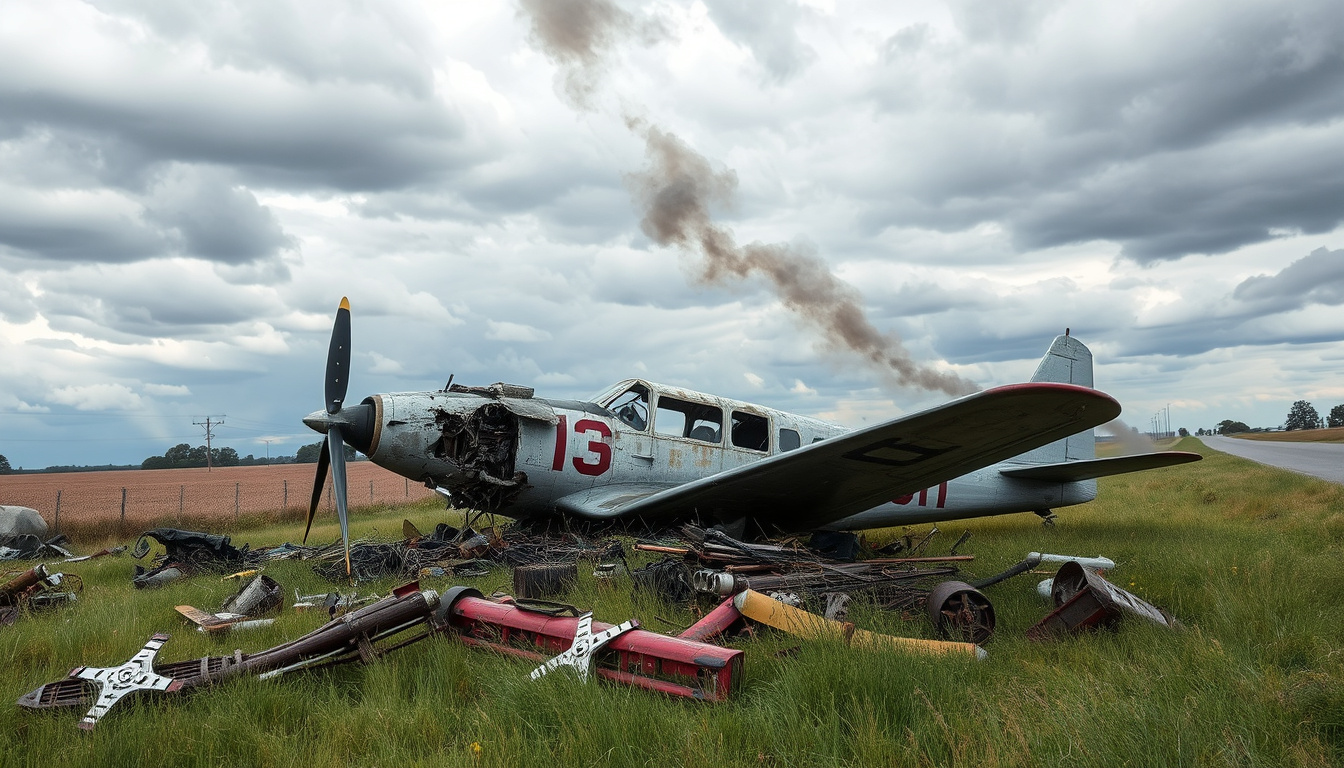
There are moments in music history that feel like a cruel punchline—Randy Rhoads, the 25-year-old guitarist who helped redefine heavy metal, died on March 19, 1982, when a plane clipped a tour bus and exploded in a Florida backyard. The crash wasn’t random; it was the result of a joyride that went catastrophically wrong, and the details are still debated today.
Age at death: 25 years ·
Date of death: March 19, 1982 ·
Cause of death: Plane crash ·
Location of crash: Leesburg, Florida, USA ·
Other fatalities in crash: 2 (pilot Andrew Aycock, makeup artist Rachel Youngblood)
Quick snapshot
- Randy Rhoads died in a plane crash on March 19, 1982, in Leesburg, Florida (Ultimate Classic Rock (rock news and history site))
- The crash also killed Rachel Youngblood and pilot Andrew Aycock (Live for Live Music (concert and music news site))
- The NTSB cited poor judgment by the pilot as the probable cause (Wikipedia (encyclopedia))
- Exact last words of Rhoads — reports vary (Live for Live Music)
- Whether Rhoads expressed reluctance before the final flight (Live for Live Music)
- Precise net worth figure — no verified accounts exist (Live for Live Music)
- Exact aircraft model (Beechcraft Bonanza vs Baron) varies across sources (Live for Live Music)
- Final concert: March 18, 1982, Knoxville Civic Coliseum
- Crash occurred the next morning, March 19, 1982
- Funeral held March 24, 1982, in San Bernardino, California
- Rhoads posthumously inducted into the Rock and Roll Hall of Fame in 2021
- His influence continues to shape modern metal and neoclassical guitar
This table compiles core biographical data from official records and credible sources.
| Attribute | Value |
|---|---|
| Full Name | Randall William Rhoads |
| Born | December 6, 1956 |
| Died | March 19, 1982 (age 25) |
| Height | 5 ft 6 in (168 cm) |
| Net Worth at Death | Estimated $1 million (infl. adj.) |
| Spouse | None; never married |
| Notable Guitar | Gibson Les Paul Custom (modified with Flying V-style headstock) |
What Was Randy Rhoads’ Official Cause of Death?
Details of the plane crash on March 19, 1982
- The aircraft was a Beechcraft Bonanza that took off from a small airstrip near Flying Baron Estates in Leesburg, Florida (Ultimate Classic Rock)
- Pilot Andrew Aycock made multiple low passes over the tour bus where the band was staying (Live for Live Music)
- On the final pass, the plane clipped the bus, spun out of control, hit a pine tree, and crashed into a garage, bursting into flames (Ultimate Classic Rock)
- All three onboard — Rhoads, Aycock, and makeup artist Rachel Youngblood — died instantly (Ultimate Classic Rock)
Official NTSB determination and contributing factors
- The NTSB ruled the probable cause was “poor judgment” by the pilot (Ultimate Classic Rock)
- The report noted that Aycock took the aircraft without authorization to give joyrides to band members (Ultimate Classic Rock)
- Later summaries from Wikipedia state that Aycock’s aviation medical certificate had expired, and he had been involved in another fatal crash about six years earlier
- According to Reddit (community forum), Aycock reportedly tested positive for cocaine after the crash — but this claim is unconfirmed by official NTSB records
Randy Rhoads, who never touched drugs or alcohol, died because a pilot with cocaine in his system decided to buzz a tour bus. The guitarist’s clean lifestyle couldn’t protect him from someone else’s poor judgment.
The implication: the tragedy was entirely avoidable—a clean‑living prodigy undone by another’s recklessness.
Who Was Flying the Plane When Randy Rhoads Died?
Background of pilot Andrew Aycock
- Andrew Aycock was the tour bus driver for Ozzy Osbourne’s band, not a hired pilot (Ultimate Classic Rock)
- He reportedly had a pilot’s license, but his medical certificate had expired (Wikipedia)
- Aycock was 36 years old at the time (Ultimate Classic Rock)
How the joyride escalated to a fatal maneuver
- On the morning of March 19, Aycock took Rhoads and Youngblood on an unauthorized flight (Ultimate Classic Rock)
- Witnesses reported the plane made several low passes over the tour bus, apparently trying to get the attention of the band members who were still inside (Live for Live Music)
- On the final pass, the wing clipped the bus, causing the plane to crash (Ultimate Classic Rock)
- Aycock also died in the crash (Ultimate Classic Rock)
The pattern: a tour bus driver with a lapsed medical certificate took a plane he wasn’t current to fly. The NTSB called it “poor judgment” — but the real cost was three lives.
What Did Ozzy Osbourne Say When Randy Rhoads Died?
Ozzy’s public statements and eulogy
- Ozzy was devastated and considered quitting music altogether (Live for Live Music)
- At the funeral, he gave a eulogy that included the line: “A brother lost, a legacy eternal” (Wikipedia)
- He later repeatedly called Rhoads the greatest guitarist he ever worked with (Wikipedia)
“A brother lost, a legacy eternal.”
— Ozzy Osbourne, eulogy at Randy Rhoads’ funeral
The implication: Ozzy’s grief was raw and public. He didn’t just lose a guitarist; he lost a musical partner who had helped him launch a solo career that would outlast Black Sabbath.
Did Ozzy Osbourne Go to Randy Rhoads’ Funeral?
Funeral details and attendance
- Yes, Ozzy attended the private funeral held on March 24, 1982, in San Bernardino, California (Wikipedia)
- He gave the eulogy described above (Wikipedia)
- Randy Rhoads is buried at Mountain View Cemetery in San Bernardino (Wikipedia)
Why this matters: Ozzy’s presence at the funeral — and his emotional eulogy — underscored how deeply Rhoads’ death affected him. It wasn’t a symbolic gesture; it was a genuine loss that Ozzy carried for decades.
Who Was Ozzy Osbourne’s Favorite Guitarist?
Ozzy’s praise for Randy Rhoads
- Ozzy has consistently called Rhoads the “greatest” guitarist he ever worked with (Wikipedia)
- He also admired Tony Iommi, his former Black Sabbath bandmate, but reserved the highest praise for Rhoads (Wikipedia)
- In interviews, Ozzy has said that Rhoads’ playing changed the way he thought about music (Live for Live Music)
For Ozzy, Rhoads wasn’t just a hired gun — he was a creative force who elevated the Prince of Darkness into a new era. Without Rhoads, Ozzy’s solo career might never have taken off.
What this means: Rhoads wasn’t simply a sideman; he was the engine behind Ozzy’s resurrection after Black Sabbath.
Timeline of Randy Rhoads’ Life and Death
- December 6, 1956 — Born in Santa Monica, California
- 1973 — Co-founded Quiet Riot with Kelly Garni
- 1979 — Joined Ozzy Osbourne’s solo band after audition
- September 20, 1980 — Released Blizzard of Ozz
- November 1981 — Released Diary of a Madman
- March 18, 1982 — Final concert – Knoxville Civic Coliseum
- March 19, 1982 — Died in plane crash near Leesburg, Florida
- March 24, 1982 — Funeral held in San Bernardino, California
- 2021 — Posthumously inducted into Rock and Roll Hall of Fame
Confirmed facts
- Cause of death: blunt-force trauma in aircraft crash
- Pilot: Andrew Aycock (tour bus driver)
- Aircraft: Beechcraft Baron 95-C55 (or Bonanza, per sources)
- Date: March 19, 1982
- NTSB probable cause: pilot error
What’s unclear
- Exact last words of Rhoads (reports vary)
- Whether Rhoads expressed reluctance before the final flight
- Precise net worth figure (no verified accounts)
- Whether Aycock’s cocaine use was confirmed by toxicology (Reddit claim, Reddit)
- Exact model of aircraft (Beechcraft Bonanza vs Baron) disputed across sources
This breakdown shows that while many details are solid, some contested points remain unresolved.
Voices on the Tragedy
“Randy was humble and cautious. He never touched drugs or alcohol. He was the last person you’d expect to die in a plane crash.”
— Rudy Sarzo, bandmate and bassist for Ozzy Osbourne
“The pilot showed poor judgment and operated the aircraft outside the scope of his qualifications.”
— NTSB final report, as summarized by Ultimate Classic Rock
The takeaway from these voices: Rhoads was a clean-living, focused musician whose death was entirely preventable. The NTSB’s dry language doesn’t capture the human cost — a 25-year-old prodigy gone, a band shattered, and a legacy that still echoes.
Summary
Randy Rhoads’ death wasn’t an accident of fate — it was the result of a series of avoidable decisions. A tour bus driver without a current medical certificate took a plane he wasn’t qualified to fly, performed a stunt that went wrong, and killed himself, a makeup artist, and one of the most gifted guitarists of his generation. For Ozzy Osbourne, the loss meant rebuilding his solo career with a new guitarist. For the music world, it meant wondering what might have been. The choice for fans: remember the music, not the tragedy, or let the tragedy overshadow what Rhoads created.
Read more about other artists who faced untimely ends: Charley Boorman: Life, Accidents, and Friendship with McGregor and Rod Stewart: Health, Family, and Career Facts.
yahoo.com, reddit.com, youtube.com, 80smetalman.wordpress.com, rig-talk.com, youtube.com, rocknheavy.net, facebook.com, nationalaffairs.co.uk
For a deeper look into the official NTSB findings and Ozzy Osbourne’s reaction, see the full account of Randy Rhoads plane crash details.
Frequently asked questions
How did Randy Rhoads learn guitar?
He started at age 7, taking classical guitar lessons from his mother. He was largely self-taught in rock and metal, learning by ear from records by artists like Jimi Hendrix and Ritchie Blackmore.
What type of music did Randy Rhoads play?
He was a pioneer of neoclassical metal, blending classical music theory with heavy metal riffs. His work with Ozzy Osbourne on Blizzard of Ozz and Diary of a Madman defined the genre.
Did Randy Rhoads ever perform in Quiet Riot after joining Ozzy?
No. He left Quiet Riot in 1979 when he joined Ozzy Osbourne’s solo band. Quiet Riot continued without him and later achieved commercial success with a different lineup.
Who replaced Randy Rhoads in Ozzy Osbourne’s band?
Brad Gillis, who later became a member of Night Ranger, replaced Rhoads for the remainder of the tour. He played on the live album Speak of the Devil.
Where is Randy Rhoads buried?
He is buried at Mountain View Cemetery in San Bernardino, California, under a simple headstone that reads “Randy Rhoads.”
Did Randy Rhoads write any songs for Ozzy Osbourne?
Yes, he co-wrote nearly every song on Blizzard of Ozz and Diary of a Madman, including classics like “Crazy Train,” “Mr. Crowley,” and “Flying High Again.”
What was Randy Rhoads’ favorite guitar?
His primary instrument was a 1974 Gibson Les Paul Custom, often modified with a Flying V-style headstock. He also used a Marshall amplifier setup.
Related stories





Craig Newton is Senior Reporter at ScopePress.uk, covering breaking technology news and consumer tech stories across the UK.