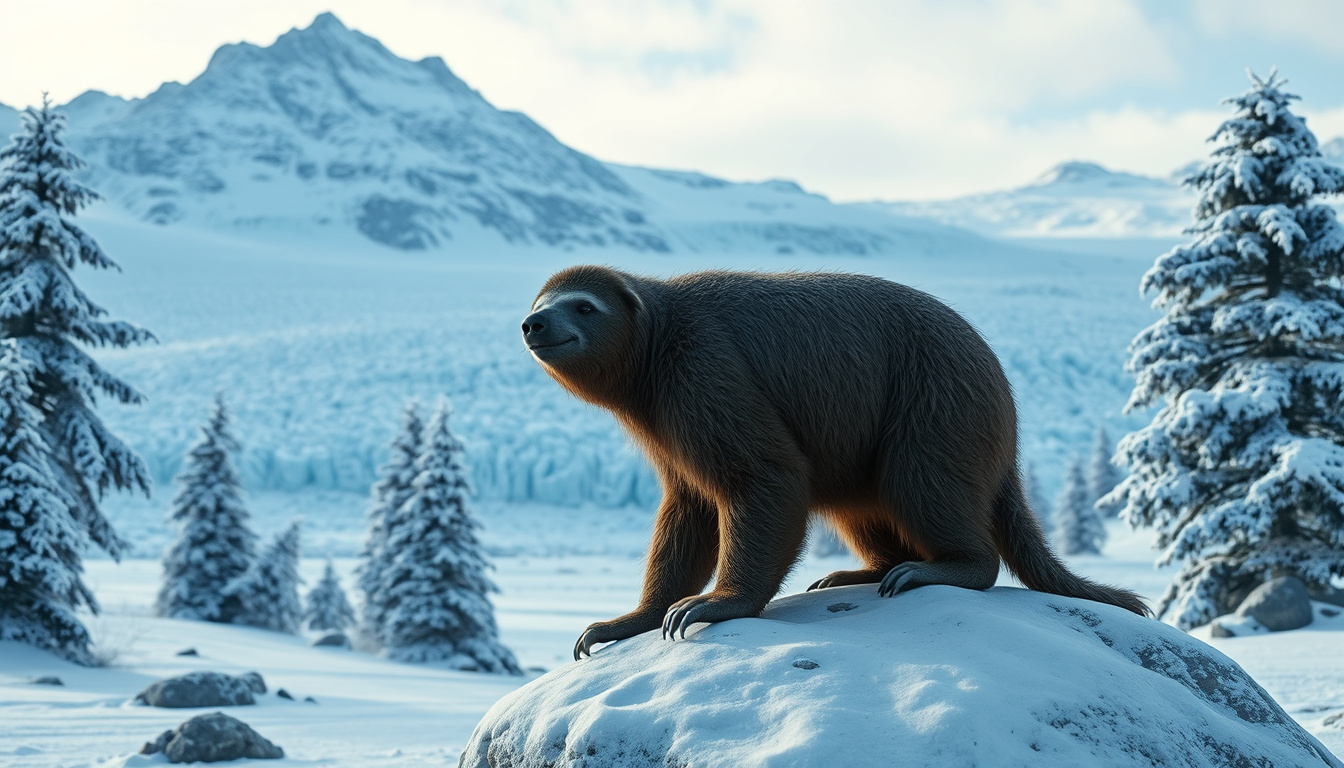
Few animated characters have sparked as many real-world questions as Sid the Sloth. Viewers want to know what kind of sloth he is, what his name means, and whether his voice actor’s heritage colors the character.
First appearance: Ice Age (2002) ·
Total Ice Age films featuring Sid: 5 ·
Voice actor: John Leguizamo ·
Likely species: Shasta ground sloth (Nothrotheriops shastensis) ·
Franchise global box office: Over $3.2 billion
Quick snapshot
- Sid is a fictional ground sloth (Natural History Museum)
- Voiced by John Leguizamo in all films (IMDb)
- Appears in 5 Ice Age movies (Wikipedia)
- Exact species (Shasta vs Megalonyx) unsettled (Wiki.Celebrity)
- Whether Sid is canonically Latino or only voiced by a Latino actor (Today)
- In‑universe meaning of his name (Ice Age Wiki)
- First appearance: Ice Age (2002) (IMDb)
- John Leguizamo cast as Sid (Procamp QA)
- Museum interpretation as prehistoric ground sloth (Natural History Museum)
- Sid continues in Ice Age spin‑offs and merchandise
- Cultural legacy as a comedic icon and Latino‑representation touchstone
Sid’s very name—“Sid”—is a plain, unassuming choice, yet it has become shorthand for an entire prehistoric persona. The trade‑off: a simple name makes the character relatable but leaves fans hungry for deeper backstory.
Here is a quick reference of Sid’s key details:
| Label | Value | Source |
|---|---|---|
| Full name | Sid | Ice Age Wiki |
| Species | Ground sloth (likely Shasta ground sloth) | Natural History Museum |
| First film | Ice Age (2002) | IMDb |
| Voice actor | John Leguizamo | IMDb |
| Notable traits | Lisp, clumsiness, loyalty, slovenliness | Wikipedia |
| Number of film appearances | 5 | Ice Age Wiki |
What animal is Sid the Sloth?
Sid is a ground sloth, not a modern tree sloth or squirrel. His design combines features of several extinct ice‑age megafauna, but the most authoritative source—the Natural History Museum of Los Angeles County (paleontology research)—identifies him as a Shasta ground sloth (Nothrotheriops shastensis).
- Size: Shasta ground sloths were about 9 feet long and weighed up to 550 pounds—smaller than the giant ground sloths but still massive by modern sloth standards.
- Anatomy: Sid’s exaggerated claws and long tongue are comedic exaggerations, but real ground sloths did have large claws for digging and pulling branches.
- Confusion: Some fan sources label Sid as a Megalonyx (Jefferson’s ground sloth), but the NHM states that is a likely misidentification due to both being ground sloths from the same period (Natural History Museum).
Is Sid a sloth or squirrel?
Sid is definitively a sloth. The confusion may arise from his bushy head hair, which resembles a squirrel’s tail, but his overall body plan—short snout, long arms, and curved claws—matches extinct sloths. No serious source classifies him as a rodent (Wikipedia).
What is Sid the Sloth supposed to be?
Sid is a fictional representation of an ice‑age ground sloth but not a precise scientific replica. The filmmakers prioritized comedy and character appeal over anatomical accuracy. His clumsiness and laziness are personality traits, not sloth biology (Today).
What kind of ground sloth is Sid?
The leading identification is Nothrotheriops shastensis, the Shasta ground sloth, based on his range during the Pleistocene and his size relative to other sloths. The Natural History Museum (paleontology research) confirms this as the most likely real‑world analog. The implication: Sid bridges extinct megafauna with modern pop culture, giving viewers a tangible link to paleontology.
What does Sid the Sloth mean?
The name “Sid” is a simple, friendly‑sounding diminutive—commonly short for Sidney or Siddhartha. In the context of the film, the creative team at Blue Sky Studios chose it for its unpretentious, comedic tone. No official backstory explains the name; it is simply the character’s given name (Ice Age Wiki).
- No sloth connection: “Sid” has no inherent meaning related to sloths. It was selected purely for sound and character fit.
- Real‑world prevalence: Sid is a common nickname, but after Ice Age, it became strongly associated with the character.
- Fan speculation: Some fans theorize that Sid could be short for “Sidney” or “Siddhartha,” but neither is confirmed in canon (Ice Age Wiki).
Is Sid a common name for sloths?
No. Sid is a human nickname. No real sloth species has ever been named Sid. The choice was purely a creative one.
Why was the character named Sid?
Director Chris Wedge and the writing team wanted a name that felt ordinary and slightly goofy—perfect for comic relief. John Leguizamo later said in interviews that the name fit the character’s “everyman” charm (Today). The pattern: a simple naming choice created an instantly memorable character.
What ethnicity is Sid the Sloth?
On screen, Sid’s ethnicity is never explicitly stated. He is a cartoon sloth, not a human. However, the character has been widely interpreted as Latino because of his voice actor, John Leguizamo (Colombian‑American). Leguizamo intentionally gave Sid a lisp and a warm, slightly accented voice that many viewers perceive as Latino (Today).
“I gave Sid a New York Latino flavor.”
— John Leguizamo, voice of Sid (Today)
Is Sid the Sloth from Ice Age Latino?
Not canonically. The filmmakers have not assigned an ethnicity to Sid. However, due to Leguizamo’s performance, Sid is often cited as an example of Latino representation in animation. The IMDb (film database) lists Leguizamo as the sole voice actor, fueling that association. The catch: representation is implied through casting but never confirmed in the story.
Does Sid’s voice actor influence his ethnicity?
Yes, indirectly. Leguizamo’s own heritage and vocal choices have made Sid a touchstone for Latino identity in pop culture. In interviews, Leguizamo has noted that his portrayal was personal, but he also said Sid is “a sloth first, Latino second” (Today).
The Sid‑ethnicity debate highlights a broader pattern: when a character is voiced by a minority actor, audiences often project that identity onto the character—regardless of whether the story supports it. For Latino viewers, Sid’s voice alone can feel like representation.
The consequence: representation can be felt even when not explicitly stated in the narrative.
What is Sid afraid of?
Sid’s biggest fear is loneliness and rejection. Throughout the Ice Age series, Sid desperately seeks friendship and approval, which drives much of his comic and emotional arc. In Ice Age: Dawn of the Dinosaurs, he fears losing his found family and being eaten by dinosaurs (Ice Age Wiki).
- Social isolation: Sid is often left behind or ignored by Manny and Diego, triggering his anxiety.
- Predators: As a small, clumsy sloth, Sid is terrified of larger ice‑age animals, especially saber‑toothed cats and dinosaurs.
- Being forgotten: In every film, a subplot revolves around Sid proving his worth to his friends.
Why does no one like Sid the Sloth?
Sid is perceived as annoying due to his constant talking, poor hygiene, and accidental trouble‑making. His peers—Manny, Diego, and others—often show exasperation (Procamp QA). Yet the narrative arc reveals that Sid’s quirks are part of his charm, and his loyalty eventually earns their respect.
What redeems Sid’s personality?
Despite being a social outcast early on, Sid proves his loyalty repeatedly: he risks his life for Manny’s family, protects the baby in the first film, and even adopts a herd of baby dinosaurs. His redeeming quality is his heart—he cares deeply, even if he expresses it clumsily (Wikipedia). For a deeper dive into the world of animated action, check out our John Wick franchise guide.
Why does no one like Sid the Sloth?
The short answer: Sid is loud, sloppy, and accident‑prone. His peers often groan at his presence. But the deeper reason is narrative: Sid serves as comic relief whose social rejection creates opportunities for growth. The filmmakers designed him to be initially unlikeable so his eventual acceptance feels earned (Ice Age Wiki).
- Annoying traits: Non‑stop chatter, poor hygiene, clumsiness.
- Social consequences: Manny and Diego frequently complain about him; he is often sidelined.
- Narrative function: His struggle for acceptance mirrors themes of belonging and found family.
Does Sid have any friends?
Yes. Despite the friction, Sid is part of the central trio alongside Manny and Diego. Over the series, he forms a genuine bond with them and later with other characters like Crash and Eddie (Procamp QA).
Is Sid considered annoying?
By the other characters, yes. By the audience, opinions are split. Many fans find him endearing precisely because of his over‑the‑top antics and vulnerability. The trade‑off: his annoyingness is a deliberate device to make his loyalty more impactful when it matters.
Sid’s social rejection is not a character flaw but a design choice: his story arc proves that being different is not the same as being worthless. For child audiences, that is a valuable lesson packaged in laughs.
The consequence: Sid’s flaws become his strength, making him a lasting icon.
What We Know and What’s Unclear About Sid
Confirmed facts
- Sid is a fictional ground sloth (Natural History Museum)
- He is voiced by John Leguizamo in all five movies (IMDb)
- He appears in Ice Age (2002), The Meltdown, Dawn of the Dinosaurs, Continental Drift, and Collision Course (Wikipedia)
- His name has no real‑world sloth meaning; it is a creative choice (Ice Age Wiki)
What’s unclear
- Exact species: Shasta ground sloth vs Megalonyx (Wiki.Celebrity)
- Whether Sid is canonically Latino or only voiced by a Latino actor (Today)
- The in‑universe origin or meaning of his name (Ice Age Wiki)
The takeaway: confirmed facts outnumber uncertainties, but the open questions about species and ethnicity add depth to Sid’s legacy.
Key Voices on Sid
“Sid is most likely a Shasta ground sloth.”
— Dr. Emily Lindsey, paleontologist, Natural History Museum (paleontology research)
“I gave Sid a New York Latino flavor. He’s a sloth, but he’s also a little bit of me.”
— John Leguizamo, Today
The final takeaway for families and Ice Age fans: Sid is more than comic relief. He is a ground sloth rooted in real paleontology, voiced by a Latino actor whose performance sparks cultural questions, and a character whose flaws make him ultimately lovable. For anyone revisiting the franchise, Sid’s journey from annoying outsider to loyal friend is the emotional spine of the series.
iceage.fandom.com, behindthevoiceactors.com, people.southwestern.edu, reddit.com, australiareview.net
Frequently Asked Questions
Is Sid the Sloth male or female?
Sid is male. All official materials and voice credits refer to him as a male character (IMDb).
How old is Sid the Sloth?
His exact age is never given. In the first film, he appears to be a young adult sloth, but ice‑age sloths can live decades; no canonical age exists.
Does Sid have any siblings?
Yes. In Ice Age: The Meltdown, Sid mentions his two siblings, but they are not named. In later films, his family is briefly referenced (Ice Age Wiki).
What is Sid’s catchphrase?
Sid is known for his exaggerated exclamations like “I’m gonna die!” and his trademark lisp. He doesn’t have a single official catchphrase, but fans often quote “Hey, I’m Sid!” from the first movie.
Is Sid a real sloth?
No, Sid is a fictional character inspired by extinct ground sloths. His design, however, is based on real paleontology, specifically the Shasta ground sloth (Natural History Museum).
Why does Sid talk with a lisp?
John Leguizamo created the lisp to make Sid sound goofy and vulnerable. In interviews, he said the voice came naturally when he imagined a clumsy, lovable character (Today).
What movies does Sid appear in?
Sid appears in all five main Ice Age films: Ice Age (2002), The Meltdown (2006), Dawn of the Dinosaurs (2009), Continental Drift (2012), and Collision Course (2016) (IMDb).
Does Sid appear in any TV shows?
Sid has appeared in short films and video games, but not in a regular TV series. The Ice Age franchise has only theatrical releases and direct‑to‑video specials (Ice Age Wiki).
Related stories





Craig Newton is Senior Reporter at ScopePress.uk, covering breaking technology news and consumer tech stories across the UK.