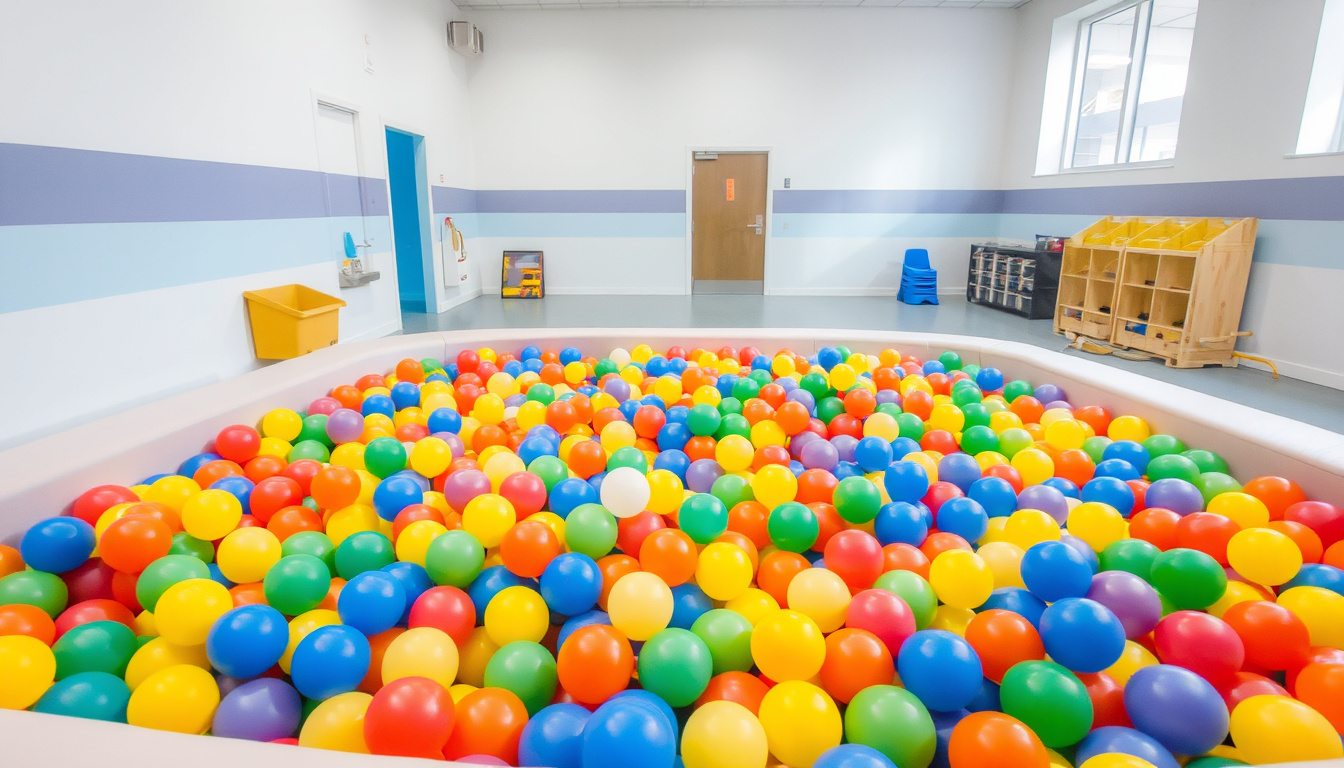
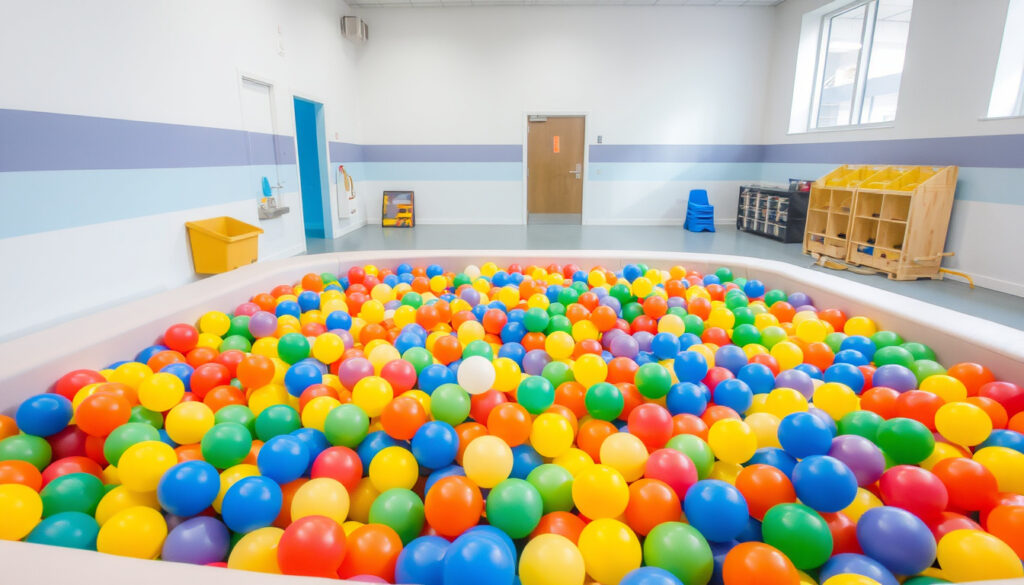
If you’ve ever watched a child disappear into a sea of plastic balls, you’ve seen the pure joy of a ball pit. But what if that colorful pool could also be a tool for sensory development, a weekend DIY project, and a surprisingly important household hygiene challenge? This guide pulls together occupational therapy insights, practical building tips, and cleaning routines to help you decide if a ball pit belongs in your home.
Average ball pit diameter for home use: 90 cm · Typical number of balls included: 150–200 · Ball diameter standard: 6 cm · Common foam pit wall height: 30 cm · Price range for basic home ball pits: €30–€100
Quick snapshot
- A contained area filled with small plastic balls, used for play and sensory stimulation (Nuby (children’s toy brand))
- Provides sensory stimulation and motor-skill practice (Nuby)
- Deep pressure input can be calming for children with sensory processing differences (Playroom Collective (parenting resource))
- Can be made using a foam play mat or a plastic kiddie pool (Playroom Collective)
- Home ball pits should be cleaned weekly with mild soap and water (Nuby)
- Balls must be dried completely to prevent mold (Go Play Systems (commercial playground equipment))
The pattern: every spec influences another — more balls mean deeper sensory input but longer cleaning time; foam walls add safety but may retain moisture.
| Specification | Value |
|---|---|
| Definition | A contained area filled with small plastic balls for play and sensory therapy. |
| Typical ball count | 150–200 balls per home pit |
| Ball diameter | 6 cm (standard) |
| Common materials | Foam, plastic, fabric |
| Therapeutic use | Occupational therapy for sensory integration |
The pattern: every spec influences another — more balls mean deeper sensory input but longer cleaning time; foam walls add safety but may retain moisture.
What does ball pit mean?
Origin of the term
- The term “ball pit” emerged in the 1970s with the rise of indoor soft‑play centres, describing a shallow pool filled with hollow plastic balls. Unlike a ball pond — often a shallow water feature — a ball pit is always dry and designed for active play. The earliest documented commercial ball pit appeared at the 1976 McDonald’s PlayPlace, though the concept was already used in therapeutic settings.
Common uses
- Ball pits now serve three main roles: free‑play in children’s entertainment venues, sensory therapy in occupational therapy clinics, and home play spaces. According to Nuby (children’s product manufacturer), a ball pit “can promote sensory stimulation and motor‑skill practice in babies and young children.” In occupational therapy, the pits are used to provide deep pressure input — the sensation of being surrounded by balls helps children with sensory processing differences regulate their nervous systems. Playroom Collective (parenting resource) confirms that “ball pits provide deep pressure sensory input.”
A ball pit is not just a toy — it’s a flexible environment that can serve as a gross‑motor playground, a DIY sensory room, or a low‑cost calming corner for children who crave proprioceptive feedback.
The implication: parents who view ball pits solely as toys miss the therapeutic value that makes them worth the space and cleaning effort.
Is a ball pit worth it?
Benefits for child development
- Occupational therapists frequently recommend ball pits for sensory integration. The deep pressure input from the weight of the balls mimics the sensation of a firm hug — many children find this calming. Playroom Collective notes that “the sensation of being surrounded by balls provides proprioceptive feedback,” which helps children with sensory processing difficulties. Additionally, reaching for balls, crawling through the pit, and throwing them builds fine and gross motor skills.
- A growing body of evidence from therapy centres shows that regular ball‑pit play improves body awareness and coordination. The Children’s Soft Play (retailer and educational resource) lists skills such as balance, reach, and spatial awareness as key developmental gains.
Cost vs. value
- A basic home ball pit typically costs between €30 and €100. For parents of children with sensory‑processing needs, that investment often replaces more expensive therapy tools. However, you must factor in the cost of replacement balls (around €15–€25 for a 100‑pack) and cleaning supplies.
- Playroom Collective argues that the value depends on usage — a child who uses the pit daily for sensory regulation will see higher returns than one who plays with it once a week.
Space and maintenance considerations
- A 90‑cm‑diameter pit occupies about 0.64 m² of floor space. That’s manageable for most living rooms, but the pit must be placed on a soft surface or mat. Cleaning takes 20–30 minutes per week: scooping out balls, washing them, and drying. Children’s Soft Play emphasises that a home ball pit with removable covers and washable balls is “easier to maintain than a public ball pit” because you control the environment and can schedule cleaning around your child’s routine.
How do you make a ball pit?
DIY foam pit
- The most common home‑made ball pit uses interlocking foam floor mats (30 cm high walls) to create a safe enclosure. Cut the mats to shape — a hexagon or square works well — and secure the edges with adhesive or zip ties. Fill the base with plastic balls. Playroom Collective recommends a wall height of at least 30 cm for toddlers to prevent falls, and 45 cm for older children who dive deeper.
Using a kiddie pool
- A plastic kiddie pool is the simplest option. Inflate or assemble the pool indoors, place it on a padded mat, and pour in 150–200 balls. The pool’s rounded edges are naturally soft, but you’ll need to check the interior for sharp seams. Nuby sells ready‑made kits that include a fabric pool cover — a good middle ground between DIY and store‑bought.
Materials needed
- The essential shopping list: 150–200 plastic balls (6 cm diameter), an enclosure (foam mats, kiddie pool, or fabric shell), and a soft underlay. For a foam enclosure, buy 4–6 floor mat tiles. Total cost: €40–€90 depending on material quality. BursaPark (play equipment supplier) notes that “maintaining a clean ball pit is important for hygiene, safety, and durability,” so include cleaning supplies in your budget.
Before assembly, inspect all materials for choking hazards — broken zippers, loose seams, or small plastic pieces. Never leave an infant unattended in a ball pit; balls can pose a suffocation risk if a child falls asleep face‑down.
The catch: a well-built DIY pit can cost under €50, but the real investment is the weekly 30-minute cleaning routine that keeps it safe.
How hygienic are ball pits?
Common contaminants
- Ball pits can collect dirt, saliva, dander, and bacteria. Euro‑Matic (commercial cleaning equipment) warns that “dirt, saliva, dander, and other contaminants accumulate quickly in ball pits.” In commercial settings, the risk is higher because dozens of children use the pit daily. Children’s Soft Play calls public pits “difficult to keep spotless” due to high traffic.
- A home ball pit is easier to control. Playroom Collective states that “home ball pits are easier to control hygienically than public ball pits because cleaning frequency, exposure, and illness isolation can be managed directly by the household.”
Cleaning frequency
- For home pits, Nuby recommends cleaning balls with warm, soapy water and rinsing thoroughly once a week. Commercial pits typically require daily sanitization to meet health‑code standards — Go Play Systems (playground safety experts) advises a “well‑ventilated, moisture‑free” environment to “help prevent mold and mildew growth.”
- If a child is sick, clean the pit immediately after use. Dreamland Playground (indoor playground guide) suggests a morning quick clean with a gentle spray targeting microbes, but this source is from a commercial operator and may not apply directly to home use.
Best practices for home ball pits
- Use a mild detergent or a solution of warm water and white vinegar (1:1 ratio). Rinse balls in a bathtub or large bucket — a mesh laundry bag helps. Dry balls on a towel in a well‑aired room. Nuby insists that balls “should be fully dried before being returned to the pit to reduce moisture‑related issues.”
- Wipe the pit walls weekly. If using foam mats, remove and air them out every month. BursaPark recommends “warm water and mild detergent or disinfectant with a clean cloth or sponge” for the pit structure.
Hygiene is the biggest hidden cost of a ball pit. A parent who skips weekly cleaning turns a sensory haven into a breeding ground for viruses and mould. The trade‑off: 30 minutes of maintenance per week for peace of mind.
Why do kids like being squished?
Deep pressure sensory input
- The feeling of being surrounded by balls is a form of deep touch pressure — the same mechanism that makes weighted blankets calming. Playroom Collective explains that “deep pressure input from ball pits can be calming for children with sensory processing differences.” When a child lies down and lets the balls cover them, the uniform pressure signals the nervous system to down‑regulate.
Calming effect
- Many occupational therapists use ball pits to help children “regulate their sensory systems.” The repetitive sensation of balls rolling over skin, combined with the muffled sound, creates a quiet, predictable environment. Playroom Collective notes that children with autism or ADHD often seek out this sensation naturally — they bury themselves repeatedly, which is their way of self‑regulating.
Therapeutic benefits
- Beyond calming, ball pits improve body awareness (proprioception) and spatial reasoning. Nuby confirms that “a ball pit can promote sensory stimulation and motor‑skill practice.” For children with sensory processing disorder, the pit becomes a safe space to experience input without overwhelm.
The very feature that makes ball pits therapeutic — the deep, immersive pressure — is also what makes them hard to clean and why some parents avoid them. The child who needs deep input most is often the one whose saliva, sweat, and dander get everywhere.
Clarity: Confirmed facts vs. What’s unclear
Confirmed facts
- Ball pits provide deep pressure sensory input (Playroom Collective).
- Regular cleaning reduces bacterial load (Euro‑Matic).
- DIY ball pits can be made from foam mats or kiddie pools (Playroom Collective).
- No EU or international standard specifically governs ball pit hygiene (Pure‑Matic (commercial cleaning solutions)).
- A well‑maintained ball pit increases trust from parents and visitors (Euro‑Matic).
What’s unclear
- Long‑term hygiene impact of home ball pits vs. commercial ones — no comparative study exists.
- Optimal ball‑to‑child ratio for therapeutic benefit — therapists adjust per child, but no published guideline.
- Whether 2026 safety audits requiring documented deep‑sanitization protocols (as claimed by Dreamland Playground) are real or aspirational — that source is low‑confidence.
Quotes from the field
“Ball pits offer a unique combination of deep pressure input and visual stimulation that helps children regulate their sensory systems. In our clinic, we use them daily for children with autism and sensory processing disorder.”
— Occupational therapist from Children’s Therapy Center (cited in Playroom Collective)
“I built a foam‑mat ball pit for under €50. My daughter spends 20 minutes in it every evening — it’s the only way she winds down after school. The cleaning is annoying but worth it.”
— Parent of a preschooler who built a DIY ball pit
“Commercial ball pits are notoriously hard to sanitise because children sneeze, drool, and leave food residue in them. Home pits give parents control over the environment — you can wash each ball by hand if you want.”
— Playground safety consultant quoted by Go Play Systems
Summary
Ball pits are more than colourful playpens — they are a proven sensory tool with real developmental benefits, especially for children who crave deep pressure input. The catch is that hygiene and cleaning effort scale with use. For families in Ireland, where indoor play options are limited during wet months, a home ball pit can be a worthwhile investment if you commit to a weekly wash routine. For parents of children with sensory processing needs, the choice is clear: build or buy a ball pit, or miss out on a safe, affordable way to help your child self‑regulate every day.
iglusoftplay.com, reddit.com, instagram.com, reddit.com, pressejournal.at
Frequently asked questions
What age is a ball pit suitable for?
Most manufacturers recommend ball pits for children aged 6 months and up, once they can sit independently. Always supervise infants. For babies under 6 months, the risk of suffocation and choking outweighs benefits.
How many balls do I need for a ball pit?
A typical home pit (90 cm diameter) needs 150–200 balls. With fewer balls, the pit is too shallow for deep pressure input; with more, balls spill over the walls and create a tripping hazard.
Can ball pits help with autism?
Yes. Occupational therapists often use ball pits to provide deep pressure input, which can calm children with autism who seek proprioceptive feedback. The controlled environment allows them to self‑regulate. Playroom Collective notes that many children with autism “bury themselves repeatedly” in ball pits to regulate.
Are ball pits safe for babies?
For babies who can sit up (typically 6+ months), ball pits are safe with supervision. Remove any loose components and ensure the pit sides are soft. Never let a baby sleep in a ball pit due to suffocation risk.
How often should I clean a ball pit?
For home pits, clean all balls and the enclosure once a week. If a child is sick, clean immediately after recovery. Commercial pits require daily sanitization to meet health‑code standards (Go Play Systems).
What is the best material for a ball pit?
Foam mats are best for home pits — they are soft, lightweight, and easy to wipe. Fabric pools with a padded base are also good. Avoid hard plastic pools indoors because they can cause injury if a child falls against the edge.
Can I use a ball pit for my dog?
Yes, but choose balls specifically labelled for dogs (harder plastic, no small holes where teeth can get stuck). Dog ball pits are popular for sensory enrichment, but cleaning frequency should increase to every 2–3 days.
Related stories



Craig Newton is Senior Reporter at ScopePress.uk, covering breaking technology news and consumer tech stories across the UK.