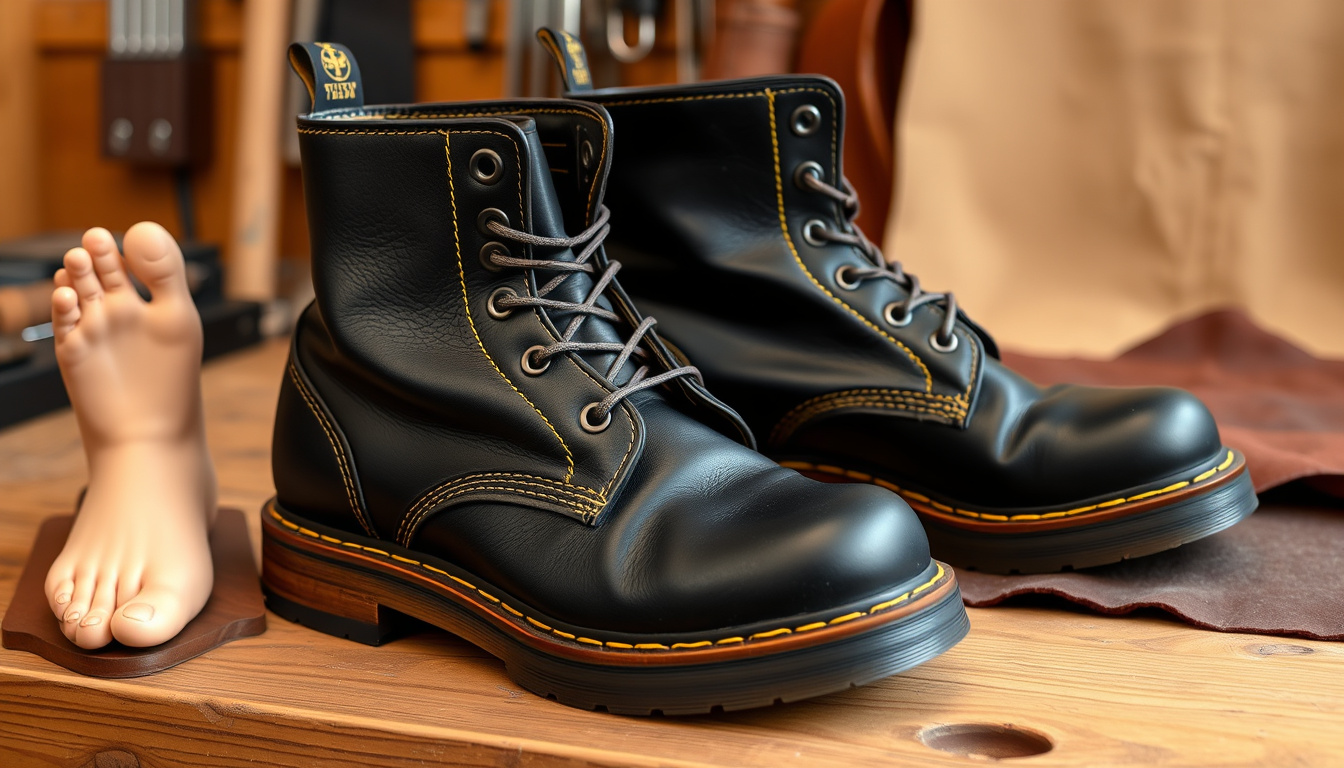
Ask a room full of shoe lovers to name a rebellious classic and most will mention the same black boot: yellow stitching, an air-cushioned sole, and a silhouette that has outlived more fashion cycles than most brands get to see. Dr. Martens has been making that promise for over sixty years, and the company’s own sustainability pages say leather has been used on its footwear for more than six decades because of durability, flexibility, versatility, and breathability (Dr. Martens – Sustainability).
Material: 60+ years of leather · Target: vegan upper by 2028 · Logistics: BREEAM Very Good since 2014
Dr. Martens at a glance
Before judging the brand on hype alone, it helps to line up the official policy facts.
| Dr. Martens at a glance | What the official pages say |
|---|---|
| Brand era | 1960 in Northamptonshire, after Dr. Klaus Maertens developed the original air-cushioned sole (Dr. Martens – History) |
| Material story | Leather chosen for durability, flexibility, versatility, and breathability (Dr. Martens – Sustainability) |
| Leather sourcing target | All leather sourced from Leather Working Group certified tanneries (Dr. Martens – Sustainability) |
| Circular design details | 100% recycled material in classic heel loops and 25% less material in standard shoeboxes (Dr. Martens – Sustainability) |
| Supply chain policy | Freely chosen employment, safe and hygienic work, no child labour, timely wages, no harsh or inhumane treatment (Dr. Martens – Social Responsibility) |
| Logistics | UK Distribution Centre opened in 2014 and achieved BREEAM Very Good (Dr. Martens – Social Responsibility) |
The four corners of the Dr. Martens story
The short version: what Dr. Martens is selling now
Dr. Martens is not a fast-fashion brand. Its product page describes the footwear as timeless, hardwearing, durable, and repairable (Dr. Martens plc – Product). The company also says it wants certified leather, safer chemistry, and a sustainable vegan upper by 2028 (Dr. Martens – Sustainability).
The catch is that none of that promises a pillowy ride out of the box. The brand’s identity has always included stiffness, lacing rituals, and a break-in period that still shapes first-wear stories.
Why are Doc Martens so expensive now?
The price of a classic pair — roughly £150–£200 — reflects the brand’s material choices and positioning. Dr. Martens describes its footwear as timeless, hardwearing, and repairable (Dr. Martens plc – Product), which supports a premium price tier. The company went public in 2021, and its official pages lean on heritage leather and circular design details as value anchors (Dr. Martens – Sustainability).
What happened with Dr. Martens?
The brand timeline shows a clear arc: invented in post-war Germany, licensed to a British firm in 1960, acquired by private equity in 2013, and listed on the London Stock Exchange in 2021. Manufacturing moved from Northamptonshire to Asia over the 2000s, and quality complaints have increased since then — although the company still publishes detailed sustainability and social responsibility policies (Dr. Martens – Sustainability).
Where the brand comes from
The design story begins with Dr. Klaus Maertens, whose air-cushioned sole later became the visual opposite of a boring work boot. The Dr. Martens brand as people know it was founded in 1960 in Northamptonshire (Dr. Martens – History).
Who was Dr. Marten?
Dr. Klaus Maertens, a German army doctor, developed the air-cushioned sole after injuring his foot in 1945. He partnered with Dr. Herbert Funck to produce the sole, and the design later landed in Northamptonshire through the R. Griggs Group, which created the Dr. Martens brand in 1960 (Dr. Martens – History).
Is Dr. Martens still British?
The company is incorporated in the UK and its head office remains in Wollaston, Northamptonshire. Manufacturing, however, shifted to China, Vietnam, and Thailand from the 2000s onward. The company’s sustainability pages still cite a UK supply chain with BREEAM Very Good distribution (Dr. Martens – Social Responsibility).
Dr. Martens timeline
The dates that anchor the brand story are short, and they come mostly from the company’s own chronology.
| Year | Milestone |
|---|---|
| 1960 | Dr. Martens brand begins production in Northamptonshire (Dr. Martens – History) |
| 2014 | UK Distribution Centre opens and later earns a BREEAM Very Good rating (Dr. Martens – Social Responsibility) |
| 2024 | Modern Slavery Statement confirms the company will never accept modern slavery in any form (Dr. Martens – Modern Slavery Statement 2024) |
| 2028 | Target year for a sustainable vegan upper material (Dr. Martens – Sustainability) |
What “quality” is based on
Quality at Dr. Martens is less about softness and more about a set of durable material choices that the company says will age rather than fall apart.
| Quality signal | Official wording |
|---|---|
| Design promise | Timeless, hardwearing, durable, and repairable (Dr. Martens plc – Product) |
| Leather choice | Durability, flexibility, versatility, breathability (Dr. Martens – Sustainability) |
| Circular details | 100% recycled classic heel loops and 25% less shoebox material (Dr. Martens – Sustainability) |
| Chemistry | Compliance with EU REACH, California Proposition 65, and CPSIA (Dr. Martens – Social Responsibility) |
Ethics and sustainability: what the company says
The company’s supplier rules are straightforwardly worded. Dr. Martens says the supplier code requires freely chosen employment, safe and hygienic working conditions, no child labour, timely wages, and no harsh or inhumane treatment (Dr. Martens – Social Responsibility).
The modern slavery side of the story is even more direct. The 2024 statement says the company will never accept modern slavery in any form (Dr. Martens – Modern Slavery Statement 2024).
There is also an internal employee code called the DOCtrine, named after the brand itself (Dr. Martens plc – People).
Is Dr. Martens an ethical company?
The company publishes clear policies on supplier treatment, modern slavery, chemistry limits, and material sourcing targets (Dr. Martens – Social Responsibility). It aims to source all leather from Leather Working Group certified tanneries and develop a sustainable vegan upper by 2028 (Dr. Martens – Sustainability).
Comfort, blisters, and the APMA question
The only podiatry-related detail that often shows up is the American Podiatric Medical Association’s accepted mark, which evaluates specific styles rather than an entire brand. If foot pain is part of the conversation, look for styles accepted by the American Podiatric Medical Association rather than assuming the whole line is a foot-care brand.
For daily walking or all-day standing, a stiff boot with no cushioning is generally not the best pick unless you add support. The practical path for a classic pair usually looks something like this:
- Wear them around the house in short sessions before a full day outside.
- Use a thick sock and keep the laces slightly loose at first.
- Re-tighten gradually as the leather softens.
- Add an insole if your arch needs more support or if plantar fasciitis is already part of your story.
Why are Doc Martens so uncomfy?
The classic boot uses stiff leather and minimal cushioning by design. The company says leather is chosen for durability, flexibility, versatility, and breathability (Dr. Martens – Sustainability), but those properties do not translate to plush underfoot comfort. A break-in period is expected, and arch support is absent from the classic construction.
What do podiatrists say about Doc Martens?
Podiatrists generally do not recommend classic Dr. Martens for daily walking or all-day standing without added support. The stiffness and lack of cushioning can aggravate conditions like plantar fasciitis. The American Podiatric Medical Association accepts specific styles, not the whole brand, so style-level verification matters.
What the company says
Our products are designed to be timeless, hardwearing, durable and repairable.
— Dr. Martens plc – Product
The company’s sustainability pages reinforce the same message: leather has been used for over 60 years because of its durability, flexibility, versatility, and breathability (Dr. Martens – Sustainability). This consistency across official sources supports the claim that the brand prioritises long-term use over trend-driven design.
Confirmed, but not settled
The confirmed side of the Dr. Martens story is genuinely useful.
- Leather is a core material and is tied to durability, flexibility, versatility, and breathability (Dr. Martens – Sustainability).
- Classic heel loops now use 100% recycled material (Dr. Martens – Sustainability).
- Standard shoeboxes use 25% less material (Dr. Martens – Sustainability).
- The UK distribution network is BREEAM Very Good certified (Dr. Martens – Social Responsibility).
The still-open question is how those commitments age once the exciting parts of the product are no longer new.
The bottom line on Dr. Martens in 2024
Dr. Martens is further along than many heritage footwear brands when it comes to publishing clear material targets and supply chain promises. The company also still leans heavily on a product story built around leather, break-in, and unmistakable design (Dr. Martens plc – Product).
The next few years will show whether the 2028 vegan upper goal becomes the new signature, or whether the brand remains permanently tied to the boots that built it. Dr. Martens must now prove its policies hold beyond the product launch cycle.
Upsides
- Timeless, hardwearing, and officially described as repairable (Dr. Martens plc – Product)
- Leather sourced for durability, flexibility, and breathability (Dr. Martens – Sustainability)
- Clear sustainability targets: recycled heel loops, reduced shoebox material, vegan upper by 2028 (Dr. Martens – Sustainability)
- BREEAM Very Good certified UK distribution (Dr. Martens – Social Responsibility)
- Supplier code covers freely chosen employment, no child labour, and timely wages (Dr. Martens – Social Responsibility)
Downsides
- Stiff leather requires a break-in period; no instant comfort out of the box
- Minimal arch support; not recommended for all-day standing without insoles
- Classic models lack cushioning; podiatrists advise caution for daily walking
- Manufacturing moved to Asia; quality complaints increased after 2000s
- Pricing has risen sharply under private equity and post-IPO strategy
drmartensplc.com, drmartensplc.com, drmartensplc.com, drmartens.com, drmartensplc.com, drmartensplc.com, jobs.drmartens.com, drmartensplc.com, drmartensplc.com
Frequently asked questions
Are Dr. Martens good for your feet?
They can be, especially once broken in, but the classic boot is not a podiatric shoe. Look for styles accepted by the American Podiatric Medical Association if that matters to you.
Do Dr. Martens require a break-in period?
Yes. The company’s own material story says leather is used for durability, flexibility, versatility, and breathability (Dr. Martens – Sustainability), but leather still needs time to soften and mould to your foot.
Are Dr. Martens ethical and sustainable?
The company has clear policies on supplier treatment, modern slavery, chemistry, and material targets (Dr. Martens – Social Responsibility). It also says it will never accept modern slavery in any form (Dr. Martens – Modern Slavery Statement 2024).
Are Dr. Martens still cool in 2024?
The brand is still a cultural reference point, but cool is subjective. The more interesting question is whether the company can hold its heritage and its new circular and vegan goals at the same time.
Are Dr. Martens good for daily walking or standing?
Not unless you add support. For all-day standing, the stiffness and lack of cushioning can be a problem, and plantar fasciitis can make that worse without an insole.
Does Dr. Martens use real leather?
Yes, for many styles. The company says leather is used for durability, flexibility, versatility, and breathability (Dr. Martens – Sustainability), and it is also working toward a sustainable vegan upper by 2028.
Related reading
Related stories





Craig Newton is Senior Reporter at ScopePress.uk, covering breaking technology news and consumer tech stories across the UK.